SpaceX Crew-13 Reaches ISS in Record-Breaking US Flight Time
<>
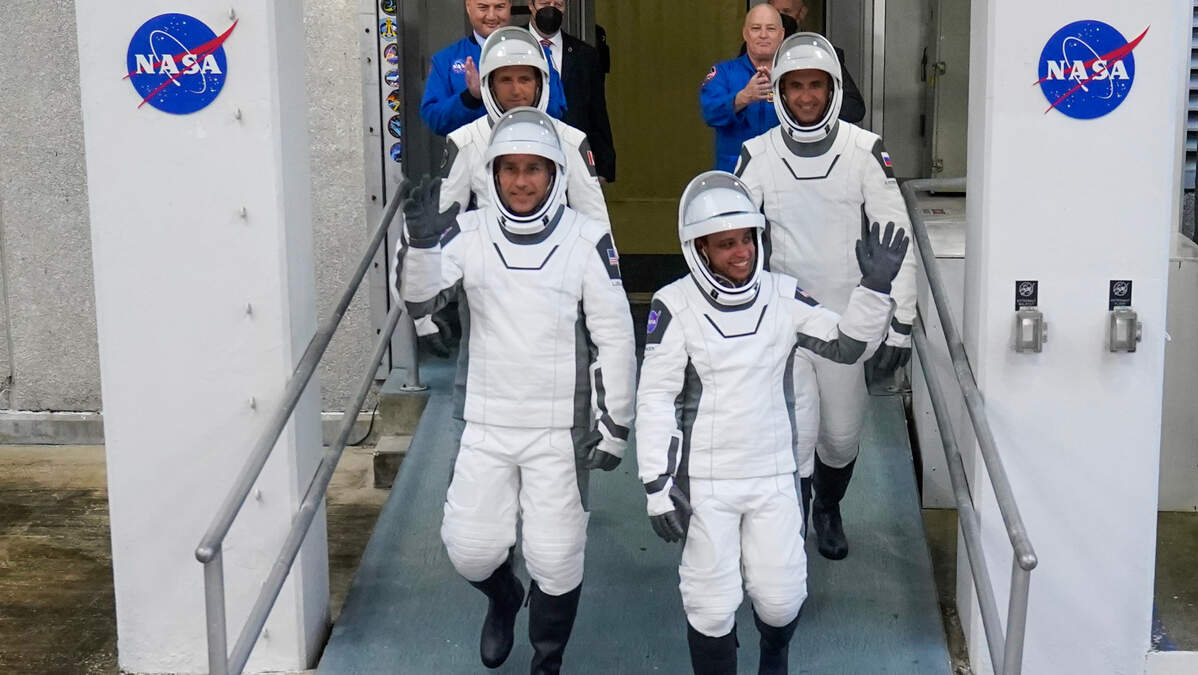
Two American astronauts, a Canadian crewmate, and a Russian cosmonaut arrived at the International Space Station aboard a SpaceX Dragon capsule, completing a journey that NASA confirmed as the fastest ever achieved by an American spacecraft to the orbiting laboratory.
The Crew-13 mission docked with the station at 1:16 a.m., according to NASA, marking a total flight time of 7 hours and 55 minutes after lifting off from Florida.
Record-Breaking Orbital Trajectory
The four crew members—NASA astronauts Jessica Watkins and Luke Delaney, Canadian astronaut Joshua Kutryk, and Russian cosmonaut Sergej Teteriatnikov—departed from Cape Canaveral at 5:10 p.m. local time on Thursday.
Flight duration for missions to the ISS varies depending on the physical distance and orbital alignment between the capsule and the station at the moment of launch, reported NOS. The previous crew launched from the United States in February spent more than thirty hours in transit.

By contrast, the fastest prior American trip carrying astronauts was completed by Crew-11 in 14 hours and 43 minutes, while an unmanned cargo Dragon achieved a 12-hour, 33-minute transit in November 2024.
Chasing the Absolute Speed Ceiling
NOS reported that the absolute speed record to the station remains held by the Russian Soyuz spacecraft, which completed an experimental flight in 3 hours and 3 minutes in 2020. SpaceX representative Julianna Scheiman noted that the Crew-13 trajectory approached the absolute limit of what orbital mechanics allow.
“The space station was in a favorable spot, and the orbital mechanics worked out so that it was the shortest time from launch to docking that we’ve had so far,” Scheiman said. She added that selecting such rapid trajectories leaves a narrower margin for operational errors.
Overcoming Pre-Flight Hurdles
The launch of Crew-13 itself had faced a three-week postponement due to a fuel system leak inside the spacecraft, according to NOS.
The mission patch features a golden lucky dragon, a design choice referencing the Apollo 13 lunar flight, which encountered a critical oxygen tank failure in 1970 before mission controllers successfully returned the crew to Earth, NOS reported.
New Crew Replaces Crew-12 for Six-Month Stay
Following standard post-docking procedures, the hatch between the Dragon capsule and the ISS was opened at 9:19 p.m.
The newly arrived team will spend approximately six months aboard the complex, which orbits roughly 400 kilometers above Earth. They replace the outgoing Crew-12 members: NASA astronauts Jessica Meir and Jack Hathaway, French European Space Agency astronaut Sophie Adenot, and Russian cosmonaut Andrej Fedjajev.

Joshua Kutryk faces a personal milestone during the assignment, as his wife is expecting their child in November. If the birth occurs while he remains on orbit, it will mark only the fourth time an astronaut has become a parent during an active spaceflight.
Weather Uncertainty at Landing Sites
NASA stated that the departing crew could return to Earth as early as Monday, though weather conditions at the landing sites could prompt schedule adjustments.
Official mission timelines indicate that the departing crew’s departure depends heavily on meteorological assessments at prospective splashdown zones, leaving the exact undocking sequence subject to daily review by flight controllers.