Space Intelligent Robot Startup Jinkong Technology Secures Millions in Angel Financing for In-Orbit Manufacturing
Space intelligent robot firm Jinkong Technology has completed tens of millions of yuan in an angel round of financing led by CDH VGC, with participation from SJTU Hanyuan Asset, CAS Green Fund, and Dexterous Intelligence. The newly secured funds will target the research and development of core space robot components, on-orbit verification, and product engineering as low-orbit satellite infrastructure expands.
Financing to Fuel Core Component Research and On-Orbit Verification
The capital injection arrives shortly after the company’s establishment in April 2026 by He Jun, a professor and doctoral supervisor at Shanghai Jiao Tong University. Jinkong Technology focuses on space manufacturing as a long-term direction, aiming to build an intelligent operation base for future orbital production. The firm has independently developed core components including intelligent controllers, servo drives, joint modules, and multi-dimensional force sensors. These parts have already cleared thermal vacuum, high and low temperature, and radiation environmental tests.
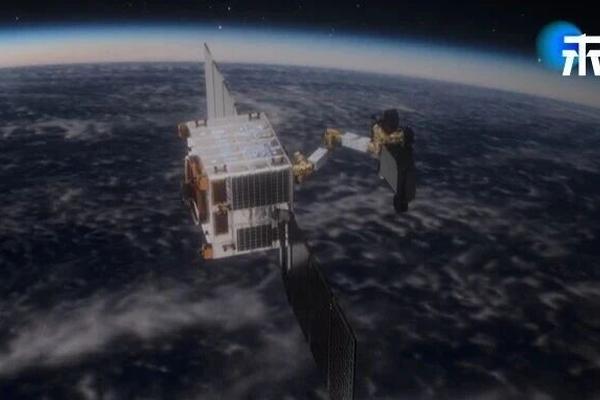
The startup plans to launch its core components into orbit for validation on a computing power satellite by the end of 2026. Following that milestone, the company intends to send the “Jinkong No.1” robot into orbit in mid-2027. That mission will test complex operational capabilities such as autonomous tool replacement and connector plugging and unplugging, paving the way for computing power satellite maintenance.
Commercial Aerospace Shifts Focus to Downstream Space Manufacturing
As launch costs decline, commercial aerospace competition is expanding beyond launch vehicles and constellation deployment into downstream applications. However, moving past experimental phases requires addressing a fundamental hurdle: future space factories cannot rely indefinitely on astronauts to handle every maintenance task or parts replacement.
Jinkong Technology views space manufacturing as evolving along a path from satellite maintenance to on-orbit experiments and eventually large-scale production. Robots are projected to develop from initial control capabilities toward human-in-the-loop coordination and fully integrated perception, decision-making, and execution. High-value spacecraft like computing power satellites require regular maintenance, making robotic on-orbit upgrading and parts replacement an immediate operational necessity.
Industrial Components and Ethernet Technology Lower Space Hardware Costs
Traditional aerospace hardware relies heavily on custom manufacturing, strict component screening, and extended development cycles that drive up costs. Jinkong Technology instead adapts mature industrial-grade components for space use through rigorous reliability design and environmental optimization. This approach uses existing industrial supply chains to lower costs while boosting standardization and iteration efficiency.
To handle heavy data traffic from multi-joint motion, position perception, and force feedback, the company incorporates Ethernet bus technology into its space robot control system. This high-speed communication architecture connects intelligent controllers, servo drives, and sensors. The setup supports complex motion control and multi-device data interaction, laying a reusable foundation for future space intelligent infrastructure.
Academic Roots and Industrial Collaboration for Complex Operations
Founder He Jun directs the Shanghai Aerospace Intelligent Manufacturing Service Platform. The founding team’s academic background covers research in the field of aerospace space robots.
The “Jinkong No.1” robot utilizes a modular design with standardized electromechanical interfaces to autonomously switch end tools. Jinkong Technology has partnered with dexterous hand enterprise Dexterous Intelligence to integrate tactile perception, front-end computing power, and operation models for complex space environments.