
Southwest Germany plant biodiversity hotspots are declining: study
Hotspots of diversity across southwest Germany are losing their diversity over time, according to an analysis published on October 27, 2026, in the journal Global Change Biology. Researchers from the Naturkundemuseum Stuttgart and the University of Hohenheim evaluated long-term flora data to track shifts in regional plant life driven by climate change and altered land use.
- Areas in southwest Germany that started with high plant diversity showed a clear trend toward declining richness over the fifty-year study period from 1970 to 2023.
- Researchers analyzed more than 2.5 million plant observations covering nearly 2,000 vascular plant species gathered by citizen scientists and professional botanists.
- The study reveals that total species counts can remain stable while a region still suffers a loss of ecological strategy and evolutionary diversity as specialized species vanish.
Fifty-Year Plant Mapping Data in Baden-Württemberg
The evaluation draws upon the Floristische Kartierung Baden-Württemberg, coordinated by the Naturkundemuseum Stuttgart, which stands as one of the oldest botanical mapping projects in Europe. Between 1970 and 2023, volunteer and professional botanists logged more than 2.5 million plant observations across the federal state. According to the joint press release issued by the Naturkundemuseum Stuttgart and the University of Hohenheim, the dataset captures shifts across roughly 2,000 vascular plant species. These long-term, comprehensive data also provide exemplary insights into the development of plant life across Germany and Central Europe.
The analysis revealed a distinct geographical pattern across the region. Regions such as the Swabian Alb and the Black Forest registered marked declines in characteristic flora and unique ecological features. Dr. Viktoria Ferenc, lead author of the study and a researcher at both the Naturkundemuseum Stuttgart and the University of Hohenheim, stated in the reports that evaluating whether biodiversity goes up or down overall misses the point because developments vary significantly by region and ecological dimension.
Evolutionary Diversity Shifts Despite Stable Species Counts
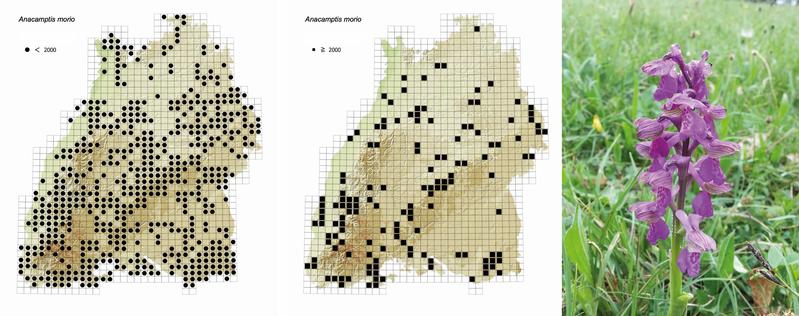
In addition to tracking raw species counts, the research team examined evolutionary lineage relationships and functional traits such as plant height, leaf characteristics, and seed size. The findings show that multiple dimensions of biodiversity do not always move in tandem. Certain habitats maintained steady overall species numbers while simultaneously losing distinct evolutionary lineages and specialized ecological strategies. Dr. Pierre Liancourt, a scientist at the Naturkundemuseum Stuttgart and co-author of the study, noted that nitrogen-tolerant, disturbance-adapted, and non-native plants frequently expand their ranges while habitat specialists, wetland species, orchids, and cold-tolerant plants recede.
Implications for Regional Conservation Strategies
The evaluation shows that local context is essential for biodiversity and effective nature conservation. The study emphasizes that it is not sufficient to simply protect as large a number of species as possible. Conservation measures must be tailored to the respective area and also take into account the ecological properties and evolutionary peculiarities of the plant species occurring there.
Disclaimer: The information provided in this article is for educational and scientific communication purposes only and does not constitute medical advice. Always consult with a qualified healthcare provider regarding any medical condition, diagnosis, or treatment plan.