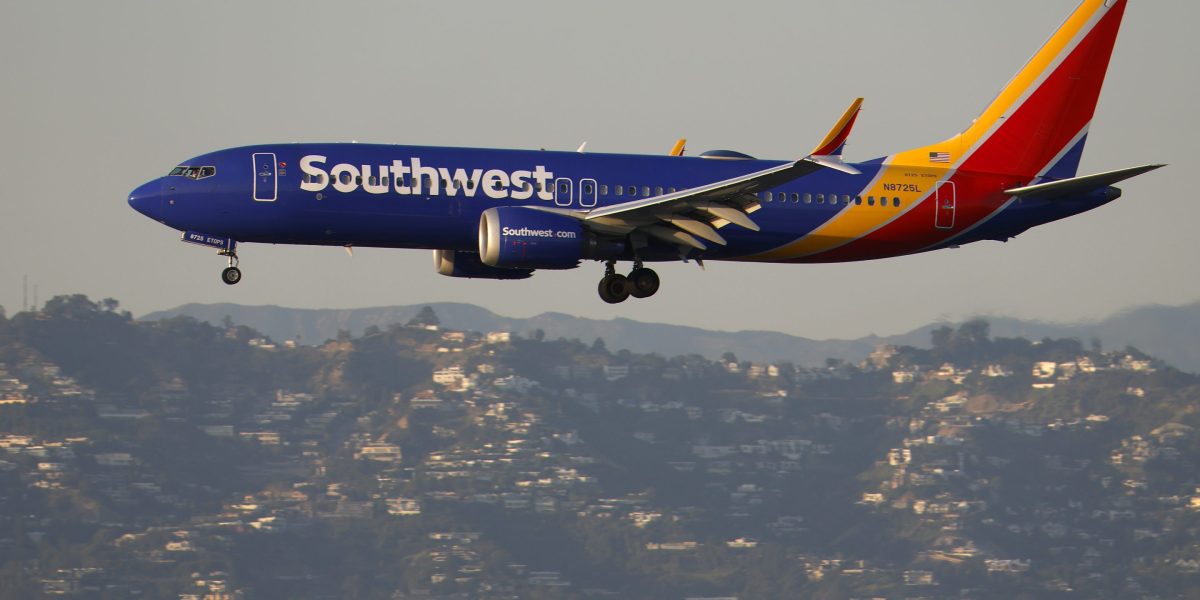
Southwest Airlines Misses Profit Estimates Amid Rising Fuel Costs and Unchanged Full-Year Guidance
Southwest Airlines Co. Missed adjusted EPS and revenue estimates for Q1 2026, reporting 45 cents per share on $7.25 billion in revenue amid soaring jet fuel costs tied to the ongoing US-Iran conflict, as the airline withholds full-year guidance while executing a revenue-per-passenger transformation strategy that includes premium seating and ancillary fee increases.
Fuel Volatility Triggers Guidance Withdrawal Across Major U.S. Carriers
Southwest’s Q1 adjusted EPS came in one cent below the Bloomberg consensus of 46 cents, with revenue falling $40 million short of the $7.29 billion average estimate. The Dallas-based carrier cited “achieving those results would require lower fuel prices mixed with stronger revenue performance” when declining to update its full-year 2026 adjusted EPS guidance of at least $4 a share. Jet fuel prices, a critical input representing approximately 25% of airline operating expenses, have surged over 30% year-to-date due to supply chain disruptions in the Persian Gulf, directly pressuring EBITDA margins across the sector. Southwest’s Q1 operating margin contracted to 8.2% from 9.1% in the prior-year period, according to its SEC Form 10-Q filed April 22, 2026, which also revealed a 12% increase in aircraft fuel expense to $1.81 billion despite a 1.8% decline in available seat miles.


“We are seeing a structural shift where legacy cost advantages are eroding faster than revenue initiatives can compensate, forcing airlines to become pure-play revenue optimizers or risk margin collapse.”
The guidance withdrawal aligns Southwest with Delta Air Lines and United Airlines Holdings, which have similarly suspended full-year forecasts, while Alaska Air Group revised its outlook downward. Analysts project Q2 adjusted EPS between 35 and 65 cents, with the midpoint of 50 cents falling below the 59-cent consensus, reflecting skepticism about near-term pricing power. Melius Research analyst Conor Cunningham warned that Southwest’s two domestic fare increases since January may accelerate demand destruction, noting the carrier’s reliance on price-sensitive leisure travelers makes it “the most exposed to elasticity risks among its peers.” This vulnerability is amplified by its lack of international diversified revenue streams, unlike Delta or United, which derive over 20% of premium cabin revenue from transatlantic routes.
Transformation Strategy Tests Revenue Resilience Against Elasticity Thresholds
Southwest’s ongoing corporate makeover—featuring premium seating, airport lounges, and checked baggage fee hikes—aims to lift revenue per available seat mile (RASM) by 4–6% annually through 2027. However, early indicators suggest diminishing returns: Q1 RASM rose just 2.1% year-over-year, well below the 3.5% needed to offset fuel-driven cost increases, per internal metrics disclosed during the earnings call. The airline’s ancillary revenue per passenger reached $28.50 in Q1, up 9% from $26.20 in Q1 2025, but remains significantly below industry leaders like Allegiant Travel ($41.30) and Frontier Group Holdings ($38.70), highlighting a monetization gap. Meanwhile, fuel hedging coverage for Q2 2026 stands at only 45%, down from 65% at the end of 2025, leaving Southwest increasingly exposed to spot market volatility—a risk mitigated by competitors like American Airlines Group, which maintains over 70% hedged exposure through 2026.
This environment is driving demand for specialized B2B services that help airlines navigate commodity risk and revenue optimization. Carriers are increasingly consulting with commodity risk management advisors to restructure hedging programs and with airline revenue management consulting firms to dynamically adjust pricing models without triggering demand suppression. Firms seeking to renegotiate aircraft leases or secure alternative financing amid margin pressure are turning to aviation-focused corporate restructuring lawyers to modify covenants and extend liquidity runways.
Analyst Scrutiny Intensifies Ahead of Earnings Call on Pricing Leverage
Analysts are expected to press Southwest executives on Thursday’s earnings call regarding the sustainability of fare increases amid softening discretionary travel demand, particularly as consumer confidence indices show a 7-point decline in travel intent since February. The airline’s load factor held steady at 82.4% in Q1, down just 0.3% from the prior year, suggesting early resistance to higher fares may be limited—but unit revenue (RASM) growth remains inadequate to counterbalance cascading cost pressures. Institutional investors are also questioning the timing of Southwest’s transformation investments, noting that capital expenditures rose 18% year-over-year to $620 million in Q1, largely driven by cabin retrofits and lounge builds, while free cash flow turned negative at -$180 million due to elevated working capital outflows tied to higher fuel inventory costs.

“The market is pricing in a prolonged period of fuel-driven margin compression; airlines that fail to pair hedging discipline with dynamic pricing engines will see their valuations rerate downward regardless of operational execution.”
With the US-Iran conflict showing no signs of de-escalation and global jet fuel cracks trading at historic premiums to crude, the near-term outlook for U.S. Carriers remains tethered to volatile energy markets. Southwest’s ability to execute its revenue transformation without triggering demand elasticity will determine whether it can stabilize margins or join peers in prolonged guidance uncertainty. For enterprises navigating similar commodity-driven margin pressures, the World Today News Directory offers access to vetted providers in energy risk management, corporate turnaround advisory, and sector-specific financial modeling—essential partners for building resilience in an era of persistent macroeconomic volatility.