
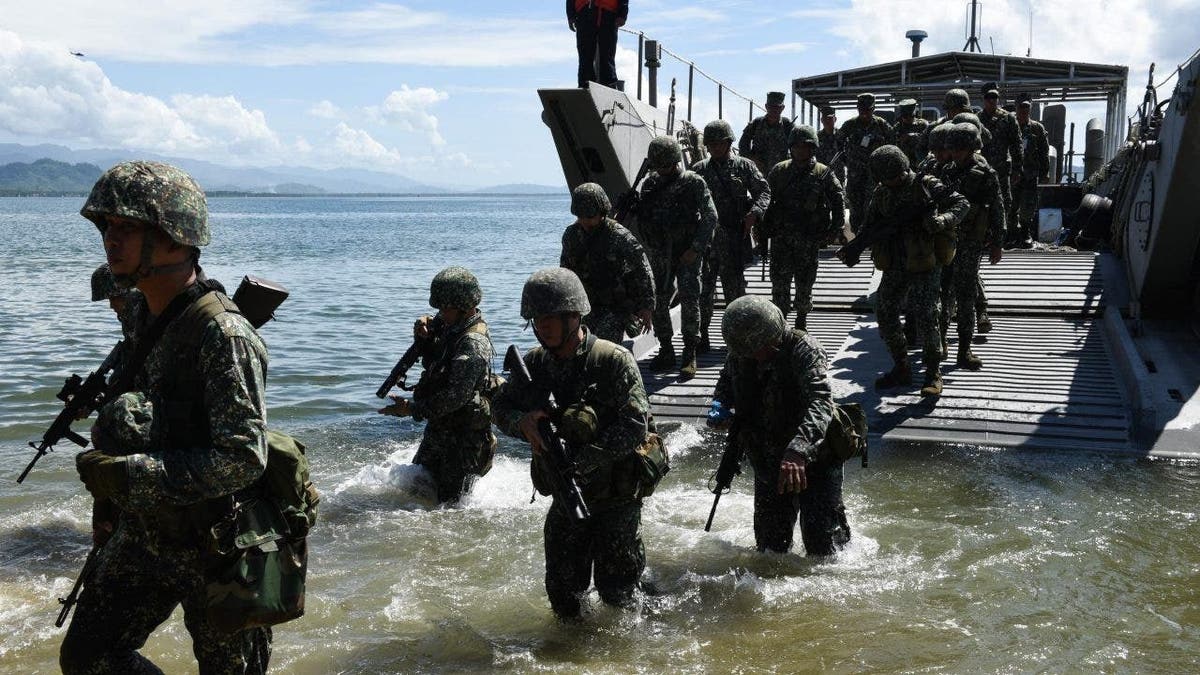
Southern Theater Command Warns Philippines Against Joint Patrols in South China Sea
On April 13, 2026, the spokesperson for China’s Southern Theater Command condemned the Philippines for organizing “joint patrols” with external powers in the South China Sea. Beijing asserts these maneuvers destabilize regional peace, escalating tensions over disputed maritime territories and challenging China’s claims of sovereignty in the region.
This isn’t just a diplomatic spat; We see a calculated escalation in a geopolitical chess match that threatens the primary artery of global trade. When the Southern Theater Command issues these warnings, they are signaling a readiness to shift from rhetoric to kinetic action. For the businesses and residents in Southeast Asia, this creates a climate of extreme volatility.
The core problem here is the erosion of predictability. Shipping lanes are the lifelines of the global economy, and any perceived instability in the South China Sea triggers immediate spikes in insurance premiums and logistical delays. For corporations operating in Manila, Hanoi, or Singapore, the risk is no longer theoretical—it is operational.
The Strategic Calculus of Joint Patrols
The Philippines has shifted its strategy from quiet diplomacy to “transparency operations,” actively inviting the United States, Japan, and Australia to patrol waters that China considers its own. By internationalizing the dispute, Manila aims to create a collective security shield. However, Beijing views this as a provocative “encirclement” strategy.
Historically, the South China Sea has been a flashpoint of “gray zone” warfare—actions that stop just short of open conflict but steadily change the facts on the ground. The use of coast guard vessels to ram ships or deploy water cannons is a tactic designed to wear down the resolve of smaller nations without triggering a full-scale military response from the U.S. Under the Mutual Defense Treaty.
“The current trajectory suggests we are moving away from a rules-based order toward a ‘might-makes-right’ maritime regime. The danger is that a single tactical miscalculation by a ship captain could trigger a strategic catastrophe.”
This quote from Dr. Aris Mendoza, a senior fellow at the Asia-Pacific Security Institute, highlights the fragility of the current peace. When the Southern Theater Command speaks, they are speaking to a domestic audience as much as an international one, asserting a narrative of national strength and territorial integrity.
The economic fallout is concentrated in the logistics and insurance sectors. As tensions rise, companies must seek international maritime law firms to navigate the complex overlapping claims and ensure their contracts account for “force majeure” events caused by geopolitical conflict.
Regional Impact: From Manila to the Mekong
The tension is not limited to the open sea. It filters down into municipal laws and regional economic policies. In the Philippines, the government is increasingly pivoting its infrastructure investments toward defense and surveillance, potentially diverting funds from urban development.
In the broader ASEAN context, the pressure to “choose a side” is creating internal fractures. Nations like Vietnam and Malaysia discover themselves in a precarious position, balancing their economic reliance on China with their own territorial claims. This instability makes it harder for regional businesses to secure long-term investments.
To understand the scale of the risk, consider the following breakdown of the strategic interests at play:
| Entity | Primary Objective | Risk Factor |
|---|---|---|
| China (Southern Theater Command) | Regional Hegemony & Territorial Control | International Isolation & Sanctions |
| Philippines | Sovereignty & Resource Access | Economic Retaliation from Beijing |
| USA / Allies | Freedom of Navigation (FONOPs) | Direct Military Confrontation |
| ASEAN Nations | Economic Stability & Neutrality | Collateral Damage in Trade Disruptions |
The “Information Gap” here lies in the invisibility of the economic ripple effect. While headlines focus on warships, the real damage occurs in the boardroom. Companies are now auditing their supply chains to remove dependencies on “high-risk” maritime corridors. This shift is driving a surge in demand for strategic risk management consultants who can map out alternative trade routes that bypass the South China Sea entirely.
The Long-Term Implications for Global Trade
If this trend continues, we are looking at a permanent state of “high-alert” in the region. This isn’t a temporary flare-up; it is the new normal. The reliance on AP News and other global monitors reveals a pattern of increasing frequency in these “joint patrols” and the corresponding Chinese condemnations.
The legal framework governing these waters, primarily the United Nations Convention on the Law of the Sea (UNCLOS), is being tested to its breaking point. When a superpower ignores an international tribunal’s ruling—as China did regarding the 2016 Permanent Court of Arbitration award—the “law” becomes a suggestion rather than a mandate.
For those managing assets in the region, the priority must be resilience. Which means diversifying ports of entry and securing the services of global supply chain auditors to ensure that a sudden blockade or “exercise” in the South China Sea doesn’t bankrupt their operations overnight.
The geopolitical tension is also affecting local governance. Municipalities in coastal provinces are being forced to integrate national security concerns into their local zoning and port management laws, creating a layer of bureaucracy that slows down commercial growth.
“We are seeing a militarization of commerce. Every port expansion and every new shipping lane is now viewed through the lens of strategic denial. The civilian economy is becoming a subset of the military strategy.”
This observation from Elena Rossi, a trade analyst specializing in Indo-Pacific markets, underscores the gravity of the Southern Theater Command’s rhetoric. The “joint patrols” are not just about sailing ships; they are about defining who owns the future of the Pacific.
The warnings from Beijing are a reminder that the peace we enjoy in global trade is often a thin veneer. As the South China Sea becomes a theater for power projection, the gap between diplomatic rhetoric and military reality narrows. Those who wait for the “dust to settle” before securing their legal and operational flanks will find themselves adrift. In an era of strategic volatility, the only true security is found in preparation. Whether you are a corporate executive or a regional policymaker, finding verified, expert global advisory services is no longer a luxury—it is a necessity for survival in a fragmented world.