Southeast Asia Rice Farmers Struggle With Unpredictable Weather, Prices May Rise
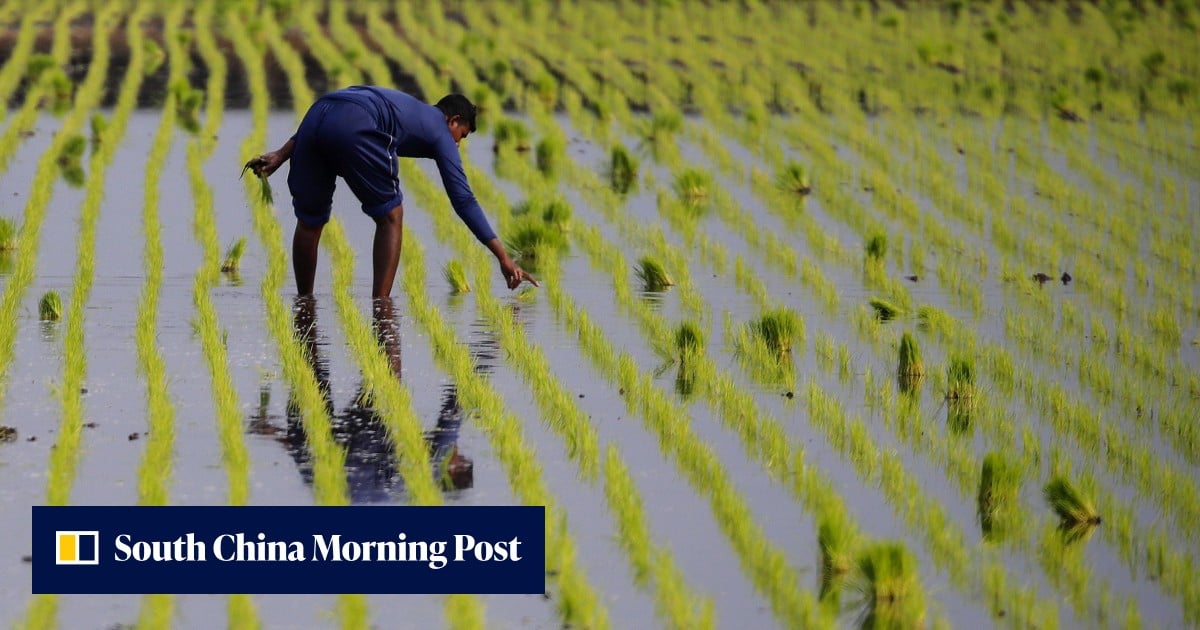
Rice farmers in Southeast Asia are struggling with unpredictable weather, threatening regional supplies and pushing import prices toward two-year highs.
Malaysia, which relies on imports for roughly half its rice, faces particular risk as global exporters grapple with falling yields.
In the Malaysian town of Sekinchan, Andrew Lim, who operates a rice mill, reported that farmers are harvesting only four to five tonnes of unmilled rice per season, down from 10 tonnes two years ago. “We cannot make money. We lost a lot,” Lim said.
Farmers in the region are struggling to align planting schedules with traditional weather patterns that have become increasingly erratic. In Sekinchan, transplanting dates have been moved forward by nearly three weeks over the last two years. “We understand the rain cycles, and when the transplanting schedule is moved, we are unable to predict because these are important factors for the paddy flowers that are sensitive to these changes,” Lim said.
Rising production costs are compounding these losses. The price of a 50kg bag of imported fertiliser has climbed 30 to 45 per cent to 210 ringgit (US$51). Pua, a local farmer, said his 1.6-acre field now yields only half of what it produced a decade ago. “We’re at a loss now. Costs are increasing, but harvest is declining,” he said.
Thailand and Vietnam, which provided 52 per cent of Malaysia’s rice imports last year, are seeing their own production hampered by drought and flooding, according to data from the International Rice Research Institute. Vietnam’s paddy harvest for the first 10 months of 2026 reached nearly 37 million tonnes, a 2 per cent decline compared to the same period in 2025.
| Country | Rice Grade | Price (per tonne) | Comparison |
|---|---|---|---|
| Thailand | 5% broken | US$505–US$510 | Highest since Dec 2024 |
| Vietnam | 5% broken | US$475–US$482 | – |
Alisher Mirzabaev, a senior scientist at the International Rice Research Institute, said that Vietnam faces additional threats from saltwater intrusion in the Mekong Delta. “When river flows fall, saltwater can reach irrigation intakes just when farmers need fresh water for flowering rice,” Mirzabaev said.
Muhamad Shakirin Mispan, an associate professor at the University of Malaya, warned that high temperatures during flowering can result in more empty grains, while heat stress during grain-filling stages reduces quality. “What concerns me the most is the increasing unpredictability of these weather patterns. Farmers can no longer rely entirely on conventional planting calendars,” he said.
Malaysia’s self-sufficiency ratio dropped to 52.9 per cent in 2024, down from 56.2 per cent in 2023. While the country maintains a six-month supply, the United Nations Food and Agriculture Organization projects 2026 production at 2.1 million tonnes, remaining below the five-year average.
“Prices could continue rising if El Nino leads to more severe weather disruptions with lower rice production,” Mirzabaev said.