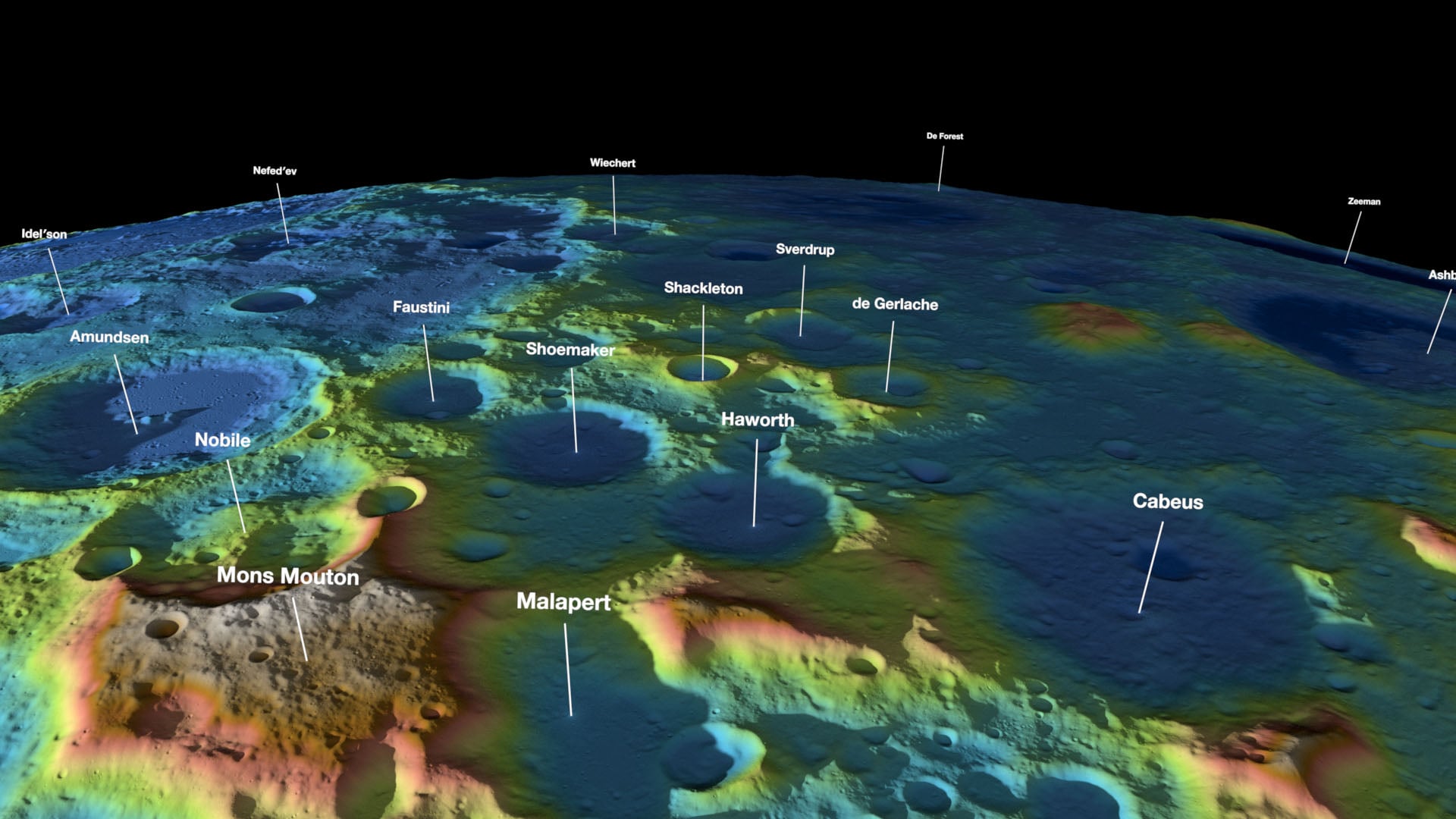
South Pole-Aitken Basin Age Revealed by Chinese Moon Samples
Chinese lunar samples from the Moon’s far side have confirmed the largest impact basin formed 4.34 billion years ago, resolving a long-standing scientific debate.
- South Pole-Aitken basin formed 4.34 billion years ago.
- Chang’e-6 mission returned first samples from lunar far side.
- Rocks reveal a gradual decline in asteroid impacts, not a single catastrophic event.
The South Pole-Aitken basin, a massive 2,200-kilometer-wide crater, was created by an ancient collision that broke the Moon’s crust and exposed rock from its interior, Universe Today reported. The crater reaches 10 kilometers deep, deeper than any comparable land-based feature on Earth. For years, scientists debated the basin’s age, with estimates ranging from 4.35 billion to 4.2 billion years old.
Using samples from China’s Chang’e-6 mission and data from Chang’e-4, an international research team has now established a precise timeline. The SPA basin originated approximately 4.34 billion years ago, with the Apollo basin developing around 4.2 billion years ago and the Orientale basin emerging about 3.87 billion years ago, Phys.org reported.
A Chinese research team has discovered that the volatile loss from the lunar mantle was induced by the giant impact that formed the South Pole-Aitken (SPA) basin in the moon's far side, upon examining the isotopic compositions of potassium (K) in Chang'e-6 lunar basalts collected… pic.twitter.com/UBQvHtxQkl
The research, published in Science Advances, analyzed two types of magnesium-rich rocks found in the region. Over millions of years, the minerals in this lava lake separated into layers.
The other type, which held even higher levels of magnesium, formed through a process called magnesium-suite magmatism. When the SPA impact broke the Moon’s crust, magma from the liquid interior broke into the crust and cooled underneath the top layer.
Later, the impact that created the Apollo basin pushed those cooled materials up into its western peak ring, and then the impact that created the Chaffee S crater blasted pieces of rock into the plains where Chang’e-6 collected them.

These findings challenge the long-held theory of a “Late Heavy Bombardment,” a single period of intense asteroid impacts, ScienceDaily reported. Instead, evidence from the lunar rocks suggests the frequency of collisions decreased gradually over billions of years.
“These samples are helping us rewrite parts of the Moon’s history and suggest the early Solar System experienced a long decline in asteroid impacts rather than a single catastrophic bombardment,” said a researcher in the study.
Dr. Frédéric Jourdan told ScienceDaily, “The Moon offers a rare opportunity to investigate this distant past… the far side preserves a cleaner record of those earliest impacts because it was much less affected by later geological events than the side facing Earth.”
Understanding Earth's early development requires reconstructing the Moon's bombardment history. “The Moon and Earth share a common history, but the evidence of early impacts has largely disappeared from our planet,” Jourdan said.
The research was spearheaded by geologists from the University of Hong Kong and the State Key Laboratory of Deep Earth Processes and Resources at the Guangzhou Institute of Geochemistry, Chinese Academy of Sciences. Yuqi Qian, the first author of the study.
Impacts shaped the lunar surface
The area contains several smaller craters that overlap the main basin.
Eventually, the Finsen impact sent fragments of the cooled lava lake into the Von Kármán crater, where Chang’e-4 later discovered them.
Research addresses lunar mysteries
Phys.org reports that investigating this basin may help explain why the near and far sides of the Moon differ so much and what exists beneath the surface.
The main crater is not the only feature in the area. “By analyzing these ancient rocks, we can better understand when major asteroid impacts occurred and how the early Solar System evolved,” one researcher said.