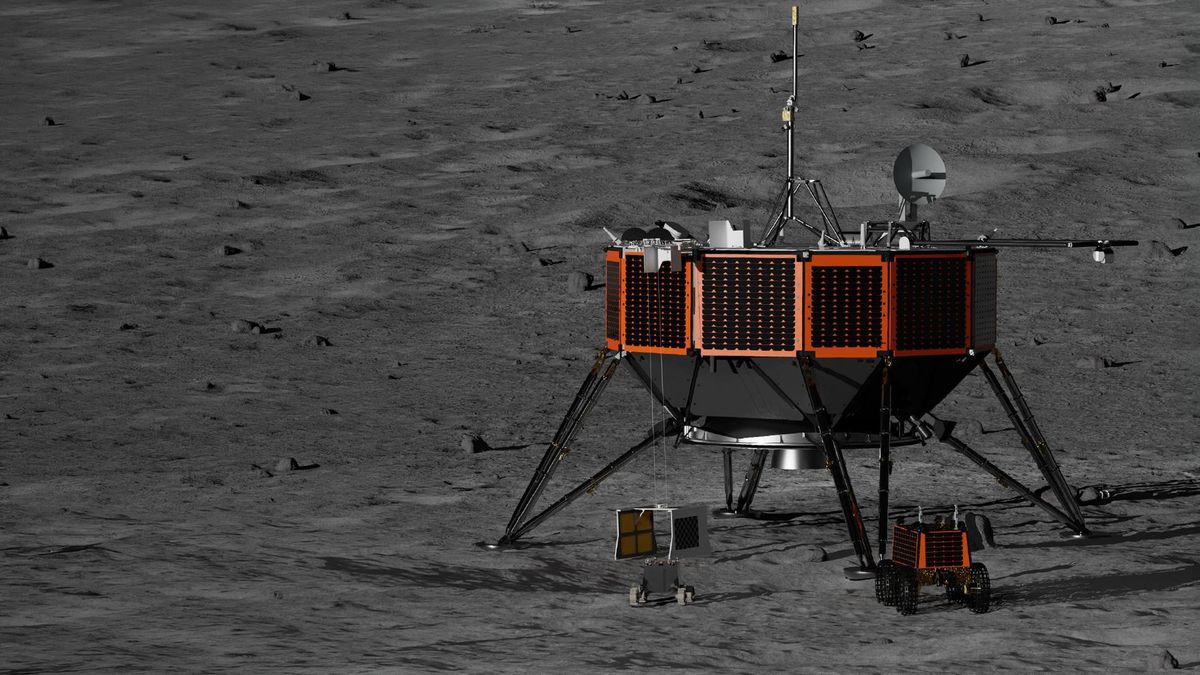
South Korea to Complete Development of Lunar Radiation Detector by Next Year
South Korean researchers are finalizing the development of a lunar surface cosmic radiation detector, with completion scheduled for 2026. This hardware is designed to measure ionizing radiation levels on the Moon, a critical step for assessing the long-term health risks posed to astronauts during extended lunar missions. The project is led by the Korea Institute of Geoscience and Mineral Resources (KIGAM) in collaboration with domestic aerospace partners.
Key Clinical Takeaways:
- The radiation monitor provides real-time data on lunar surface exposure, enabling the calculation of cumulative biological dose rates for mission planning.
- Monitoring ionizing radiation is essential to mitigate risks of acute radiation syndrome and long-term stochastic effects such as carcinogenesis.
- The project represents a shift toward domestic autonomy in space-health instrumentation, reducing reliance on international diagnostic hardware for deep-space missions.
Biological Impact of Lunar Ionizing Radiation
Space-bound crew members face unique radiological environments characterized by galactic cosmic rays (GCRs) and solar particle events (SPEs). Unlike Earth, the Moon lacks a magnetosphere and atmosphere to attenuate these high-energy particles. According to the World Health Organization (WHO), exposure to ionizing radiation can induce DNA double-strand breaks, leading to cellular mutation, tissue damage, and increased risk of malignant neoplasms.
The instrumentation under development by the Korean team aims to quantify the secondary radiation produced when primary cosmic rays interact with lunar regolith. This “albedo” radiation is a known variable in space medicine. Clinical researchers emphasize that understanding the specific energy spectra is vital for designing effective shielding protocols. For organizations or research groups currently evaluating occupational exposure limits for space personnel, consulting with specialized radiation oncology centers or aerospace medicine consultants is recommended to align with current international safety standards.
Technological Development and Funding Transparency
The development of this detector is supported by national aerospace technology funding, aiming to integrate local sensor technology into upcoming lunar lander missions. By localizing the production of high-precision radiation monitors, South Korea seeks to establish a standardized diagnostic capability that meets the rigorous requirements set by international space agencies. The project transitioned from the conceptual design phase to hardware prototyping over the last two years, with rigorous testing for vacuum and thermal stability currently underway.
The device utilizes high-sensitivity semiconductor detectors to capture particle flux. This data is critical for predictive modeling of radiation-induced morbidity. “The ability to accurately characterize the lunar radiation environment is not merely a technical milestone; it is a clinical necessity for human physiology in deep space,” notes Dr. Sarah Jenkins, an independent researcher in space radiobiology. “Without such localized, high-fidelity data, the uncertainty in calculating cancer risk remains a significant barrier to sustained lunar presence.”
Clinical Triage and Future Trajectory
As the 2026 completion date approaches, the integration of these detectors into lunar payloads will likely refine the medical risk assessments used by flight surgeons. Effective management of astronaut health requires a proactive approach to monitoring long-term environmental exposure. Healthcare providers and medical diagnostic facilities interested in the application of these sensing technologies for terrestrial or aerospace health applications should engage with vetted medical technology compliance experts to navigate the complex regulatory environment surrounding clinical-grade diagnostic hardware.
The future of deep-space exploration relies on the marriage of aerospace engineering and clinical pathology. By bridging the gap between hardware development and physiological monitoring, the current initiative provides a blueprint for managing the biological challenges of long-duration spaceflight. As data becomes available from these monitors, it will be integrated into international databases, facilitating a more robust understanding of the dose-response relationship in extraterrestrial environments.
Disclaimer: The information provided in this article is for educational and scientific communication purposes only and does not constitute medical advice. Always consult with a qualified healthcare provider regarding any medical condition, diagnosis, or treatment plan.
Worth a look
- Experimental Drug Helps Obese Mice Burn Fat Without Losing Muscle
- Biological Skin Age and the Role of Peptides in Regenerative Medicine
- South Korea Dispatches First Commercial Container Ship Through Arctic Northern Sea Route (newsdirectory3.com)
- Thymus Radiation Linked to Worse Lung Cancer Survival, Study Finds (newsy-today.com)