
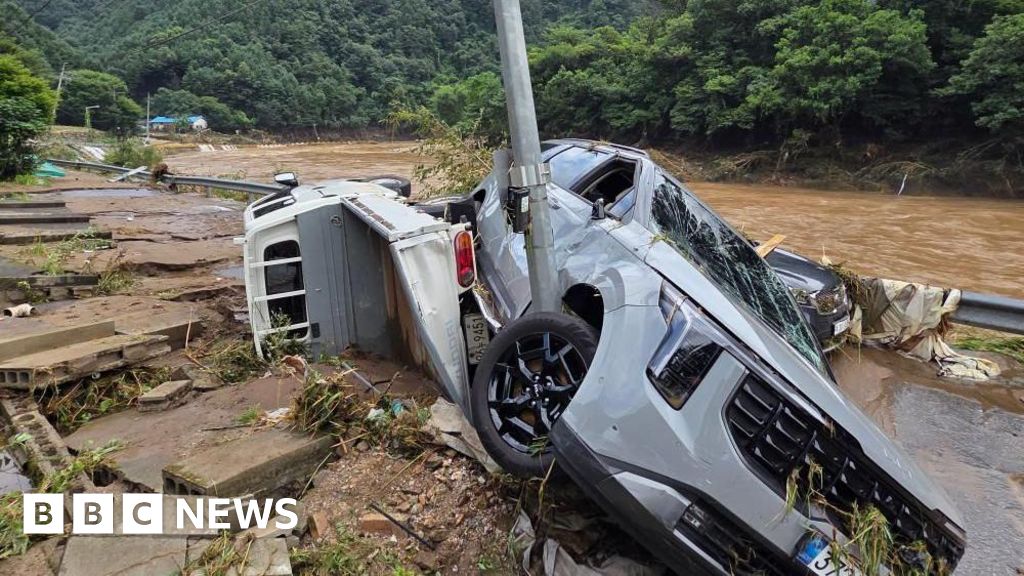
South Korea Reels as Floods and Landslides Claim 14 Lives
Death Toll Feared to Rise Amidst Widespread Devastation
Torrential downpours have ravaged South Korea, leaving at least 14 people dead and 12 missing as relentless rain triggered devastating floods and landslides. Emergency rescue operations are ongoing, with fears the casualty count will escalate.
Villages Engulfed, Evacuations Underway
The central Chungcheong region witnessed an entire village buried under earth and debris following a massive landslide on Saturday. Meanwhile, in the landslide-hit resort town of Gapyeong, residents were seen navigating thick mud and a damaged bridge to reach safety on Sunday. Further south, Sancheong reported six fatalities and seven missing individuals, highlighting the extensive impact across the nation.
Infrastructure Crippled, Power Outages Widespread
Thousands of roads and buildings have succumbed to raging floodwaters, with significant damage also reported to farmland. The widespread destruction has led to the loss of livestock. Nearly 10,000 people have been compelled to evacuate their homes since Wednesday, and over 41,000 households have experienced temporary power disruptions.
Government Declares Disaster Zones, Mobilizes Resources
President Lee Jae-myung has declared the most severely affected areas as special disaster zones. The government has initiated a multi-agency recovery effort, with Interior Minister Yun Ho-jung urging local authorities to deploy all available resources swiftly. A separate landslide in northern Gapyeong County claimed two lives when several properties were inundated with mud.
Rain Shifts North, Heatwave Looms
While the heaviest rain has begun to subside in the southern and central regions, the downpour has moved northward, with Seoul and northern areas bracing for continued heavy rain on Sunday. The deluge is expected to cease late Sunday, making way for an intense heatwave. According to the BBC, South Korea’s monsoon season typically lasts from late June to late August, often bringing significant rainfall and the risk of landslides.
The scale of the disaster underscores the vulnerability of communities to extreme weather events exacerbated by climate change.
