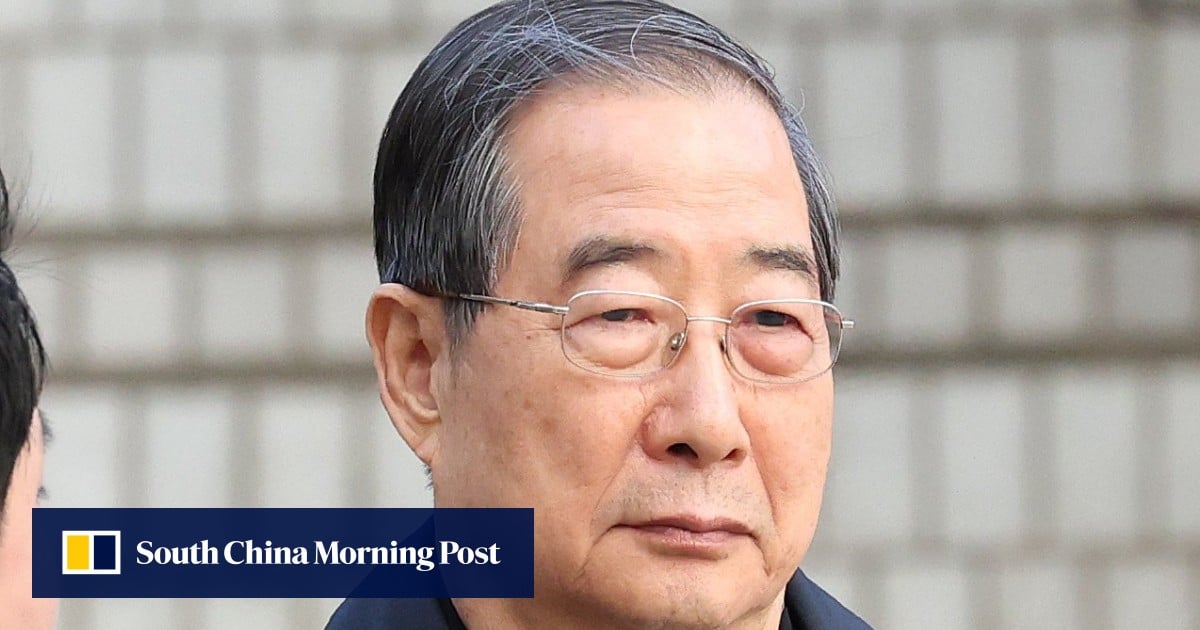
South Korea Court Reduces Former PM Han Duck-soo’s Sentence Over Martial Law
On May 7, 2026, a South Korean appeals court reduced former Prime Minister Han Duck-soo’s prison sentence from 23 to 15 years. Han was convicted of aiding and abetting former President Yoon Suk-yeol’s brief, illegal December 2024 martial law declaration, which the court classified as an act of insurrection.
This isn’t just a win for a former politician’s legal team; This proves a signal of how the South Korean judiciary is grappling with the boundaries of executive power. When the Seoul High Court handed down this reduced sentence, it didn’t erase the crime. It simply recalibrated the penalty for a man who stood at the center of a six-hour window that nearly dismantled civilian rule in one of Asia’s most vibrant democracies.
The chaos of December 2024 remains a raw nerve in Seoul. The brief imposition of martial law was a shock to the system, a sudden suspension of the normal order that plunged the capital into uncertainty. Although opposition lawmakers acted with surgical speed to overturn the decree, the legal fallout has been slow, grinding, and profoundly complex.
The Legal Pivot: From 23 Years to 15
The transition from the lower court’s January sentencing to this May appeals ruling reflects a nuanced shift in how the judiciary views “aiding and abetting” in the context of a state-level insurrection. In January, the court had leaned toward a heavier-than-expected penalty, signaling a desire to make an example of those who facilitated the crisis. However, the Seoul High Court has now opted for a sentence that, while still severe, acknowledges a different tier of culpability.

The core of the conviction remains: Han Duck-soo played a key role in an insurrection. By facilitating the declaration of martial law, he didn’t just follow orders; he provided the administrative and political machinery necessary for the decree to take effect. In the eyes of the law, this was not a routine bureaucratic action but a criminal contribution to the overthrow of civilian governance.
Navigating these high-stakes criminal appeals requires a level of expertise that goes beyond standard litigation. For public figures facing charges of this magnitude, the difference between a two-decade sentence and a fifteen-year term often comes down to the ability of specialized constitutional law firms to argue the specific intent and degree of influence a defendant held over the primary decision-maker.
“The reduction in sentencing does not diminish the gravity of the act. An insurrection is an attack on the very architecture of the state, and any official who lends their hand to such a venture must face a penalty that reflects the betrayal of their public oath.”
Breaking Down the Insurrection Charge
To understand why this case is so volatile, one must look at the specific legal framework of South Korean law regarding the state. An “insurrection” charge is not a mere political label; it is a heavy criminal designation that implies an attempt to subvert the constitutional order.
- The Act: The declaration of martial law in December 2024, which briefly suspended civilian rule.
- The Role: Aiding and abetting. This means Han was not the architect (the President was), but he was an essential gear in the machine.
- The Outcome: The rapid reversal by lawmakers prevented a full-scale collapse, but the legal “attempt” was completed the moment the decree was issued.
This case highlights a recurring tension in South Korean politics: the struggle between the presidency’s perceived emergency powers and the legislature’s role as a check on that power. The 2024 crisis was a stress test for the Constitution of the Republic of Korea, and the resulting trials are the cleanup operation.
For those observing the fallout, the legal complexity is staggering. When the state itself becomes the defendant, the traditional legal playbook is thrown out. Local governments and municipal bodies are often left in a vacuum of leadership during such crises, necessitating the intervention of democratic oversight agencies to ensure that local administration doesn’t collapse alongside the national executive.
The Democratic Ripple Effect
The sentencing of Han Duck-soo sends a ripple through the halls of power in Seoul. It establishes a precedent that “following orders” is an insufficient defense when those orders violate the fundamental tenets of the constitution. Yet, the reduction of the sentence also suggests a judicial hesitancy to impose maximum penalties on the entire executive cabinet, perhaps fearing a total destabilization of the administrative memory of the state.
The geopolitical implications are equally significant. South Korea’s stability is a cornerstone of security in East Asia. A judiciary that can transparently punish high-ranking officials—even if the sentences are reduced on appeal—demonstrates a resilience that protects foreign investment and diplomatic trust. When the rule of law is applied to the Prime Minister, it reinforces the idea that no one is above the court.
The process of rebuilding public trust after such a breach is not handled by courts alone. It requires a systemic overhaul of how emergency powers are triggered. Many are now looking toward government ethics advisors to draft new protocols that prevent a single individual from unilaterally suspending civilian rule without immediate, ironclad legislative triggers.
Timeline of the Crisis and Legal Response
| Date | Event | Legal Significance |
|---|---|---|
| December 2024 | Martial Law Declared | Initial act of insurrection; suspension of civilian rule. |
| January 2026 | Lower Court Sentencing | Han Duck-soo sentenced to 23 years in prison. |
| May 7, 2026 | Appeals Court Ruling | Sentence reduced to 15 years; conviction upheld. |
This timeline reveals a judicial system moving with deliberation. The eight-year reduction is significant, but the 15-year term remains a crushing blow to Han’s legacy and his freedom. It serves as a stark reminder that the window between a “brief” imposition of power and a lifelong prison sentence is incredibly narrow.

As the legal proceedings continue for other figures involved in the December 2024 events, the world is watching to see if the Seoul High Court will maintain this trend of calibrated sentencing or if the pendulum will swing back toward the severity seen in January. The ultimate goal is not just punishment, but the restoration of a democratic equilibrium that can withstand the impulses of a single leader.
The tragedy of this case is the realization that the machinery of government can be turned against the people it is meant to serve. While the courts provide the punishment, the real cure lies in the strength of the institutions that survive the storm. Whether you are a corporate entity navigating the resulting regulatory shifts or a citizen seeking transparency, finding verified legal experts who understand the intersection of criminal law and constitutional crisis is the only way to ensure stability in an era of unpredictability.