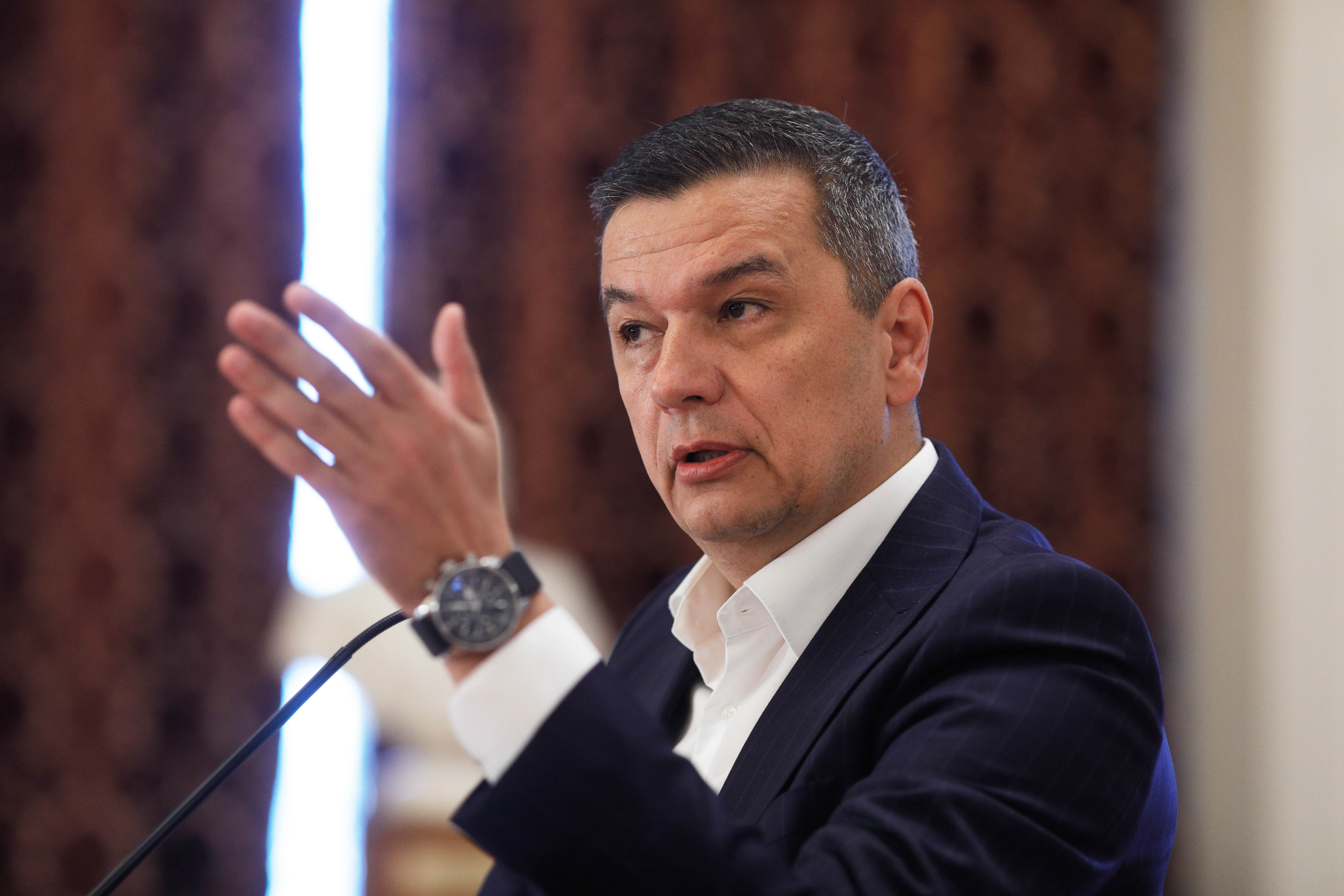
Sorin Grindeanu rejects technocratic executive and warns of deficits
Social Democratic Party leader Sorin Grindeanu rejected the concept of a technocratic executive for Romania, warning that an unbacked administration could see a budget enter with a deficit of 5.8% and exit with 8.5% amid ongoing political friction.
Grindeanu Warns Technocratic Budgets Risk Ballooning Deficits
The PSD leader argued that the first major hurdle for such an executive would be passing a budget without political ownership, leading to widespread amendments and a ballooning deficit. Liderul PSD pointed out that during this spring there was a blockage on the 2026 budget here in Parliament when Ilie Bolojan refused to include the social solidarity package requested by the party, valued at 1.7 billion lei. Grindeanu also noted that a technocratic executive would have to present a budget to Parliament rapidly without possessing the necessary political support to assume responsibility for it.
In parallel, political analyst George Jiglău explained that Grindeanu’s broader strategy aims to alter the internal power dynamics of the National Liberal Party while establishing the conditions for social-democrats to re-enter governance. Jiglău noted that the primary target of PSD’s recent maneuvers has been the faction led by Ilie Bolojan rather than cutting the liberals out of the equation entirely. Jiglău added that the PSD would have preferred for the liberals to distance themselves from Bolojan and return to a coalition with the social-democrats in the exact formula that functioned during the Nicolae Ciucă and Marcel Ciolacu period.

Social Media Exchanges Over Economic Pressures
The public disagreement between Grindeanu and Bolojan continued through a series of statements posted to Facebook. Grindeanu argued that public dissatisfaction with the direction of the country is not an invention of the PSD, pointing to rising prices, stagnant wages, and struggling businesses. Grindeanu previously declared on Thursday evening at Antena 3 CNN that he does not support forming a minority social-democratic government, considering such a formula would place the party in a vulnerable position, though he stated then that the party would vote for a minority government formed by the PNL and UDMR — a declared availability that represents a major discursive shift given that social-democrats did not support the governmental formula attempted by Mureșan.
In response, Ilie Bolojan maintained that the refusal of the PNL to form a coalition with the PSD is based on past lessons rather than petty politics. Bolojan asserted that the PSD seeks partners primarily to shift blame when blocking necessary solutions or protecting public resources, including through the use of public resources.
Niculescu and Grindeanu Seek Stable Legislative Backing
Designated Prime Minister Luca Niculescu acknowledged the ongoing friction, noting that while negotiations remain active, Bolojan has maintained a firm stance. Niculescu emphasized his preference for a solid legislative backing for the future government while recognizing that alternative options remain on the table.
Grindeanu reiterated that the PSD remains open to rebuilding a stable majority alongside the PNL and the Democratic Alliance of Hungarians in Romania, or UDMR, provided there is a genuine change in economic direction and a transparent governing program. Meanwhile, the political impasse continues as parties weigh the viability of minority versus coalition setups ahead of upcoming legislative sessions.
