
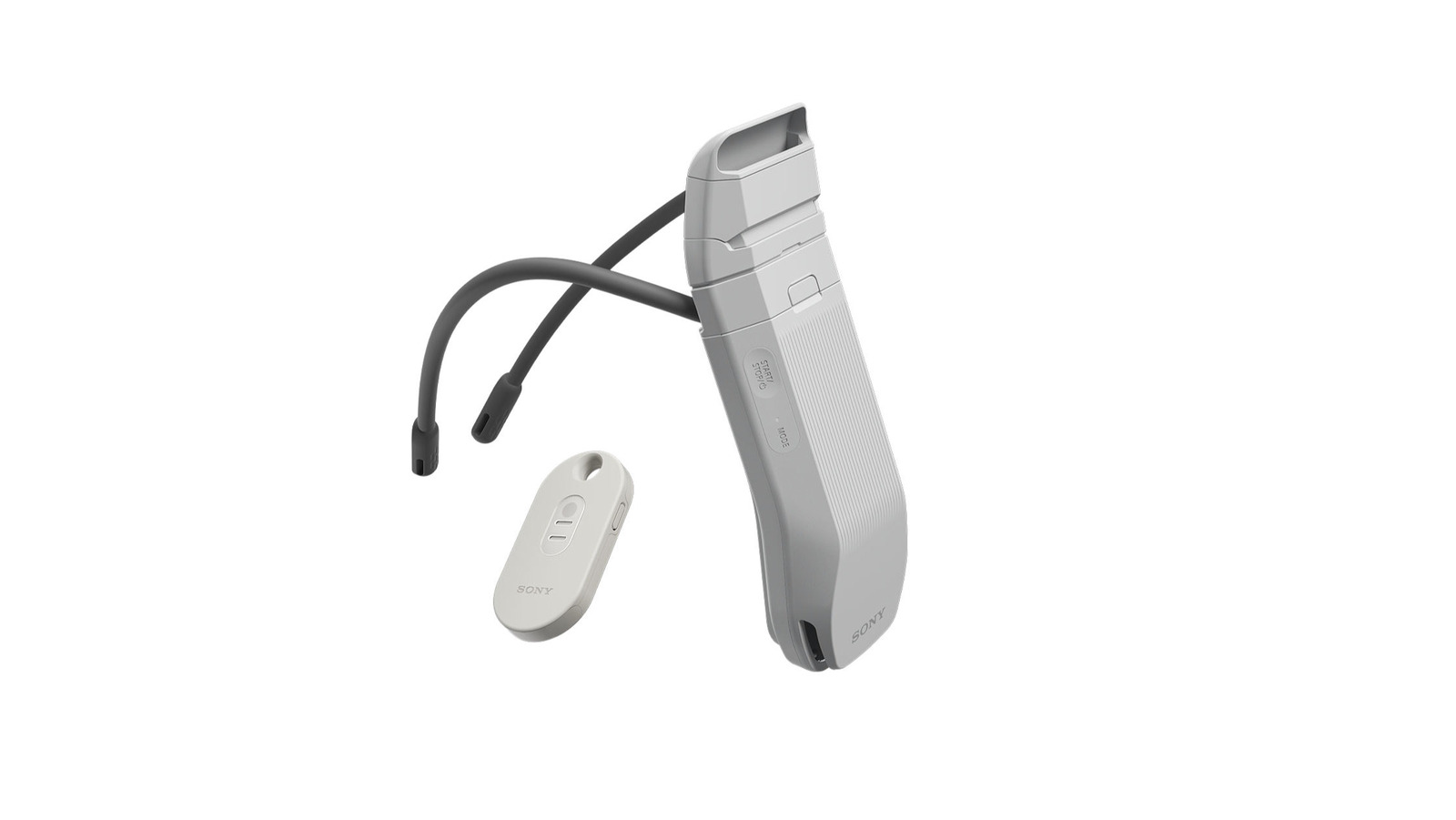
Sony Reon Pocket Pro Plus: The New and Cooler Wearable Air Conditioner
Sony is doubling down on the niche market of personal thermal management with the release of the REON POCKET PRO Plus. While the consumer press is focusing on the “cool factor,” from an engineering perspective, this is a study in the brutal physics of thermoelectric cooling (TEC) and the struggle to manage heat dissipation in a form factor that must remain wearable.
The Tech TL;DR:
- Hardware Iteration: The REON POCKET PRO Plus launches May 12, emphasizing improved thermal throughput and a redesigned chassis for tighter neck contact.
- The Engineering Hurdle: Success depends entirely on the efficiency of the Peltier junction and the device’s ability to exhaust waste heat without overheating the user.
- Deployment: Positioned as a high-end wearable for urban commuters and industrial environments where centralized HVAC is unavailable.
The fundamental problem with wearable air conditioning isn’t the cooling—it’s the heat. Any device utilizing the Peltier effect creates a temperature differential by transferring heat from one side of a semiconductor module to the other. In a device as compact as the REON POCKET, the “hot side” of the module must dump heat into the ambient air. If the exhaust is inefficient, the device hits a thermal ceiling, leading to throttling or, worse, the waste heat radiating back toward the user’s skin.
Sony’s claim that the PRO Plus is “cooler” and “better at hugging your neck” suggests an optimization of the thermal interface material (TIM) and a reduction in the air gap between the cooling plate and the skin. In thermodynamics, any gap is an insulator. By improving the ergonomic “hug,” Sony is effectively lowering the thermal resistance, allowing for a more efficient heat transfer from the body to the TEC module.
Thermal Architecture and Efficiency Breakdown
To understand the jump from the previous iteration to the PRO Plus, we have to look at the system’s power-to-cooling ratio. Most personal TEC devices struggle with a low Coefficient of Performance (COP). To drop the skin temperature by a few degrees, the device must consume significant battery power and exhaust a disproportionate amount of heat.
| Metric | Standard Wearable TEC | REON POCKET PRO Plus (Projected) |
|---|---|---|
| Cooling Mechanism | Basic Peltier Junction | Optimized TEC with Enhanced Heat Sink |
| Thermal Interface | Flat Plate | Contoured Ergonomic “Hug” Design |
| Bottleneck | Airflow Stagnation | Active Heat Exhaustion |
| Primary Use-Case | Short-term burst cooling | Sustained thermal regulation |
For enterprise deployments—such as workers in non-climate-controlled warehouses or data center technicians—this hardware represents a shift toward “micro-climate” management. However, the reliance on internal batteries means the device is still tethered to the energy density limits of lithium-ion cells. Organizations looking to scale this as a safety requirement for staff often require IoT systems integrators to manage device fleets and monitor battery health across a workforce.
“The challenge with wearable TECs is not the cooling side, but the heat rejection. Without a massive heat sink or liquid cooling, you are essentially fighting a losing battle against the second law of thermodynamics. Any improvement in the ‘hug’ or contact area is a critical win for efficiency.”
The Integration Layer: Controlling the Thermal Loop
While Sony handles the hardware, the real-world utility of these devices often depends on how they integrate with environmental data. A truly “smart” wearable AC shouldn’t just run at a fixed setting; it should adjust based on ambient temperature and the user’s heart rate. For developers looking to build wrappers or integration tools for similar wearable hardware, the logic typically follows a PID (Proportional-Integral-Derivative) controller loop to prevent over-cooling and battery drain.
Below is a conceptual implementation of how a developer might interface with a wearable thermal API to automate temperature adjustments based on an external weather sensor:
import requests import time # Hypothetical Sony REON API Endpoint API_ENDPOINT = "https://api.sony.wearables.dev/v1/thermal/control" DEVICE_ID = "reon_pro_plus_001" API_KEY = "your_secure_token_here" def adjust_cooling(ambient_temp): # Logic: Increase cooling as ambient temp rises # Threshold: Start cooling at 25C, Max at 35C target_temp = 20 if ambient_temp > 30 else 24 payload = { "deviceId": DEVICE_ID, "mode": "auto", "targetTemperature": target_temp, "intensity": "high" if ambient_temp > 32 else "medium" } headers = {"Authorization": f"Bearer {API_KEY}", "Content-Type": "application/json"} response = requests.post(API_ENDPOINT, json=payload, headers=headers) return response.status_code # Monitoring loop while True: # Mocking an external weather API call current_ambient = 31.5 status = adjust_cooling(current_ambient) print(f"Ambient: {current_ambient}C | API Status: {status}") time.sleep(300) # Update every 5 minutes This level of automation is where consumer gadgets transition into professional tools. For firms deploying these in the field, the hardware is only half the battle; the other half is the software layer that ensures the device doesn’t fail during a critical shift. This is why many companies are now employing consumer electronics repair shops that specialize in enterprise-grade battery refurbishment to extend the lifecycle of these wearables.
The Competitive Landscape: TEC vs. Evaporative Cooling
The REON POCKET PRO Plus enters a market split between thermoelectric cooling and evaporative cooling (misting fans). While evaporative cooling is more energy-efficient, it is useless in high-humidity environments—the highly places where TEC shines. Unlike misting fans, the REON doesn’t rely on water evaporation, making it a superior choice for humid urban centers like Tokyo or Singapore.
However, the “Pro Plus” designation must be scrutinized. To truly move the needle, Sony needs to address the noise floor of the exhaust fans. In a quiet office or a professional setting, the audible hum of a high-RPM fan trying to dump heat can be a distraction. The architectural trade-off here is clear: you can have silent cooling, or you can have effective cooling, but in a device this modest, you rarely get both.
For further technical deep-dives into the physics of these modules, developers and engineers should reference the IEEE Xplore digital library for whitepapers on thermoelectric materials, or check Ars Technica for their historical analyses of Sony’s hardware iterations.
The trajectory of wearable climate control is moving toward integrated sensing. We are approaching a point where the wearable won’t just react to a button press, but will preemptively cool the user based on biometric data and GPS-linked weather forecasts. As we move toward this “predictive thermal” era, the hardware will likely shift toward more advanced materials like graphene-based heat spreaders to solve the exhaust problem once and for all.
the REON POCKET PRO Plus is a refined tool for a specific problem. For those operating in the “thermal gap” between indoor AC and the outdoors, it is a necessary piece of kit. For the rest of us, it remains a fascinating example of how difficult it is to shrink a refrigerator to the size of a credit card.
*Disclaimer: The technical analyses and security protocols detailed in this article are for informational purposes only. Always consult with certified IT and cybersecurity professionals before altering enterprise networks or handling sensitive data.*