
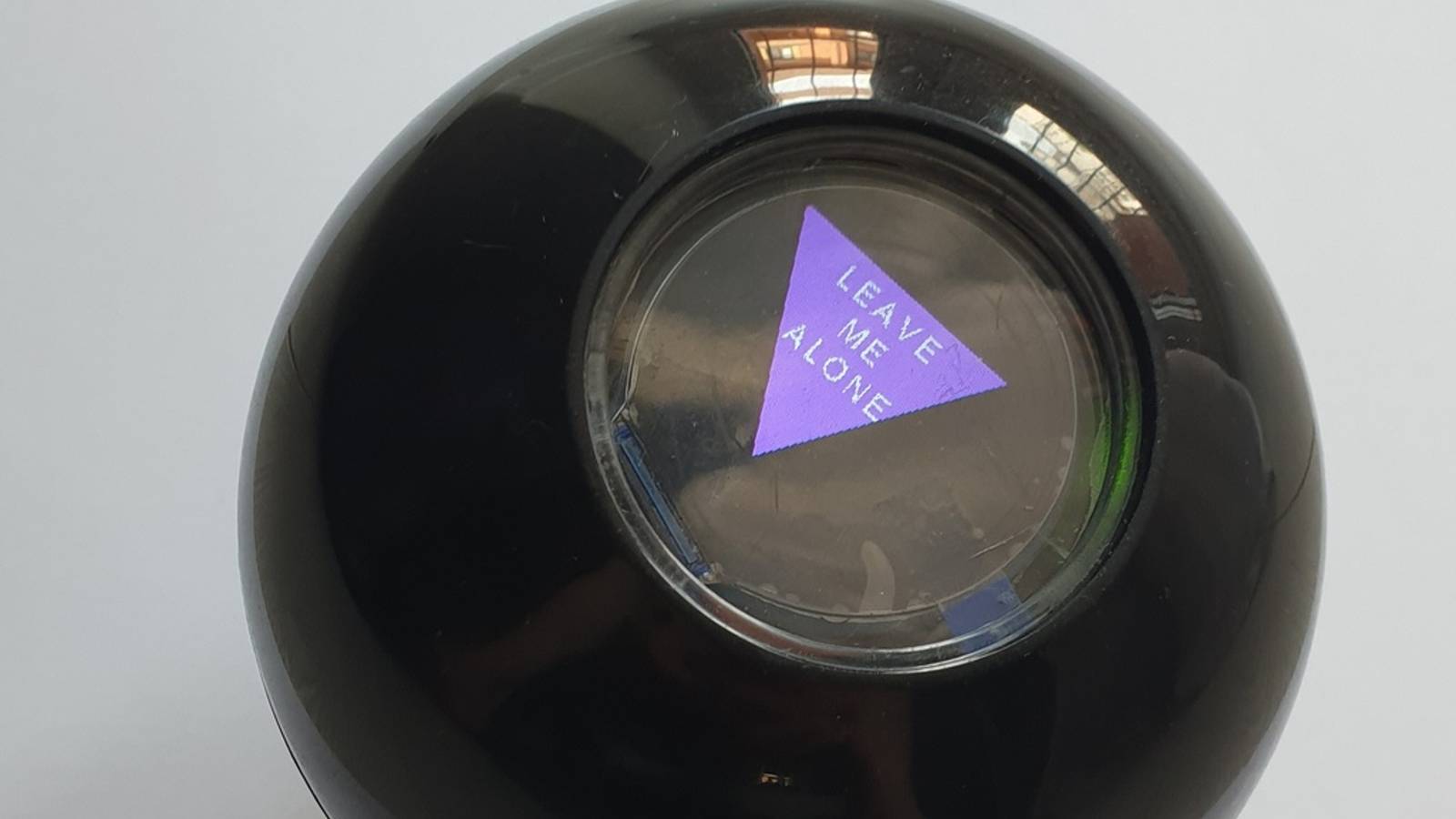
Someone turned a broken Magic 8 Ball into a physics-based Raspberry Pi Pico fortune teller
Resurrecting the Analog: A Forensic Look at the RP2040-Powered Magic 8 Ball
We often talk about “circular economy” in the context of server rack recycling or lithium-ion battery recovery, but the most profound hardware hacks happen at the consumer edge. A recent repository surfaced on GitHub, authored by user lds133, details the conversion of a drained, liquid-less Magic 8 Ball into a fully digital, physics-simulated fortune teller powered by a Raspberry Pi Pico. While this might appear as mere novelty tinkering, the underlying architecture demonstrates a sophisticated application of sensor fusion and low-power state management that enterprise IoT developers should note.
- The Tech TL;DR:
- Core Architecture: Utilizes the dual-core ARM Cortex-M0+ RP2040 microcontroller for real-time gesture processing.
- Sensor Fusion: Implements accelerometer data to emulate fluid dynamics and floating D20 physics without liquid resistance.
- Power Efficiency: Features aggressive sleep-state logic, drawing negligible current when the device is stationary.
The project addresses a specific hardware bottleneck: how to maintain the tactile “weight” of an analog toy using digital constraints. The original Magic 8 Ball relies on buoyancy and fluid viscosity to sluggish the movement of the icosahedron. Replicating this digitally requires more than just random number generation; it demands real-time orientation tracking. The developer replaced the internal fluid chamber with a 1.25-inch round display and an accelerometer module. When the user shakes the device, the microcontroller calculates the vector of the force, applies a damping algorithm to simulate fluid resistance, and renders the die tumbling on the screen.
Under the Hood: The RP2040 Advantage
Choosing the Raspberry Pi Pico (RP2040) over the ubiquitous ESP32 or Arduino Nano was a calculated architectural decision. In 2026, the RP2040 remains a staple for edge computing due to its deterministic real-time performance and lack of Wi-Fi overhead, which reduces attack surface area for standalone devices. The project leverages the Pico’s Programmable I/O (PIO) state machines to handle the display refresh rate independently of the main CPU cores, ensuring the animation remains smooth even while the accelerometer is polling at high frequencies.
According to the project documentation on GitHub, the logic detects “idle” states to trigger deep sleep modes. Here’s critical for battery-operated IoT deployments where “vampire drain” can kill a deployment in weeks. For enterprise IT managers overseeing large fleets of sensors, this logic mirrors the heartbeat protocols used in industrial monitoring.
| Microcontroller | Architecture | Max Clock Speed | Power Profile (Active) | Best Use Case |
|---|---|---|---|---|
| Raspberry Pi Pico (RP2040) | Dual-core ARM Cortex-M0+ | 133 MHz | Low (No Wi-Fi radio) | Deterministic sensor fusion, local logic |
| ESP32-WROOM | Dual-core Tensilica LX6 | 240 MHz | High (Wi-Fi/BT overhead) | Connected IoT, cloud telemetry |
| Arduino Nano (ATmega328P) | 8-bit AVR | 16 MHz | Incredibly Low | Simple GPIO toggling, legacy support |
Implementation: Sensor Fusion Logic
The “magic” of this build isn’t the screen; it’s the math. To emulate the die floating in liquid, the code must interpret raw accelerometer data (X, Y, Z axes) and translate it into screen coordinates with added friction coefficients. Below is a simplified representation of how the tilt detection logic is structured in the firmware, utilizing the I2C bus to read the accelerometer:
// Pseudo-code for Accelerometer Tilt Detection on RP2040 void loop() { // Read raw acceleration data from I2C sensor (e.g., MPU6050) float ax = accelerometer.readX(); float ay = accelerometer.readY(); float az = accelerometer.readZ(); // Calculate tilt angles (Roll and Pitch) float roll = atan2(ay, az) * 180 / PI; float pitch = atan2(-ax, sqrt(ay * ay + az * az)) * 180 / PI; // Apply damping factor to simulate fluid viscosity display_x = lerp(display_x, roll, 0.1); display_y = lerp(display_y, pitch, 0.1); // Check for shake threshold to trigger "Fortune" event if (abs(ax) > SHAKE_THRESHOLD) { generateFortune(); } else if (isStationary()) { enterDeepSleep(); // Critical for battery longevity } } This approach to state management—moving from active polling to interrupt-driven sleep—is a pattern that embedded systems consultants frequently recommend for reducing operational costs in remote monitoring setups. When hardware behaves unpredictably, organizations often rely on specialized electronics repair services to diagnose whether the issue lies in the sensor calibration or the power delivery network.
The “Vaporware” Filter: Real-World Viability
While the project is open-source and functional, scaling this concept reveals limitations. The round display used is a niche component, often driving up the Bill of Materials (BOM) cost compared to standard OLED panels. The reliance on a specific accelerometer model means that supply chain disruptions could halt production if this were a commercial product.
“The elegance of this hack lies in the local processing. By keeping the physics simulation on the edge device rather than offloading it to a cloud API, the latency is effectively zero. Though, maintaining the calibration of the accelerometer over time requires robust firmware updates, a challenge many consumer IoT devices fail to address.”
— Elena Rossi, Lead Embedded Engineer at Vertex Systems
Alternatives and The Tech Stack Matrix
For developers looking to replicate this functionality for different form factors, the Raspberry Pi Pico is not the only option. The Seeed Studio XIAO series offers a smaller footprint with similar Cortex-M4 performance, ideal for wearables. Conversely, the ESP32-C3 provides RISC-V architecture with Wi-Fi capabilities, allowing the “fortune” to be pulled from a live API rather than a static local array. However, for pure tactile simulation without network dependency, the Pico’s PIO architecture remains unmatched in its price bracket.
This project serves as a reminder that hardware obsolescence is often a software problem. The original Magic 8 Ball failed due to fluid leakage—a mechanical failure. The digital resurrection solves this via code. In the enterprise sector, this parallels the shift from hardware-dependent legacy systems to software-defined infrastructure. When legacy hardware fails, the immediate triage often involves IT asset disposition firms to securely wipe and recycle the units, but innovative CTOs are increasingly looking at firmware redevelopment to extend the lifecycle of existing endpoints.
Final Verdict
The “Pico 8 Ball” is more than a desk toy; it is a proof-of-concept for efficient edge computing. It demonstrates how low-cost microcontrollers can handle complex physics simulations without cloud dependency. For the IT director, the lesson is clear: before discarding hardware as “broken,” evaluate if a firmware pivot can restore utility. The future of sustainable tech isn’t just recycling; it’s re-architecting.
Disclaimer: The technical analyses and security protocols detailed in this article are for informational purposes only. Always consult with certified IT and cybersecurity professionals before altering enterprise networks or handling sensitive data.