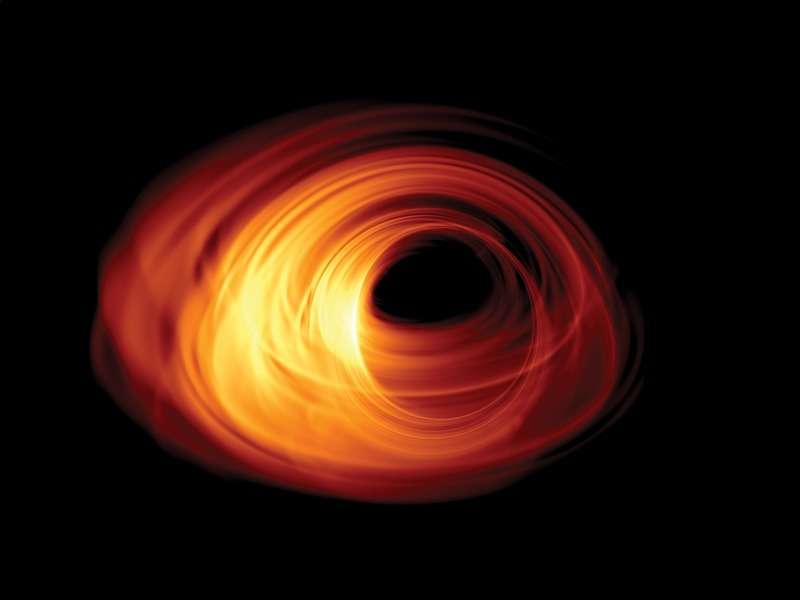
Solving the Mystery of Early Supermassive Black Holes and Little Red Dots
Researchers Measure Environment Where First Supermassive Black Holes Formed
Astrophysicists have captured unprecedented, high-resolution measurements of the high-density gas environments that foster supermassive black holes, addressing a long-standing mechanics puzzle in galactic evolution. An international team directed by Alessandro Trinca—a Postdoctoral Research Associate at the University of Edinburgh’s Royal Observatory and Institute for Astronomy—investigated the required cosmic conditions for early black hole seeding, as detailed by Universe Today and published in the Monthly Notices of the Royal Astronomical Society. Simultaneously, separate observations led by Takuma Izumi, an assistant professor at the National Astronomical Observatory of Japan, utilized the Atacama Large Millimeter/submillimeter Array (ALMA) to resolve local accretion structures within the Circinus Galaxy down to a scale of roughly one light-year, revealing how molecular gas feeds active galactic nuclei.
The Tech TL;DR:
- Core Breakthrough: High-resolution ALMA and simulation data quantify the molecular and plasma phases of accretion disks, proving gravitational instability channels matter inward.
- Architectural Scale: Observations achieved a physical resolution of approximately one light-year, tracking gas flows around active galactic nuclei.
- Enterprise/Research Impact: Data models clarify how early “Little Red Dots” and heavy black hole seeds formed less than a billion years after the Big Bang, bridging cosmological simulations with empirical radio astronomy.
Decoding the Accretion Pipeline and Gravitational Instability
Understanding how cosmic giants accumulate mass requires tracking gas accretion, where friction in high-speed particle streams heats material to millions of degrees. Yet capturing the intimate physical scale of these gas flows has historically challenged compute-heavy astrophysical pipelines. To simulate these crowded settings, Trinca and his colleagues integrated high-resolution N-body cosmological zoom-in runs employing the GIZMO software with the Cosmic Archaeology Tool semi-analytic framework, pulling in academic partners like the Como Lake Center for Astrophysics, ISTA, the Sapienza School for Advanced Studies, and INAF branches in Rome and Bologna.
Complementing these simulations, Izumi’s team at ALMA mapped the Circinus Galaxy with unprecedented precision. The high-sensitivity data detected molecular gas absorbing active galactic nucleus light, exposing a direct inward feed driven by gravitational instability. In this state, gas disks overwhelmed by their own gravity collapse and funnel material toward the center. However, the measurements uncovered a distinct computational paradox: the observed accretion rate was 30 times higher than necessary to sustain active galactic nucleus activity. Widespread outflows detected by high-sensitivity ALMA observations resolved this discrepancy, accounting for the excess gas movement.
High-Performance Compute Infrastructure and VLBI Synchronization
Processing data streams of this magnitude demands heavy supercomputer infrastructure. Beyond local accretion mechanics, global collaborations like the Event Horizon Telescope targeted the quasar 3C 279, located five billion light-years from Earth. Land-based radio telescope networks around the globe were synchronized for the 2017 campaign at a 1.3 mm wavelength through the use of hydrogen maser atomic clocks. Each telescope generated roughly 350 terabytes of data daily on helium-backed hard drives, which were subsequently flown to supercomputer correlators at the Max Planck Institute for Radio Astronomy and MIT Haystack Observatory.
import hashlib
import json

def validate_telemetry_batch(file_path, expected_checksum):
    sha256_hash = hashlib.sha256()
    with open(file_path, "rb") as f:
        for byte_block in iter(lambda: f.read(4096), b""):
            sha256_hash.update(byte_block)

    calculated_hash = sha256_hash.hexdigest()
    if calculated_hash == expected_checksum:
        return {"status": "verified", "hash": calculated_hash}
    else:
        return {"status": "corrupted", "hash": calculated_hash}

# Example execution for an ingestion node
batch_result = validate_telemetry_batch("telemetry_payload_3c279.dat", "e3b0c44298fc1c149afbf4c8996fb92427ae41e4649b934ca495991b7852b855")
print(json.dumps(batch_result))
Investigating High-Redshift Heavy Seeds
Moving from local mechanics to the early universe, researchers are probing how the earliest supermassive black holes formed less than a billion years after the Big Bang. Conventional models—where black holes originate exclusively from collapsing stellar remnants—were challenged when NASA’s James Webb Space Telescope identified a multitude of compact, high-redshift targets referred to as Little Red Dots. Scientists consequently shifted their focus to the Direct-Collapse Black Hole model, wherein immense quantities of cold gas gather at the cores of primordial galaxies to form heavy black hole seeds through direct collapse.
As astrophysicists scale these simulations to account for dark matter halos and cosmic overdensities, institutional compute clusters face severe I/O bottlenecks.
Forward-Looking Architecture
The convergence of high-resolution millimeter interferometry and cosmological zoom-in simulations marks a shift in how astrophysical structures are analyzed.
*Disclaimer: The technical analyses and security protocols detailed in this article are for informational purposes only. Always consult with certified IT and cybersecurity professionals before altering enterprise networks or handling sensitive data.*