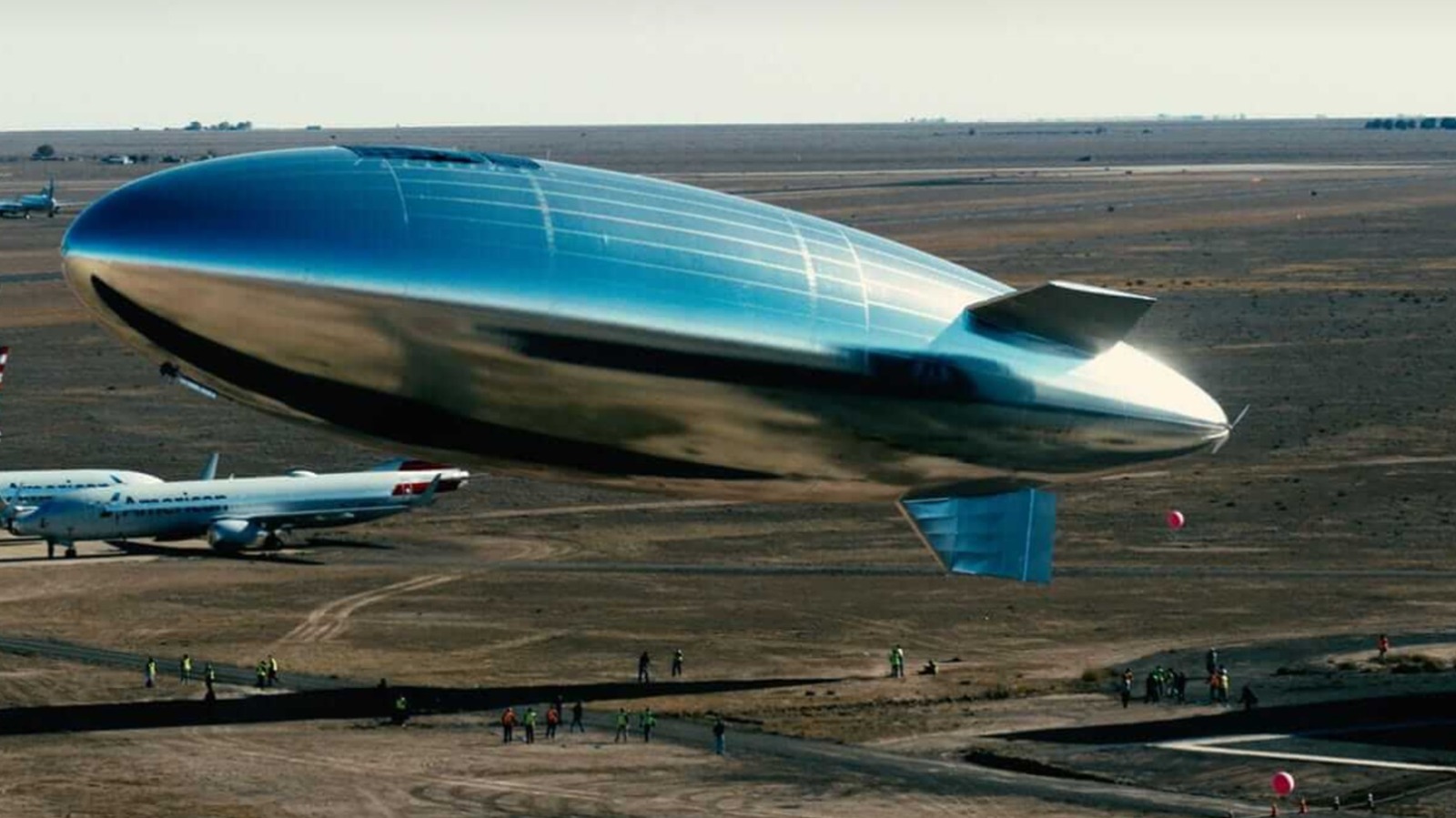
Solar-Powered Stratospheric Airships: The Future of 5G Connectivity
Solar-Powered Airships: The Architectural Shift in Stratospheric Connectivity
Stratospheric telecommunications platforms, specifically solar-powered dirigibles designed to function as high-altitude pseudo-satellites, are moving from theoretical aerospace concepts to tangible infrastructure projects. By positioning 5G and 6G transceiver arrays at altitudes of 60,000 feet, these platforms aim to mitigate the latency issues inherent in Low Earth Orbit (LEO) satellite constellations while bypassing the terrestrial deployment costs associated with traditional cellular towers. This pivot represents a significant re-engineering of mobile backhaul, moving from static ground-based masts to dynamic, autonomous aerial nodes.
The Tech TL;DR:
- Latency Reduction: Operating at sub-stratospheric altitudes reduces signal round-trip time (RTT) compared to LEO satellites, potentially offering single-digit millisecond latency for mission-critical industrial applications.
- Persistent Coverage: Solar-powered propulsion and high-capacity solid-state battery arrays allow for multi-month endurance, providing a persistent, localized network overlay in underserved or disaster-impacted zones.
- Deployment Economics: The model shifts CAPEX from permanent physical infrastructure construction to modular aerial deployment, though it introduces significant regulatory and air-traffic management overhead.
Hardware Specifications and Energy Budgeting
The core challenge for any High-Altitude Platform Station (HAPS) is the energy-density-to-weight ratio. According to recent whitepapers from the IEEE Xplore digital library, successful long-duration flight requires a closed-loop energy system where solar harvesting during daylight hours offsets propulsion and payload power consumption during nocturnal periods. The integration of gallium arsenide (GaAs) solar cells, which offer higher efficiency-per-gram than traditional silicon, is a baseline requirement for these airships.
| Metric | HAPS Airship (Projected) | LEO Satellite (Typical) |
|---|---|---|
| Altitude | 18–22 km | 500–1,200 km |
| Latency (RTT) | 5–15 ms | 25–50 ms |
| Payload Flexibility | High (Modular/Upgradable) | Low (Fixed/Disposable) |
Architectural Integration and IT Triage
Deploying these aerial nodes into a production environment requires more than just hardware; it demands robust containerization strategies. To manage the intermittent connectivity inherent in mobile nodes, engineers are increasingly turning to Kubernetes-based edge computing architectures. By running localized micro-services on the airship itself, latency-sensitive compute tasks can be offloaded from the cloud, ensuring high availability even if the backhaul link experiences atmospheric interference.
For enterprises looking to integrate these platforms into their existing wide-area networks, the security perimeter becomes a primary concern. The transition from terrestrial fiber to wireless stratospheric backhaul necessitates a rigorous review of OWASP-compliant encryption standards for all transit data. If your organization is evaluating the shift to decentralized aerial backhaul, you should consult with a [Relevant Tech Firm/Service] to ensure your current SOC 2 compliance frameworks remain valid during the transition.
For developers interfacing with the telemetry and signal control APIs of these platforms, the following cURL request provides a conceptual baseline for querying the node’s current signal-to-noise ratio (SNR) and power health:
curl -X GET "https://api.stratosphere-node.internal/v1/telemetry/health"

     -H "Authorization: Bearer $NODE_API_KEY"

     -H "Content-Type: application/json"

     | jq '.power_level, .snr_ratio'
Cybersecurity and Regulatory Bottlenecks
The security of these platforms relies on the integrity of the remote control link and the hardening of the onboard operating system. As noted by cybersecurity researchers in the CISA advisory database, any device acting as a network bridge is a prime target for man-in-the-middle (MITM) attacks. If these airships are compromised, the blast radius includes the entire local cellular network they serve. Before full-scale enterprise adoption, firms must engage [Relevant Cybersecurity Auditor] to verify that the command-and-control (C2) channels employ quantum-resistant encryption protocols.
“The move to stratospheric nodes is essentially an exercise in distributed systems management,” says a lead systems architect at a major aerospace firm. “The hardware is impressive, but the real engineering feat is maintaining a consistent, secure handshake between the airship, the ground station, and the end-user device while dealing with variable wind speeds and thermal expansion.”
Furthermore, managing the software lifecycle of a fleet of airships requires continuous integration/continuous deployment (CI/CD) pipelines that can push firmware updates over the air (OTA). Ensuring these updates do not brick the system while in flight is a high-stakes deployment challenge that requires specialized [Software Dev Agency] support.
The Future of Aerial Backhaul
As we move toward the latter half of 2026, the feasibility of these airships will be tested by their ability to maintain uptime during extreme weather events and their compliance with international airspace regulations. The shift from static to dynamic infrastructure will likely force a consolidation in the telecommunications market, favoring firms that can seamlessly integrate aerial nodes into existing 5G/6G core networks. Organizations that begin auditing their network resilience today will be best positioned to leverage these advancements as they exit the pilot phase.
Disclaimer: The technical analyses and security protocols detailed in this article are for informational purposes only. Always consult with certified IT and cybersecurity professionals before altering enterprise networks or handling sensitive data.