
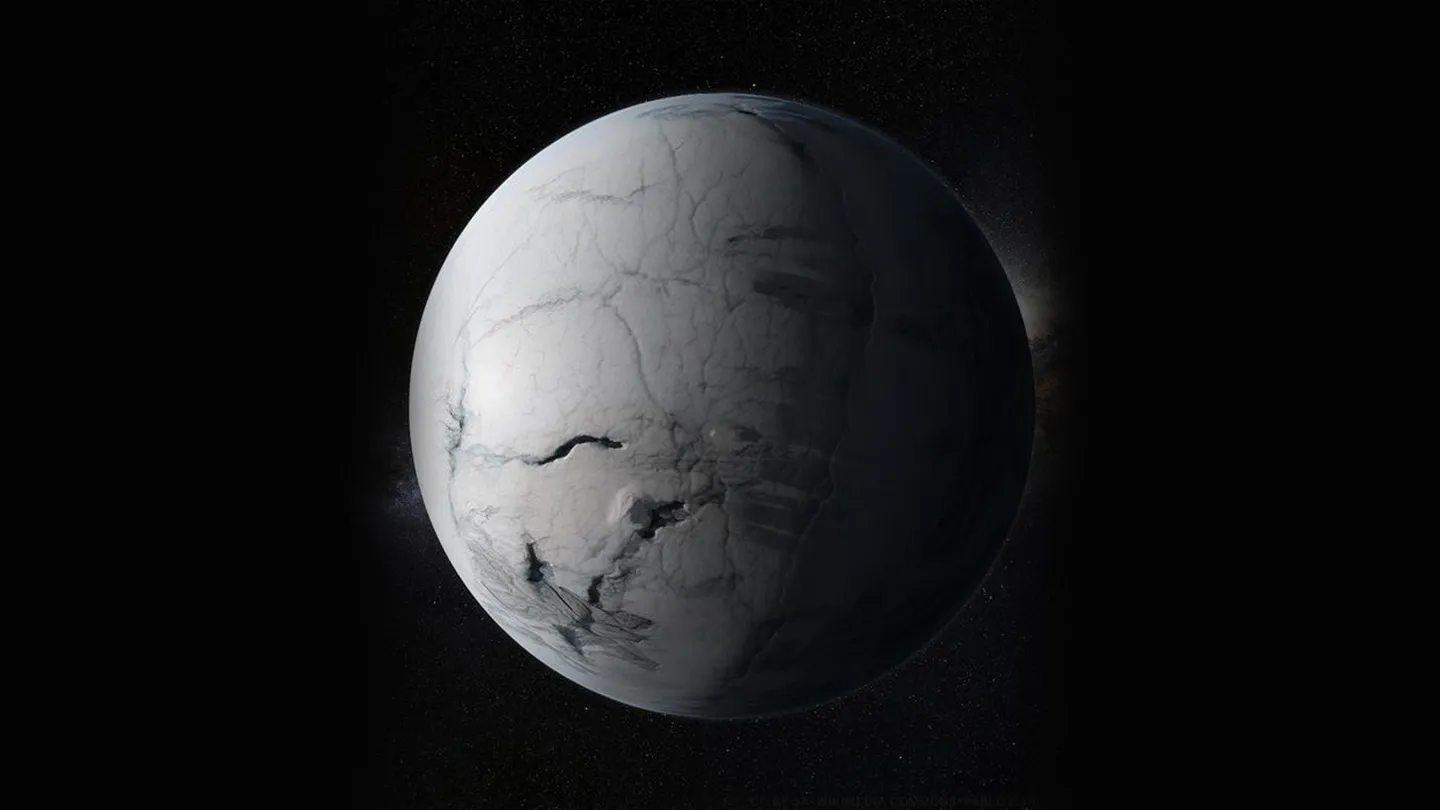
Even during the most extreme deep freeze in Earth’s history, when ice sheets extended to the tropics, the planet’s climate wasn’t static, according to fresh research published this week in Earth and Planetary Science Letters. Scientists studying remarkably well-preserved rocks from the Garvellach Islands off the west coast of Scotland have found evidence of annual climate cycles, including patterns similar to modern-day El Niño events, suggesting a partially open ocean persisted even during the “Snowball Earth” period.
The findings challenge the long-held assumption that Earth’s climate system essentially shut down during the Cryogenian Period, between 720 and 635 million years ago, when two major glacial events – the Sturtian and Marinoan glaciations – occurred. Previous theories posited a completely frozen planet, with minimal exchange between the atmosphere and oceans.
The research team, led by Dr. Chloe Griffin of the University of Southampton, analyzed Sturtian rocks – dating from approximately 717 to 658 million years ago – characterized by alternating layers of coarse and fine sediment. These layers, unusually well-preserved compared to other Cryogenian-era rocks typically eroded by glacial activity, resemble those found today under glacial lakes. Each year, glacial meltwater deposits coarse sediment in the summer, while fine clays settle during the winter months, creating distinct annual bands.
“These rocks are extraordinary,” said Dr. Griffin. “They act like a natural data logger, recording year-by-year changes in climate during one of the coldest periods in Earth’s history.” The rocks contain approximately 2,600 of these annual layers, providing an unprecedented record of climate variability from that era.
Study co-author Thomas Gernon, also of the University of Southampton, described the preservation of the layers as “unprecedented,” allowing for a detailed analysis of past climate conditions. The team identified four distinct cyclical patterns within the layers. One cycle, repeating every four to 4.5 years, closely mirrors the El Niño-Southern Oscillation (ENSO), a climate pattern in the tropical Pacific Ocean characterized by fluctuations in sea surface temperature. This suggests that even during Snowball Earth, some form of heat transport between the ocean and atmosphere occurred, likely in a tropical region.
The remaining three cycles identified by the researchers appear to correlate with variations in the sun’s intensity, indicating that solar cycles also influenced the climate even during this extreme glacial period. The analysis involved mathematically examining the thickness of each layer, with warmer summers resulting in thicker sediment deposits due to increased glacial erosion.
While the annual layering is a strong indicator of yearly climate cycles, geologist Tony Prave of the University of St. Andrews cautioned that confirming the layers represent annual deposits requires careful consideration. However, he noted the striking similarity between the Garvellach Island rocks and modern glacial lake sediments. “You could go to a glacial lake in Switzerland, look at a core that’s taken out of that lake, and it’ll look exactly like what is preserved in the Garvellach Islands,” he said.
The findings contribute to an ongoing debate regarding the extent of glaciation during Snowball Earth. Some data support a completely frozen planet, while evidence from sites like the Garvellach Islands suggests a more dynamic climate with potential areas of open water. Dr. Gernon suggested that short-term warming events, potentially triggered by volcanic activity or asteroid impacts, could explain the observed climate fluctuations.
The analyzed rocks represent a relatively short period within the 59-million-year-long Sturtian glaciation, and may reflect conditions at the beginning or end of the event, when partial thawing could have occurred, according to Dr. Prave.
