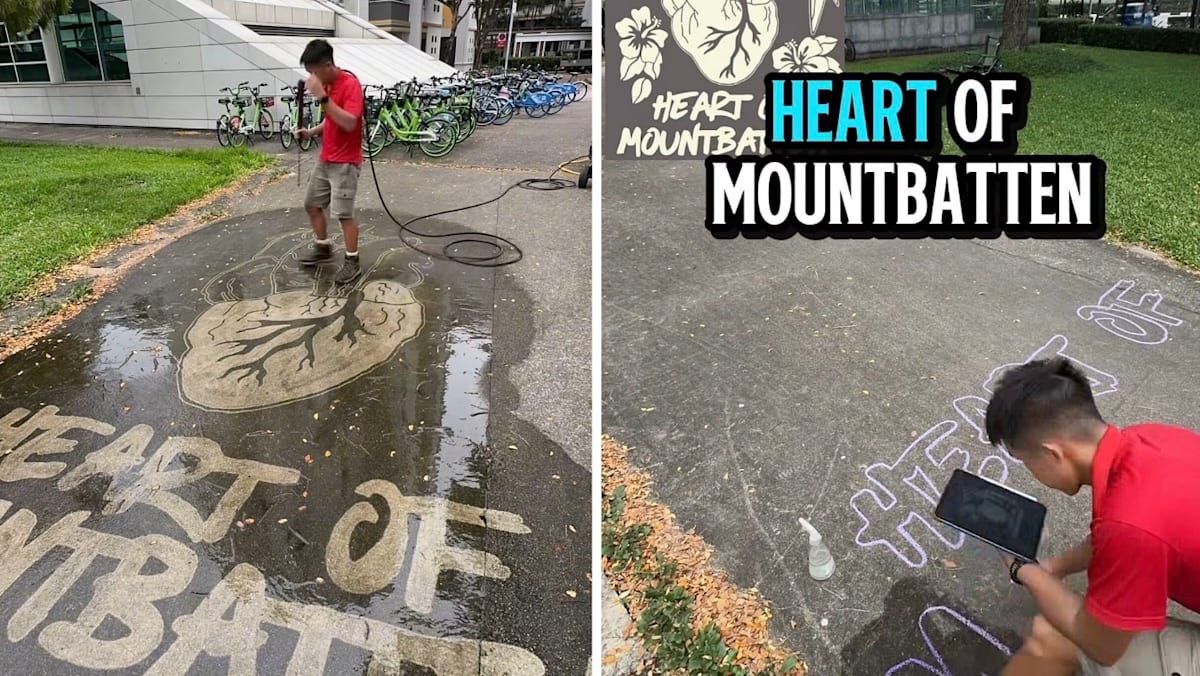
SMRT Mountbatten Pavement Art Removal Sparks Debate on Artistic Expression
SMRT Corporation removed a piece of street art located outside Mountbatten MRT station on Oct. 23, citing safety and regulatory concerns, which triggered public debate regarding the boundaries of creative expression in Singapore’s public spaces. The artwork, created by artist Marcus Pang using a power washer to clean patterns into a grime-covered pavement, was cleared following reports that the transit operator deemed it an unauthorized modification of public property.
The Removal Process
The artwork consisted of intricate designs etched into the sidewalk through the removal of dirt via high-pressure water. According to reports from The Straits Times, SMRT personnel removed the work shortly after it appeared, stating that the cleaning of public infrastructure requires prior approval. The transit operator maintains that while it supports community engagement, all artistic interventions on property under its management must adhere to established safety and maintenance protocols.

Public and Political Response
The incident drew significant attention on social media, where users criticized the removal as heavy-handed. The Online Citizen reported that many netizens labeled the move "hypocritical," arguing that the operator’s public-facing branding often promotes arts and culture.
The matter reached the political sphere when Member of Parliament Gho Sze Kee noted that the incident highlights a tension between rigid regulatory frameworks and the desire for vibrant public spaces. According to reporting by CNA, Gho observed that the episode serves as a case study for how authorities might better balance the maintenance of infrastructure with the encouragement of spontaneous, non-destructive creativity.
Differing Perspectives on Public Expression
The discourse surrounding the Mountbatten artwork reveals a divide in how different segments of the public perceive urban aesthetics. In a Stomp commentary, columnist Neil Humphreys noted that the incident underscores the friction between the desire for "pretty" streets and the strict operational mandates governing Singapore’s infrastructure.
While some observers argue that the temporary nature of power-wash art—which eventually disappears as natural grime accumulates—should allow for more leniency, others point to the necessity of a standardized permit system to prevent unauthorized alterations to public property.
As of late October, SMRT has not announced any changes to its policy regarding spontaneous public art installations. The operator continues to refer potential contributors to its official channels for community project proposals.