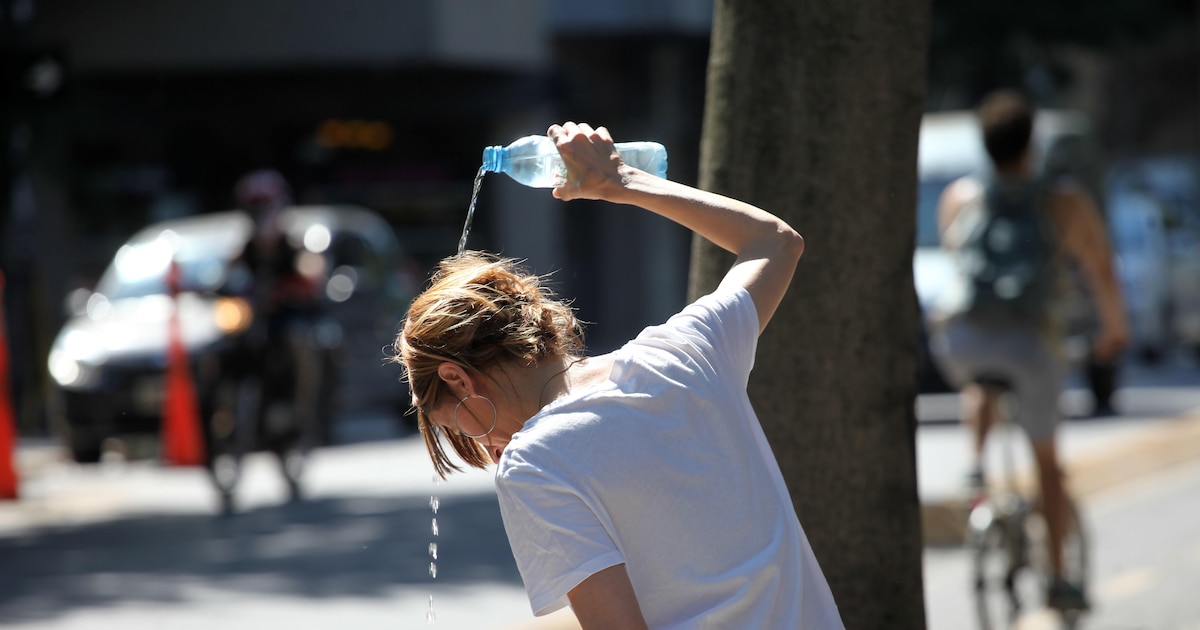
SMN Issues Yellow Heat Alert for AMBA, Buenos Aires, La Pampa, Mendoza, Río Negro and Neuquén
The Servicio Meteorológico Nacional has issued a yellow alert for extreme heat covering the AMBA, Buenos Aires, La Pampa, Mendoza, and parts of Río Negro and Neuquén, with temperatures in the Área Metropolitana de Buenos Aires (AMBA) expected to reach a peak of 34°C on Sunday, November 29.
The alert, which signifies a “mild to moderate effect on health,” is in effect for the weekend and potentially until Tuesday, December 2, according to the SMN. It affects more than 30 localities across at least four provinces, with specific zones in Buenos Aires including the mountainous areas of Coronel Pringles, Coronel Suárez, Saavedra, and Tornquist, as well as the north of Bahía Blanca and the west of Patagones and Villarino, according to Cronica.
In La Pampa, the alert covers Chical Co and Puelén, while in Río Negro and Neuquén, numerous districts are included, such as General Roca, Meseta de Pilcaniyeu, and Confluencia.
The SMN warns that the forecasted temperatures can be dangerous for health, particularly for groups requiring greater care: children, people over 65, pregnant women, and those with chronic diseases. “They can be dangerous, especially for at-risk groups, such as children and girls, people over 65 years of age, with chronic diseases,” the SMN adds.

For the AMBA, Saturday begins with clear skies and a low of 26°C, reaching a high of 33°C with partial cloudiness and winds up to 12 km/h. Sunday will be the hottest day, with temperatures between 23°C and 34°C and partially cloudy skies, while winds could reach 22 km/h in the afternoon.
Monday is expected to be similar, with a low of 23°C, a high of 33°C, and partial cloudiness, though Meteored reports that temperatures in some neighborhoods away from the Río de la Plata could be higher, between 34°C and 37°C.
The SMN recommends several precautions to cope with the extreme heat. The central recommendation is to maintain hydration throughout the day by drinking water frequently, even without feeling thirsty. People are advised to avoid direct sun exposure between 10 a.m. and 4 p.m., reduce physical activity, and wear lightweight, loose-fitting, light-colored clothing, along with a hat and sunglasses.
“Increase your water consumption (frequency and intake) without waiting to be thirsty to maintain adequate hydration,” the SMN says. “Do not expose yourself to the sun excessively, nor during the central hours of the day (between 10 and 16).”
The SMN also advises avoiding drinks with caffeine, alcohol, or high sugar content, and large meals. Instead, it recommends consuming fruits and vegetables and remaining in ventilated or air-conditioned spaces. As Meteored notes, the humidity relative could drop to 30% in the afternoons, and it is recommended to pay special attention to constant hydration, stay in shaded and ventilated areas, and use sunscreen.
A potential change is on the horizon for Tuesday, December 1. A cold front is expected to bring instability, increasing the probability of rain, showers, and storms to 80-90% in metropolitan areas during the afternoon and evening.
This passage will be accompanied by a wind shift to the southwest and south, with gusts reaching 45-60 km/h. “Tuesday 1 will mark a turning point in the weather conditions in the AMBA,” Meteored reports.

SMN Details Heat Alert Impact
The Servicio Meteorológico Nacional (SMN) has specified that the yellow alert indicates a “mild to moderate effect on health.” The SMN adds that these groups require greater care during the extreme heat event, according to infobae.
The alert covers more than 30 localities across four provinces. La Pampa’s alert covers Chical Co and Puelén.
Authorities Define Heat Wave Threshold
The possibility of a first heat wave for the season in the City of Buenos Aires (CABA) is high, Meteored reports. It will be defined if minimum temperatures of 22°C and maximum temperatures of 32.3°C are reached simultaneously for at least three consecutive days.
On Saturday, the Área Metropolitana de Buenos Aires (AMBA) will see partial cloudiness and rising temperatures, with a maximum of 33°C according to the SMN. The alert for extreme heat also extends to parts of Río Negro and Neuquén, with the SMN noting the conditions can be dangerous for health, especially for at-risk groups.
The Servicio Meteorológico Nacional (SMN), established in 1872, is Argentina’s primary meteorological authority, tasked with observing, understanding, and predicting weather and climate across the nation and surrounding waters. It operates a network of 125 weather stations, including six synoptic stations in Antarctica, measuring atmospheric parameters like temperature, rainfall, and ozone levels.
As a member of the World Meteorological Organization since 1951, the SMN issues alerts, such as the yellow heat alert for extreme conditions, which it categorizes by severity—mild to moderate effects on health—covering multiple provinces with specific temperature thresholds and timeframes to safeguard public safety.
This cold front will bring a sharp temperature drop, with a difference of more than 10°C in less than 48 hours. By Wednesday, December 2, and Thursday, December 3, a considerably cooler air mass will consolidate, bringing relief from the intense heat.