Small Estate Probate in Pennsylvania: Ament Law Group Explains Process
When someone dies in Pennsylvania leaving behind personal property worth $50,000 or less, families can utilize a simplified small estate procedure under 20 Pa.C.S. § 3102 to settle the estate without undergoing full formal probate, reported the Ament Law Group. Full probate requires appointing a personal representative, publishing notices, filing an inventory, preparing accountings, paying debts and taxes, and distributing assets, which can feel disproportionate for smaller holdings.
Pennsylvania Small Estate Threshold Rules and Gross Asset Calculations
Under 20 Pa.C.S. § 3102, the Orphans’ Court may settle an estate on petition when the decedent died owning property of a gross value of $50,000 or less. This figure is counted exclusive of real estate and of property payable under § 3101, but it does include personal property claimed as the family exemption.
Because the statutory test relies strictly on gross value, debts and liens are not subtracted from the total. Real estate is excluded from the calculation entirely, but owning property solely in the decedent’s name creates a distinct legal complication. The small estate procedure does not transfer title to real estate, meaning land and buildings typically require formal probate or an alternative mechanism like a joint deed to transfer ownership.
Bank accounts, vehicles, and other personal property owned by the decedent count toward the limit. Assets passing by joint ownership or beneficiary designation—such as joint accounts with survivorship, payable-on-death or transfer-on-death designations, retirement accounts, and life insurance with named beneficiaries—pass outside regular estate administration. However, whether those designated assets count toward the $50,000 threshold remains a technical eligibility question dependent on how each asset was held, requiring a complete asset list for legal review before filing.
The Orphans Court Petition Process and Will Requirements
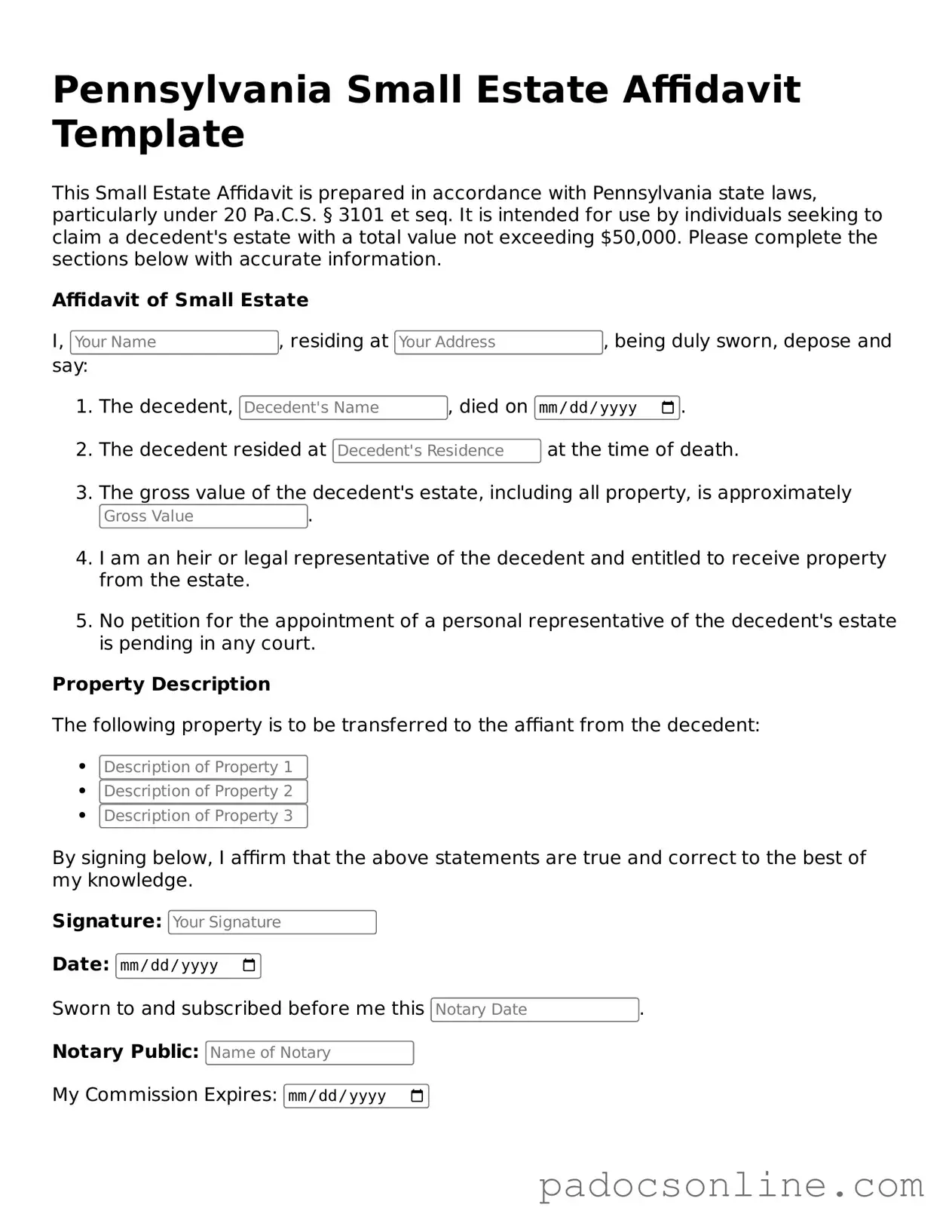
The small estate procedure is not entirely free of court oversight. It requires filing a formal petition for settlement of a small estate with the Orphans’ Court.
The petition must contain specific information:
- The decedent’s identifying information
- Names and addresses of all beneficiaries
- Names and addresses of known creditors
- An itemized list of assets and debts
- A proposed plan of distribution
If the decedent left a valid will, that document must still be submitted to the Register of Wills for probate. While the small estate petition streamlines asset distribution, it does not eliminate the requirement to probate the underlying will. Once the court reviews the petition and confirms eligibility, it issues a decree authorizing distribution, which serves as the legal authority for banks and financial institutions to release funds.
Pennsylvania Law Simplifies Payments for Qualifying Accounts
For qualifying accounts, Pennsylvania law provides an even faster mechanism under 20 Pa.C.S. § 3101(b). Under this statute, a financial institution may pay a qualifying deposit account of $20,000 or less directly to a surviving spouse, child, parent, or sibling in that strict statutory order of priority. This payment can occur upon presentation of a death certificate and required funeral documentation without requiring letters testamentary.
Separately, 20 Pa.C.S. § 3121 establishes a family exemption. This provision allows a surviving spouse, or minor children who resided with the decedent if no spouse survives, to claim up to $3,500 in estate property free from all creditors. Available in estates of any size, the family exemption is taken off the top before debts are paid, though administration costs and funeral expenses maintain higher priority under 20 Pa.C.S. § 3392.
Debts, Taxes, and Practical Considerations for Small Estates
Qualifying for a small estate procedure does not erase financial obligations. Legitimate debts, including funeral expenses and medical bills, must be addressed before assets are distributed to beneficiaries.
Pennsylvania inheritance tax applies regardless of the overall size of the estate. The inheritance tax return is due within nine months of the date of death, and small estates remain eligible for the 5% early payment discount. Thorough record-keeping protects participants if disagreements emerge later, requiring families to document all assets collected, debts paid, and distributions executed.
The simplified process works best when personal property totals under $50,000, real estate is absent from the decedent’s individual name, beneficiaries share no significant disputes, and liabilities remain minimal. It is not appropriate when real estate requires a formal title transfer, assets exceed the statutory limit, claims are contested, or the decedent operated a business that requires formal wind-down procedures. Families facing complex asset structures or uncertain asset classifications often consult an estate planning attorney or probate lawyer to verify eligibility and manage court filings accurately.