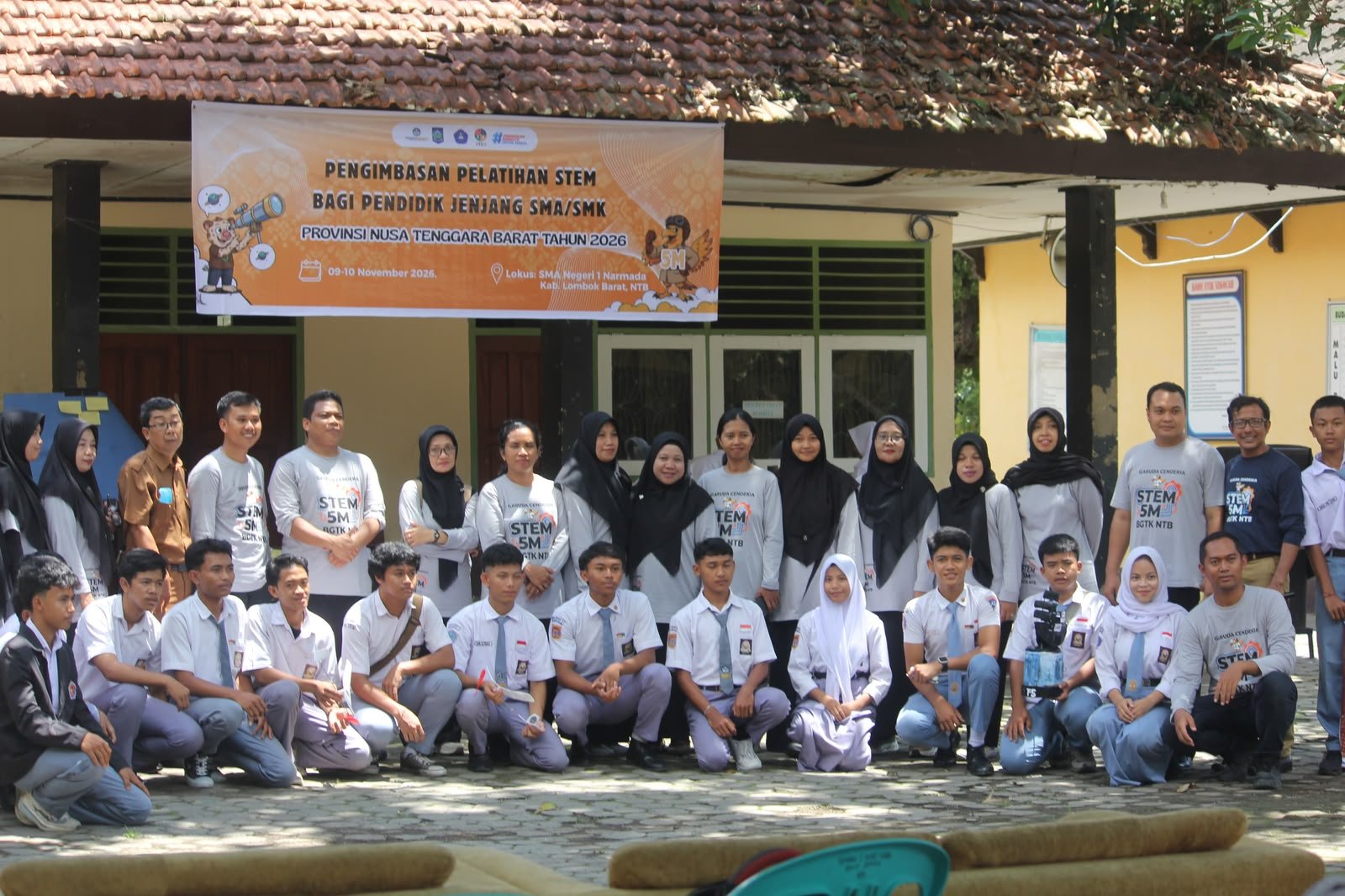
SMA Negeri 1 Narmada Holds STEM Program Turning Waste Heat into Electricity
SMA Negeri 1 Narmada hosted a cocurricular STEM learning program focused on turning waste-burning heat into electricity from November 20 to 23, 2026, suarantb.com reported.
Eleventh-grade students tackled the project, titled Thermoelectric Waste Processing, to build problem-solving skills through innovation and teamwork. School principal Hulwani said that the initiative aimed to make conceptual integration across scientific disciplines practical and meaningful for students.
Activities kicked off on Friday, November 20, with conceptual reinforcement sessions for students who had previously completed field observations and defined their project goals. Teachers provided worksheets to bridge gaps in cross-disciplinary understanding before students began hands-on work, according to suarantb.com.
Students assembled prototype frames on Saturday, November 21, designing devices intended to convert thermal energy into electrical current. Before testing waste combustion prototypes, participants conducted small-scale trials using hot water as a heat source to practice safety protocols and understand energy conversion.
The program culminated on Monday, November 23, with a gallery walk exhibition showcasing completed prototypes. Several neighboring institutions joined the exhibition as part of an outreach rollout conducted earlier in the month, including SMA Negeri 2 Narmada, SMK Negeri 1 Narmada, SMA NW Narmada, and SMA Negeri 1 Lingsar, according to Blogspot.
The exhibition opened with remarks from regional education officials, including West Nusa Tenggara region 1 branch education head Purni Susanto, provincial BGTK subdivision head Lale Srilastatun, and school coordinator Habiburrahman, according to Suarantb. Participating students subsequently presented their mechanical designs to supervising teachers for final evaluation.
Following prototype assembly on November 21, students completed worksheet evaluations to measure their comprehension of experimental outcomes and design processes, according to suarantb.com. Source 1 reported that participants concluded their second-day tasks by reflecting on their initial device performance and testing the constructed frames.
“According to the objectives of this STEM learning session, student representatives were able to solve surrounding problems with various innovations, creativity, and cooperation in an easy, cheap, enjoyable, conscious, and highly meaningful way for life,” Hulwani told suarantb.com.