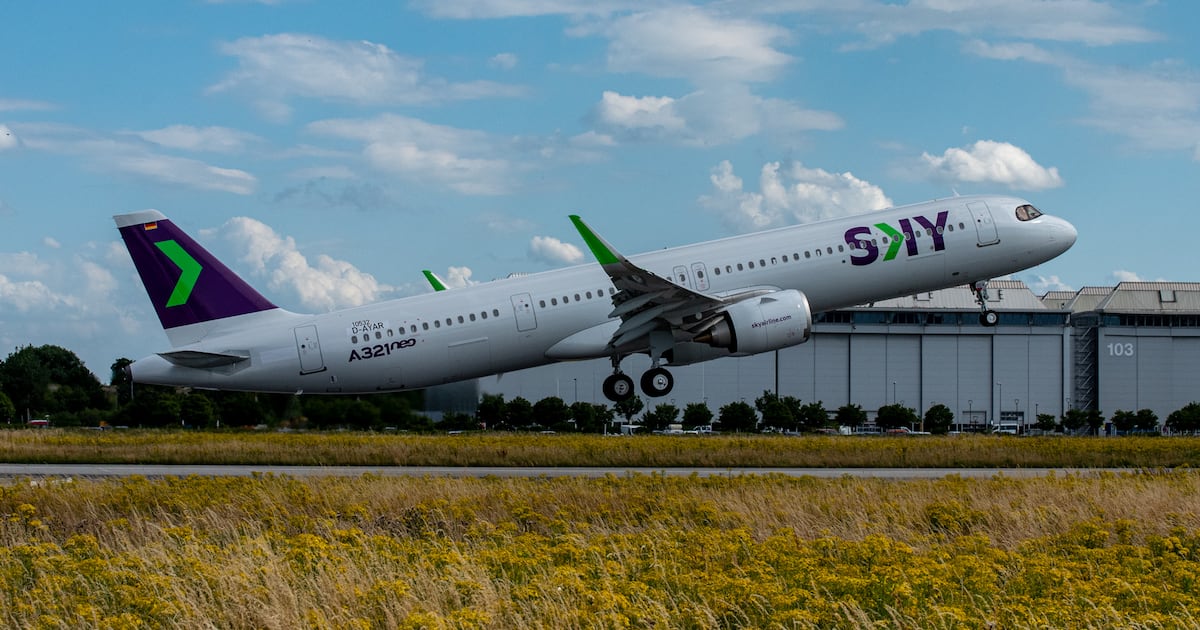
Sky Airline Restructuring: Layoffs, Flight Cuts, and Fare Hikes
Sky Airline is undergoing an aggressive operational reengineering—marked by staffing cuts, reduced flight frequencies, and fare hikes—to optimize profitability ahead of its pending acquisition by the Abra Group. Led by GM Daniel Belaúnde, the move aims to streamline the carrier’s balance sheet before finalizing its integration into the Gol-Avianca conglomerate.
This is not a standard cost-cutting exercise; it is a surgical valuation play. In the high-stakes world of aviation M&A, every line item on the profit and loss statement directly impacts the final purchase price. The current friction between the Paulmann Mast family and the Abra Group centers on equity—specifically, the percentage of the conglomerate the sellers will receive in exchange for 100% of Sky’s shares. When a gap exists between a seller’s valuation and a buyer’s offer, the only lever left is to maximize the target’s fiscal health. Companies navigating these precarious transitions typically engage enterprise restructuring consultants to ensure the entity is “investment-ready” before the deal closes.
The “Investment-Ready” Mandate
The appointment of Daniel Belaúnde as General Manager in August served as the catalyst for this shift. Belaúnde, an executive with a deep pedigree in retail, was not brought in to maintain the status quo. He was hired to instill a retail-centric focus on profitability—a move that coincided with the announcement of a pre-agreement to integrate Sky into the Abra Group. The objective was clear: position the company “in shape” to maximize leverage during the final stages of the acquisition.

The resulting “reengineering” has been blunt. The airline has implemented layoffs and adjusted flight frequencies, while simultaneously raising ticket prices to bolster margins. These moves are designed to replace raw growth with sustainable profitability, signaling to the Abra Group that Sky is a lean, high-yield asset rather than a high-burn growth engine.
“Belaúnde had arrived with the mission of putting the company more ‘in shape,’ coinciding with the arrival of the eventual new owners.”
Operating out of its hub at the Aeropuerto Internacional Jorge Chávez in Lima, Sky Airline Perú has already established itself as the second-largest operational airline in Peru. With a fleet of nine Airbus A320neo aircraft, the subsidiary’s efficiency is the primary metric the Abra Group is analyzing. For any firm facing similar operational bloat during a merger, the ability to pivot toward profitability quickly often requires the intervention of M&A advisory firms to manage the delicate balance between cost-cutting and brand erosion.
The Valuation War: Paulmann Mast vs. Abra Group
The deal’s delay is a classic case of valuation misalignment. The Paulmann Mast family, the controlling owners of Sky, are reportedly seeking approximately 5% of the Abra Group’s total equity. Abra Group, however, has shown a reluctance to meet that figure, offering a lower percentage. This tug-of-war over equity points suggests that both parties are acutely aware of the combined entity’s future market power in the Andean region.
The Abra Group is not a monolithic entity but a powerhouse conglomerate with a diverse ownership structure. The group’s control is split among key figures: Constantino de Oliveira Junior holds one-third of the property, followed by Roberto Kriete, the former owner of Taca, and Chilean investor Isidoro Quiroga. Quiroga, operating through the society South Lake One Subco, holds more than 10% of the conglomerate.
By absorbing Sky, Abra Group intends to challenge the dominance of Latam in Chile and Peru, mirroring the success it has already achieved in Colombia, Ecuador, and Brazil. The strategic goal is the creation of a regional hegemon capable of competing on a global scale, but that vision remains hostage to the final equity split.
The Regulatory Chokehold
Even if the Paulmann Mast family and Abra Group reach a financial consensus, a significant regulatory wall remains. The transaction cannot proceed without the approval of the Fiscalía Nacional Económica (FNE) in Chile and the relevant competition authorities in Peru. The FNE has already signaled its scrutiny, having launched an official investigation into the acquisition of control of Sky Airline by the Abra Group in late January 2026.
This investigation focuses on whether the merger would create an anti-competitive environment that could lead to higher prices or reduced service for consumers. In the aviation sector, where slots and hub access are finite resources, antitrust regulators are notoriously cautious. The timeline for a real absorption is now pushed toward the end of the year, leaving Sky in a state of corporate limbo.
Navigating these regulatory waters is rarely a straightforward process. Most conglomerates in this position rely on specialized antitrust legal counsel to negotiate divestitures or behavioral remedies that satisfy regulators while preserving the deal’s core strategic value.
The New Andean Order
The long-term trajectory of the South American aviation market is shifting toward a duopoly. With the potential integration of Sky into Abra Group, the contest for market share will intensify between Latam and the combined force of Avianca, Gol, and Sky. This consolidation is a response to the inherent volatility of the region’s economy and the high capital expenditures required to maintain modern, fuel-efficient fleets like the A320neo.
Sky’s current austerity measures—the fare hikes and route cuts—are the price of admission for this new era. For the passenger, the “low-cost” promise may be softening as the airline prioritizes the balance sheet over market penetration. For the investor, however, the play is clear: lean operations lead to higher valuations, which lead to a more favorable equity stake in the region’s most ambitious aviation conglomerate.
The consolidation of the Andean skies is a blueprint for how mid-market players must evolve to survive the pressure of global conglomerates. As the Abra Group deal moves toward a resolution, the industry will be watching to see if the FNE’s investigation forces a restructuring of the deal’s terms. For executives seeking to navigate similar corporate transitions or regulatory hurdles, the World Today News Directory provides a curated gateway to the vetted B2B partners and legal experts necessary to execute high-stakes corporate reengineering.