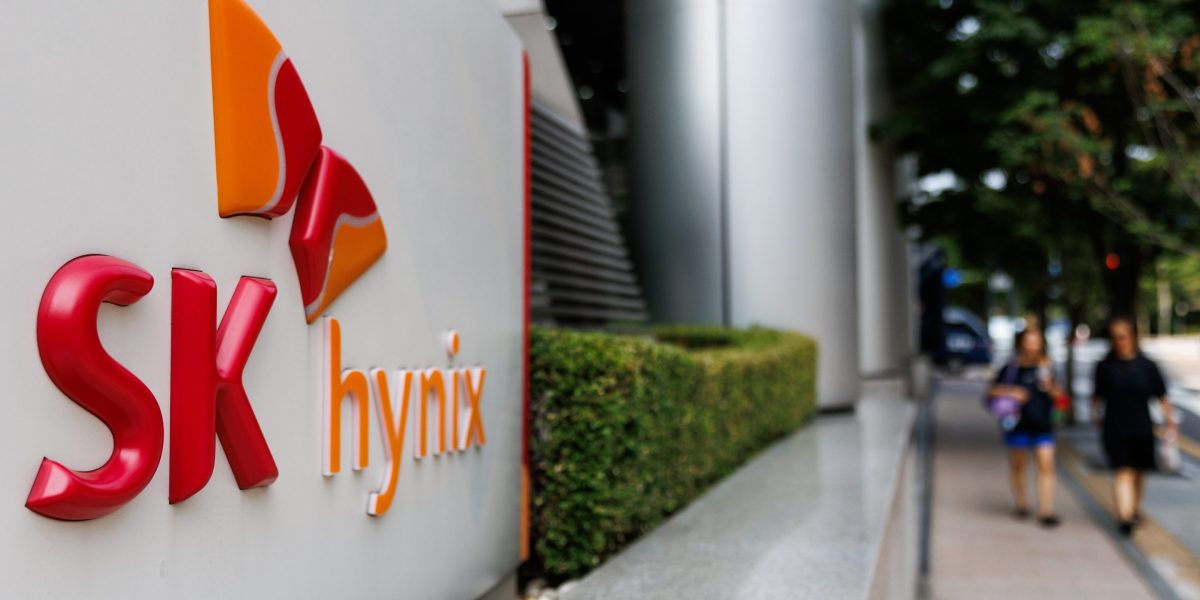
SK Hynix to Launch Massive Nasdaq IPO Amid AI Boom and Market Volatility
South Korean chipmaker SK Hynix will debut on the Nasdaq this Friday, July 10, 2026, in a share sale expected to raise $29 billion. The listing follows a 770% surge in the company’s Korea-listed stock over the last 12 months, positioning the high-bandwidth memory (HBM) leader as a primary barometer for AI market sustainability.
This massive capital injection arrives as the industry faces a critical liquidity crossroads. While the listing aims to fund hundreds of billions in new production plants, the sheer scale of the offering risks signaling a “valuation snapback” to cautious investors. For the hyperscalers fueling this demand, the escalating cost of AI infrastructure is creating a desperate need for structured capital management and [Treasury Management Services] to handle the volatility of multi-billion dollar capex cycles.
Why is the SK Hynix U.S. Debut a Market Signal?
The Nasdaq listing serves as a litmus test for whether the AI rally is based on fundamental value or speculative froth. SK Hynix has outperformed Micron Technology’s 700% rally over the same period, largely due to its status as the preferred provider for Nvidia. However, the market’s appetite for AI assets is showing cracks.
SpaceX, which went public last month in an $86 billion IPO, provides a cautionary tale. According to market data, SpaceX shares jumped initially but fell sharply, returning to near their first-day closing price. Even SpaceX bonds, despite investment-grade ratings, sold off to levels comparable to junk-rated debt. This instability has reportedly pushed OpenAI to consider delaying its own IPO to 2027.
The volatility isn’t just a U.S. phenomenon. Last month, a comment from SK Hynix regarding a potential slowdown in its AI memory business triggered the fifth-worst daily plunge in the history of the Kospi index. Global markets followed suit, proving that a single statement from a memory supplier can now destabilize international indices.
How Does the “Hyperscaler” Spend Impact Chip Margins?
Capital expenditure by hyperscalers—the massive cloud providers like Microsoft, Google, and Amazon—is projected to hit $1 trillion next year. This spending spree has created an artificial shortage in consumer electronics, forcing companies like Apple to raise prices to compensate for chip scarcity.
The fiscal problem is a gap between spending and cash flow. As cash reserves dwindle to feed the AI “beast,” companies are increasingly relying on debt and equity issuance. This reliance on leverage makes the entire sector vulnerable to interest rate shifts and yield curve fluctuations. Firms struggling to balance these aggressive growth targets with sustainable debt loads are increasingly turning to [Corporate Restructuring Specialists] to optimize their balance sheets.
SK Hynix is doubling down on this growth, planning to spend hundreds of billions of dollars on two new production facilities in South Korea. In a sector defined by violent boom-and-bust cycles, this aggressive capacity expansion could inadvertently trigger an oversupply crisis if demand from hyperscalers softens.
Three Ways the AI Memory Cycle is Shifting
- From General Purpose to HBM: The shift toward High-Bandwidth Memory has given SK Hynix a temporary monopoly-like grip on Nvidia’s supply chain, driving the 770% stock surge.
- The Debt Trap: The transition from cash-funded growth to bond-funded growth (as seen with SpaceX) suggests the market is hitting a ceiling of organic liquidity.
- Valuation Snapback: High multiple stocks are “gapping up” at levels that historically precede bear markets, according to Bank of America.
What Do Analysts Predict for the S&P 500?
The outlook from institutional analysts is increasingly bearish. Bank of America reaffirmed a year-end S&P 500 target of 7,100 on Tuesday, which represents a 5% drop from the week’s closing level. In a note to clients, BofA stated that “bear market signposts suggest speculation is hitting extreme levels.”

James Reilly, senior markets economist at Capital Economics, argues that the recent volatility is “evidence of excessive froth” and questions the sustainability of the rally. Reilly notes that similar selloffs have historically occurred only during major crashes, such as the Asian financial crisis, the dot-com bubble, and the 2008 Great Financial Crisis.
Despite this, some bulls point to the fact that current earnings reports and guidance are beating estimates—a stark contrast to the 1990s tech bubble where valuations had no fundamental backing. Yet, the market is no longer satisfied with “beats”; it is questioning whether the long-term profit realization will match the trillion-dollar infrastructure spend.
As these semiconductor giants navigate the transition from private to public scrutiny on the Nasdaq, the complexity of international tax laws and cross-border regulatory compliance becomes a primary friction point. This is driving a surge in demand for [International Tax Law Firms] capable of managing the friction between Seoul and New York.
The SK Hynix debut is more than a corporate milestone; it is a stress test for the global economy’s relationship with AI. If the stock sustains its value, the boom continues. If it follows the volatile trajectory of SpaceX, the market may finally be entering the “snapback” phase BofA warns about. For investors and enterprises looking to hedge against this volatility, finding vetted, institutional-grade partners via the World Today News Directory is the only way to ensure operational resilience in a frothy market.