Six-Year-Old Boy With Isolated Pancreatic Laceration From Bicycle Handlebar Trauma Managed Nonoperatively in Cureus Case Report
A six-year-old boy sustained an isolated pancreatic laceration after striking his upper abdomen on a bicycle handlebar, a rare injury pattern that can be missed by initial bedside ultrasound, according to a case report published Sunday in Cureus.
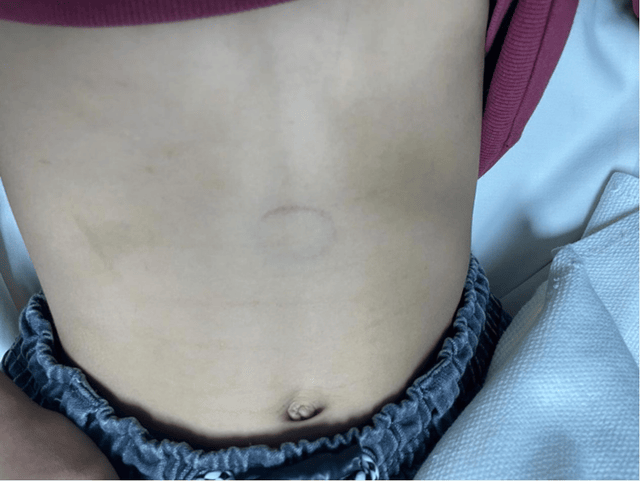
The boy arrived at the emergency department four hours after the fall with persistent epigastric pain and repeated vomiting. He was hemodynamically stable, and an extended focused assessment with sonography for trauma (eFAST) was negative, but a visible handlebar imprint on his abdomen prompted further imaging.
Contrast-enhanced computed tomography revealed a linear laceration in the pancreatic body with a small amount of free fluid and no other organ injuries. The scan did not show main pancreatic duct disruption, though duct integrity could not be definitively confirmed, limiting the ability to assign a definitive grade under the 2024 American Association for the Surgery of Trauma (AAST) scale.
Nonoperative management chosen
The pediatric surgery team admitted the boy for observation with intravenous fluids, analgesia, and serial abdominal exams. He remained stable without signs of peritonitis. Serum amylase rose from 158 U/L at presentation to a peak of 830 U/L before declining to 249 U/L at discharge. Lipase, sent to an external lab, was 733 U/L on hospital day 2.
Antibiotics were started on day 2 after the white blood cell count rose to 18.7 × 10³/µL, though the patient remained afebrile. A repeat ultrasound on day 4 showed a well-defined peripancreatic fluid collection measuring 1.3 × 1.2 × 2.1 cm. Pain improved, oral intake was tolerated, and he was discharged on hospital day 5 without surgical or endoscopic intervention.
Follow-up incomplete
The family, who lived far from the hospital, did not attend the scheduled follow-up appointment. The patient later presented for an unrelated respiratory infection, but no pancreatic imaging or enzyme testing was performed after discharge. The long-term outcome of the fluid collection and pancreatic function remains unknown.
The case report on the pediatric pancreatic injury appeared Sunday in Cureus, a web-based open-access general medical journal that became part of the Springer Nature group of journals as of December 2022. Cureus employs a two-stage model: articles undergo pre-publication peer review before appearing online, after which an optional post-publication review invites readers to score papers through its trademarked Scholarly Impact Quotient (SIQ), with expert assessments weighted more heavily.
This structure aims to accelerate dissemination — Cureus asks experts to review manuscripts in a few days, yielding much faster turnaround than most traditional medical journals — while using post-publication commentary and the article-level SIQ metric as ongoing quality filters.
Diagnostic limitations noted
The authors emphasized that eFAST can miss pancreatic injuries due to the organ’s retroperitoneal location. They recommended magnetic resonance cholangiopancreatography (MRCP) when ductal status is uncertain on CT and could change management. Under the 2024 AAST revision, a parenchymal laceration without duct injury is grade II; with duct involvement, it is grade III. In this case, a definitive grade could not be assigned.
World Society of Emergency Surgery and AAST guidelines support nonoperative management in stable patients with low-grade injuries and no associated surgical emergencies.
A pediatric systematic review cited in the report found an 87% success rate for initial nonoperative management across injury grades, while a more recent meta-analysis found no significant mortality difference between operative and nonoperative approaches, though pseudocysts were more frequent with nonoperative management and fistulas more common after surgery. The certainty of those comparative findings was rated very low.