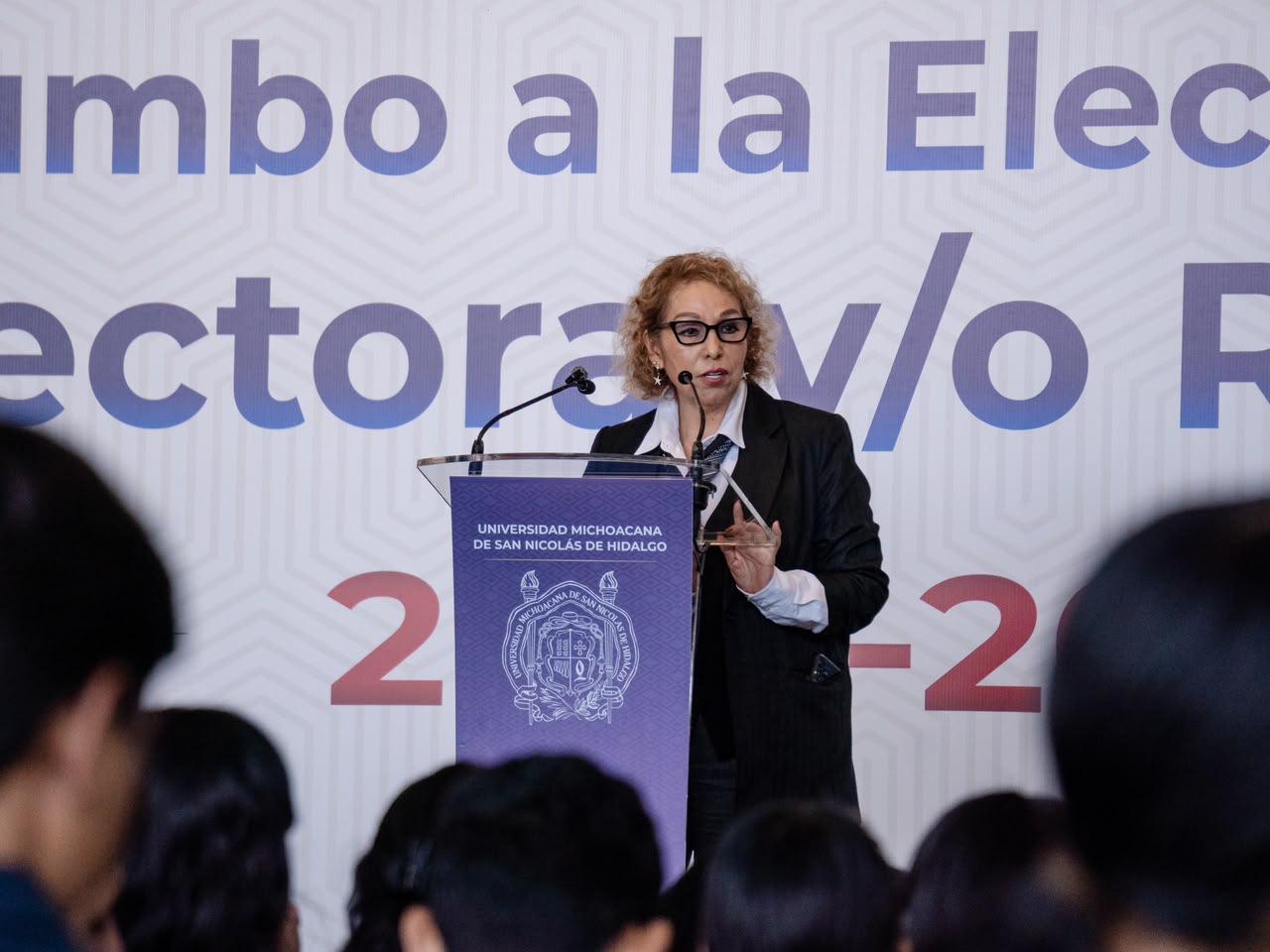
Six UMSNH Rector Candidates Present Proposals to Student Housing Residents
Six candidates for rector of the Universidad Michoacana de San Nicolás de Hidalgo presented proposals to residents of the university’s student housing complexes on Saturday, outlining competing visions for the 2027–2031 term, Quadratín reported, according to Quadratín Michoacán.
| Candidate | Key proposals |
|---|---|
| Jaime Espino Valencia | Curriculum updates, expanded scholarships and mobility, improved connectivity, health services, streamlined procedures, infrastructure upgrades, job placement office |
| Erika Jenny González Mejía | Equity-focused housing budget, health prevention campaigns, cultural and sports programs, gender equity, infrastructure maintenance, graduate tracking |
| Laura Leticia Padilla Gil | Student academic council, digital services window, electronic records, community research programs, research and graduate scholarship access |
| Hugo Rojas Figueroa | Research linkage for residents, increased sociocultural funding, sports promotion, housing rehabilitation, academic merit incentives, sector linkage |
| Miguel Ángel Villa | Accreditation strengthening, graduation program, 300 scholarships for high-performance athletes, internet and AI upgrades, sustainability, human rights, peace culture, security, integral care center |
| Memo Salas | Academic excellence with digital transformation and AI, digital education access, research linkage, direct bridges to employers and social sector for pre-graduation opportunities |
The forum, titled “Four Thematic Axes of the Institutional Development Plan for Student Housing,” was organized by the Special Commission for the Election of the Rector as part of the Informative Nicolaita Forums. All six aspirants participated in registration order under equal conditions, according to the commission’s bulletin.
Jaime Espino Valencia proposed updating academic curricula, strengthening scholarship searches, expanding mobility opportunities, improving connectivity, and boosting academic advising alongside physical and mental health services. He also called for bringing residents closer to knowledge generation, streamlining administrative procedures, upgrading academic and sports infrastructure, strengthening linkage agreements, and creating a university job bank.
Erika Jenny González Mejía centered her platform on an equity and justice approach for the housing complexes, advocating a “dignified budget” to meet community needs, disease-prevention campaigns, and health caravans. She also proposed cultural and sports programs to enhance artistic activities, gender equity measures, infrastructure maintenance, and a graduate follow-up program.
Laura Leticia Padilla Gil suggested creating an Academic Council so residents can define needed academic and tutorial support.
She proposed a Single Digital Nicolaita Window and an electronic university record to expedite paperwork, along with “University in the Territory” and “Nicolaita Research Seedbed” programs, and mechanisms to open research and graduate scholarship opportunities.
Hugo Rojas Figueroa emphasized linking residents with research and innovation, increasing resources for sociocultural support, and promoting sports. He proposed a deep rehabilitation program to comprehensively dignify housing facilities, an institutional incentives program rewarding residents with outstanding averages, and stronger sector linkages.
Miguel Ángel Villa highlighted strengthening accreditation and reaccreditation processes, maintaining the graduation program that aids family economies, and managing 300 scholarships for high-performance athletes.
He also cited improvements in internet, artificial intelligence, sustainability, human rights, peace culture, and university security, plus the creation of an Integral Care Center with psychological and pedagogical support.
Memo Salas argued his project bets on academic excellence paired with digital transformation and artificial intelligence.
He proposed promoting digital education to bring classes to youth in their homes and regions, linking residents with research, and building direct bridges with companies, producers, institutions, and the social sector to open opportunities before graduation.
The election process continues under the Special Commission’s calendar.
Worth a look
- IARC: Nearly 1M Gastric Cancer Cases in 2024, 760K Linked to H. pylori
- WSU Study: Winegrape Varieties Respond Identically to Drought
- California Announces New Homekey+ Projects and Funding to Address Homelessness and Veteran Housing (newsdirectory3.com)
- What Trump's Housing Order Means for a $360,000 Loan at 7.32% (daybreakwire.com)