
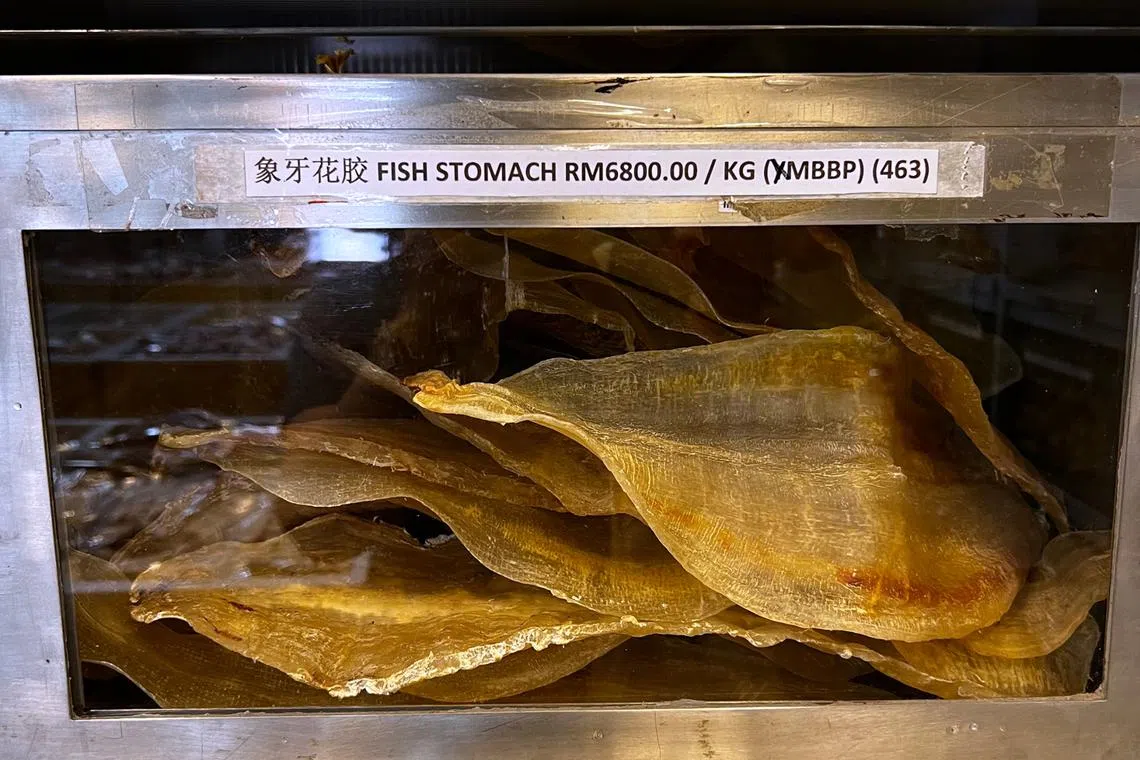
Endangered Fish DNA Found in Singapore Fish Maw Products
A recent study revealed that fish maw, a delicacy in Asian cuisine, contains the DNA of several endangered fish species. This discovery highlights concerns about the sustainability and traceability of the fish maw trade, prompting calls for consumers and businesses to consider alternatives.
Hidden Species in Fish Maw
Researchers from the **National University of Singapore (NUS)** and **Universiti Malaysia Terengganu (UMT)** have made a significant discovery. Their analysis of fish maw products from Singapore and Malaysia uncovered the presence of DNA from six endangered fish species. The findings, published in the journal *Conservation Letters*, shed light on the complexities of the fish maw trade.
Fish maw, derived from the dried swim bladder of fish, is highly valued in Chinese cuisine. It is often seen as a status symbol and a key ingredient in soups and stews. However, the origins of these products are often difficult to ascertain. The study examined 480 samples of fish maw collected from stores in Singapore and Malaysia.
“You can’t determine what species the maw comes from without using genetic methods – so we have no idea of what species are involved in this trade in South-east Asia.”
—Professor Benjamin Wainwright, NUS
The Challenge of Regulation
The trade in fish maw is challenging to regulate due to difficulties in visually identifying the species. The processing of fish maw, which includes cleaning and flattening, makes it hard to determine its origin. Furthermore, the aggregation of fish maw under a common commodity code further complicates oversight, according to the study’s authors.
DNA analysis of the samples revealed a total of 39 fish species. The most prevalent was the blackspotted croaker, found in 58 of the samples. The study also identified four endangered and two critically endangered species, including the cassava croaker, American eel, fourfinger threadfin, and iridescent shark.
The European eel, a critically endangered species, was also found in the samples. Notably, eleven samples originated from this species, despite a zero-export quota implemented by the European Union in 2010. This suggests ongoing challenges in regulating the trade and preventing the import of banned species.
According to the NOAA, overfishing is a major concern, with 34% of global fish stocks overfished. (NOAA 2024)
Seeking Sustainable Solutions
The findings underscore the need for consumers and businesses to be aware of the potential environmental impact of fish maw consumption. **Mr. Chester Gan**, the marine lead at the **World Wide Fund for Nature (WWF) Singapore**, emphasizes that businesses should examine their supply chains to ensure responsible sourcing. He encourages considering sustainable alternatives.
The researchers suggest avoiding fish maw if the origin and sustainability of the fishery cannot be confirmed. As **Professor Wainwright** points out, the overfishing of one species often leads to the exploitation of another. This cycle can continue if consumers do not become more conscious of the origins of the products they purchase.
