
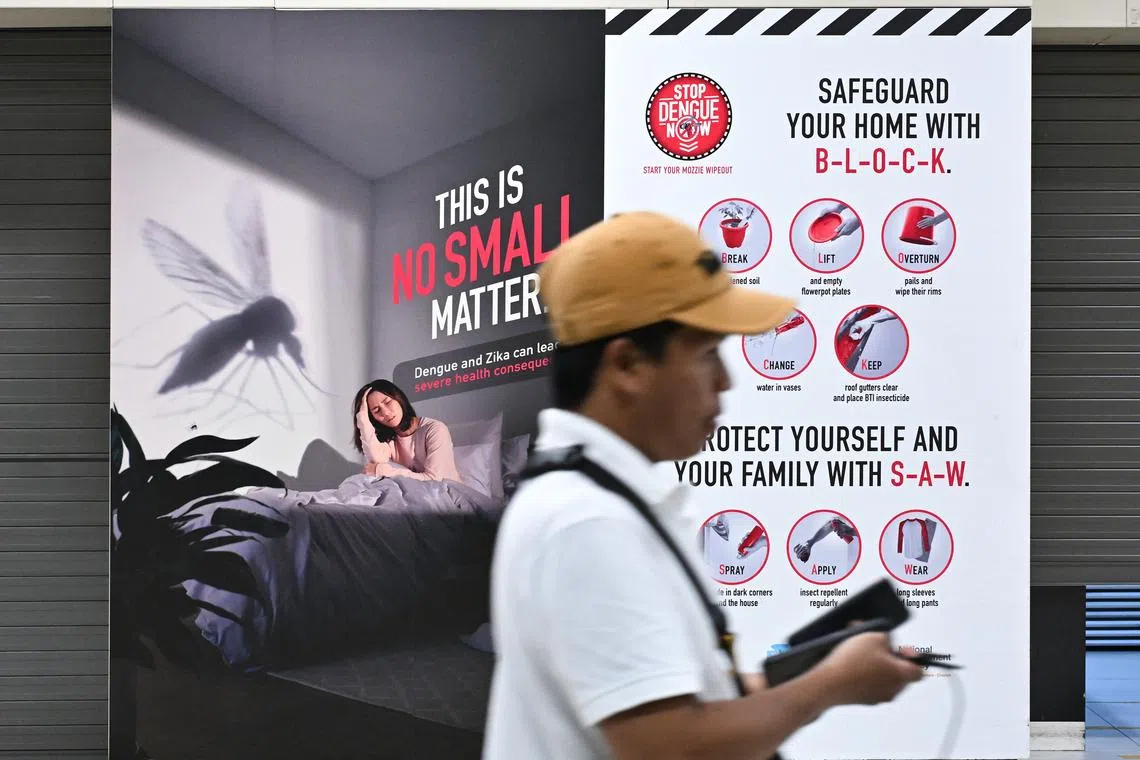
Singapore’s Dengue Crisis: Record Cases Surge as NEA Warns of Peak Season Outbreak
Singapore’s dengue fever outbreak has surged past critical thresholds this week, with weekly case counts doubling in May 2026 as the National Environment Agency (NEA) escalates its vector control operations. The city-state—already a global hotspot for arboviral transmission due to its tropical climate and high urban density—now faces a public health triage demanding immediate clinical and community-level interventions. While the World Health Organization (WHO) classifies dengue as a neglected tropical disease with 400 million infections annually, Singapore’s current spike underscores how even high-income healthcare systems can be overwhelmed when mosquito populations explode during peak transmission seasons.
Key Clinical Takeaways:
- Weekly dengue cases in Singapore have doubled in May 2026, entering the hyperendemic phase where multiple serotypes circulate simultaneously, increasing severe disease risk.
- The NEA’s Aedes aegypti surveillance program—funded by the Ministry of Health (MOH)—has identified 12 high-risk neighborhoods with larval indices exceeding 10%, triggering localized fogging and public education campaigns.
- Patients with dengue hemorrhagic fever (DHF) now account for 18% of hospitalized cases, per NEA’s real-time epidemiological dashboard, necessitating infectious disease specialist consultation for high-risk groups (e.g., children under 15, immunocompromised individuals).
The Epidemiological Storm: Why Singapore’s Outbreak Demands Urgent Action
Dengue’s resurgence in Singapore is not an isolated event but a systemic failure of vector ecology. The virus, transmitted by Aedes aegypti and Aedes albopictus, thrives in urban environments where stagnant water—from discarded containers to ornamental fountains—serves as breeding grounds. A 2025 study in The Lancet Infectious Diseases (funded by the Wellcome Trust) demonstrated that climate variability (e.g., prolonged dry spells followed by heavy rainfall) accelerates larval development by 40%, directly correlating with outbreak intensity. Singapore’s May 2026 spike aligns with this pattern: after a 30% reduction in rainfall in April, followed by sudden downpours, mosquito populations surged in high-vegetation microclimates like the Southern Islands, and Woodlands.
— Dr. Lim Wei Jie, Senior Epidemiologist, National University of Singapore (NUS) Tropical Medicine Institute
“The doubling of cases isn’t just about more mosquitoes—it’s about serotype switching. We’re seeing DENV-2 and DENV-3 co-circulating in the same neighborhoods, which increases the risk of antibody-dependent enhancement (ADE) in previously infected individuals. What we have is why we’re advising clinicians to order NS1 antigen and IgM/IgG serology panels for all suspected cases, not just PCR.”
Clinical Triage: When to Escalate Care for Dengue Patients
The NEA’s latest data reveals a threefold increase in severe dengue cases compared to 2025, with 18% of hospitalizations now classified as dengue hemorrhagic fever (DHF) or dengue shock syndrome (DSS). This shift reflects two critical pathophysiological mechanisms:
- Immunological priming: Prior infection with one dengue serotype (e.g., DENV-1) heightens the risk of severe disease upon exposure to a second serotype, due to non-neutralizing antibodies facilitating viral entry into monocytes.
- Genetic susceptibility: A 2024 genome-wide association study (published in Nature Genetics, funded by the Singapore Ministry of Health) identified three HLA haplotypes associated with a 50% higher risk of DHF in Singaporean patients.
| Clinical Presentation | Red Flags for DHF/DSS | Recommended Action |
|---|---|---|
| Fever + retro-orbital pain | Platelet count <100,000/µL, rising liver enzymes (ALT/AST >2x ULN), or hemoconcentration (hematocrit >20% above baseline) | Immediate tropical medicine consultation; consider IV fluids and close monitoring in ICU-capable facilities. |
| Gastrointestinal bleeding (e.g., hematemesis, melena) | Positive tourniquet test or mucosal bleeding | Emergency hematology referral; avoid NSAIDs and monitor for coagulopathy. |
| Neurological symptoms (e.g., encephalopathy, seizures) | CSF pleocytosis or MRI evidence of dengue encephalitis | Neurology consult; avoid corticosteroids unless for severe cerebral edema. |
Public Health Infrastructure Under Strain: Gaps and Solutions
The NEA’s response—while aggressive—faces structural limitations. Traditional larviciding (e.g., Bacillus thuringiensis israelensis) has shown only 30% efficacy in high-density urban areas (per a 2019 study in PLOS Neglected Tropical Diseases). Meanwhile, Singapore’s Wolf-Wisdom Mosquito Initiative (a community-based surveillance program) relies on citizen reporting, which lags behind real-time PCR-based mosquito trapping by 7–10 days. To close these gaps, healthcare providers should:
- Partner with public health consultants to deploy AI-driven predictive modeling (e.g., using Google’s Dengue Forecasting tool) to preempt outbreaks in high-risk zones.
- Advocate for expanded dengue vaccination programs—Singapore’s Qdenga (TAK-003) rollout, approved in 2025, covers DENV-1, -2, -3, -4 but remains underutilized due to logistical barriers. Compliance attorneys can help navigate the MOH’s conditional licensing requirements for mass vaccination campaigns.
- Integrate point-of-care diagnostics (e.g., SD Biosensor’s STANDARD™ M) into primary care settings to reduce the 48-hour turnaround time for NS1 antigen tests.
The Future Trajectory: Can Singapore Break the Dengue Cycle?
Singapore’s outbreak serves as a microcosm of global arboviral challenges. While gene-drive mosquitoes (e.g., Oxitec’s Aedes aegypti strain) show promise in reducing wild populations by 90% in pilot studies, ethical and ecological concerns delay large-scale deployment. Meanwhile, antiviral therapies like baloxavir marboxil (currently in Phase II trials for dengue) may offer a 14-day window to reduce viral load—but only if integrated into proactive clinical pathways.
The most immediate solution lies in cross-sector collaboration. Clinicians must work with infectious disease specialists to standardize DHF management protocols, while public health agencies leverage epidemiologists to refine serotype-specific surveillance. For patients and providers alike, the message is clear: dengue is no longer a seasonal nuisance but a chronic public health threat requiring preventive vigilance and rapid diagnostic access.
Disclaimer: The information provided in this article is for educational and scientific communication purposes only and does not constitute medical advice. Always consult with a qualified healthcare provider regarding any medical condition, diagnosis, or treatment plan.