Singapore’s $12M Health Pledge & Global Pandemic Preparedness: Key Updates from Geneva
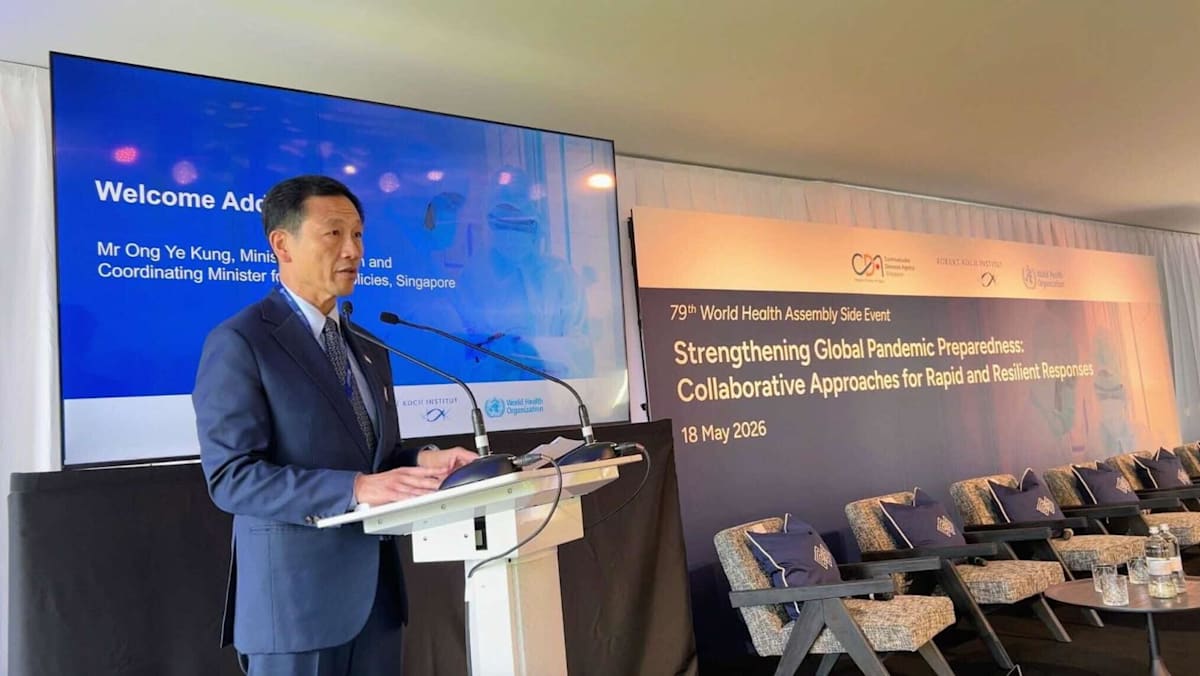
Singapore’s Health Minister Ong Ye Kung announced today that the city-state will contribute US$12 million (S$15.4 million) over the next four years to the Coalition for Epidemic Preparedness Innovations (CEPI), reinforcing its commitment to global pandemic defense amid persistent warnings about the risk of future outbreaks.
The pledge, made during Singapore’s participation in the 79th World Health Assembly in Geneva, will support CEPI’s “100 Days Mission”, an initiative aimed at accelerating the development of vaccines and biologics against emerging threats within 100 days of detection. The funding, set to run from 2027 to 2030, follows an earlier US$15 million contribution made by Singapore in 2022, positioning the country as a consistent partner in CEPI’s efforts to strengthen international preparedness.
Speaking at a side event on strengthening global pandemic preparedness, Minister Ong underscored the “unabated risk of another pandemic crisis”, echoing concerns raised by health officials and scientists worldwide. The announcement comes as CEPI, a public-private partnership backed by the World Health Organization (WHO), scales up its operations to address gaps exposed by the COVID-19 pandemic. The European Union has also pledged support for CEPI’s strategy, signaling a coordinated push to improve vaccine development timelines and equitable access to countermeasures.
CEPI’s 3.0 strategy, unveiled earlier this year, focuses on three core pillars: expanding manufacturing capacity, diversifying supply chains, and enhancing data-sharing mechanisms to detect and respond to outbreaks faster. The Singaporean funding will specifically target the “100 Days Mission,” which aims to reduce the time from pathogen identification to vaccine deployment—a critical bottleneck in past responses. The mission includes investments in mRNA and other next-generation vaccine platforms, as well as partnerships with biotech firms to ensure rapid scalability.
While the announcement marks a continuation of Singapore’s long-standing support for CEPI—dating back to 2020—the latest contribution reflects a broader shift in global health financing. The WHO has repeatedly highlighted the need for sustained funding to avoid a repeat of the chaotic early stages of the COVID-19 response, where vaccine inequities and supply chain disruptions left many low- and middle-income countries vulnerable. Singapore’s pledge aligns with this priority, though officials have not yet specified whether the funds will be earmarked for regional initiatives in Asia or global programs.
The timing of the announcement is significant, as the WHO’s World Health Assembly—where Minister Ong delivered the pledge—is currently debating a proposed pandemic treaty. The treaty, intended to create legally binding frameworks for international cooperation, has faced delays due to disagreements over liability, data-sharing, and resource allocation. Singapore’s financial commitment, while not directly tied to the treaty negotiations, underscores its willingness to act independently to bolster pandemic resilience.
CEPI’s executive director, Dr. Richard Hatchett, welcomed the Singaporean contribution in a statement, calling it a “critical step forward” in the organization’s efforts to “ensure no community is left behind in the face of future threats.” The organization has set a target of securing US$1 billion in additional funding by 2030 to fully implement its 3.0 strategy, with contributions from both governments and private sector partners.
As discussions at the World Health Assembly continue, Singapore’s role as a bridge between developed and developing nations in global health governance remains under scrutiny. The city-state’s technical expertise in biomanufacturing and its status as a regional hub for medical research could position it as a key player in executing CEPI’s initiatives, particularly in Asia, where pandemic risks—including from zoonotic diseases—remain high.
The next phase of CEPI’s work will focus on identifying high-priority pathogens and refining its vaccine development pipelines. Singapore’s funding will be directed toward these efforts, though exact allocations have not been disclosed. The Ministry of Health has not yet commented on whether the pledge includes provisions for technology transfer or capacity-building in partner countries, a topic of growing importance in global health equity debates.