Singapore Fuel Prices: Diesel Hits $4.13, Concerns Grow Over Rising Costs
Diesel Inflation: The Supply Chain Squeeze as Brent Nears $120
On March 30, 2026, Singapore’s major fuel retailers—Esso, Caltex, and SPC—implemented a synchronized 20-cent diesel price hike, pushing pump rates to a record $4.13. This move, mirroring Shell’s earlier adjustment, correlates directly with Brent crude surpassing $116 amid escalating Middle East tensions. The immediate fiscal impact threatens to erode SME margins and inflate logistics OpEx across the region.
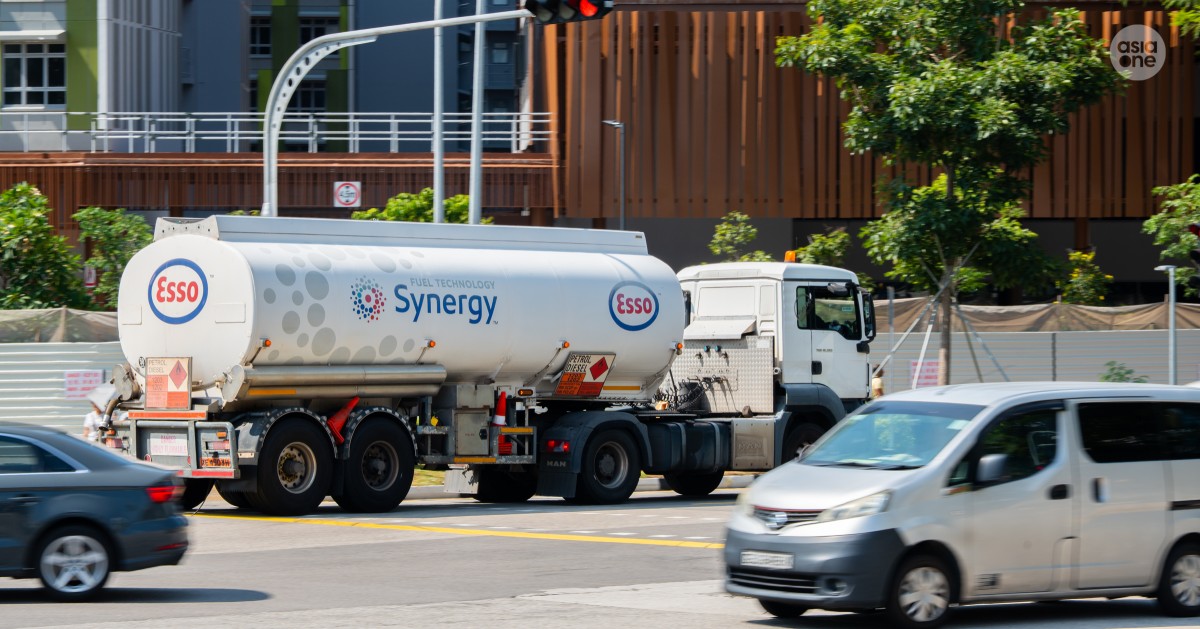
The rhythm of the Singapore fuel market has shifted from volatile fluctuation to a grim, predictable ascent. For the fourth consecutive week, the opening bell of Monday has signaled another erosion of purchasing power. Esso led the charge this morning, lifting diesel by 20 cents to $4.13 per litre. Caltex and SPC followed suit before the closing bell, cementing a new price floor that leaves little room for negotiation. Here’s not merely a consumer inconvenience; it is a direct assault on the operating leverage of the logistics sector.
While petrol prices saw a fleeting respite last week—dropping by mere cents between March 25 and March 27—the diesel trajectory tells a different story. The asymmetry is stark: downward adjustments are measured in pennies, while upward revisions arrive in double-digit increments. Caltex, for instance, cut petrol prices by five cents on March 26 only to hike diesel by 20 cents on the same day. This divergence signals a decoupling of retail fuel strategy from immediate crude spot prices, leaning instead on forward-looking risk premiums.
The Geopolitical Risk Premium
Market mechanics are currently secondary to geopolitical friction. The Brent benchmark, the global standard for crude valuation, surged past US$116 (S$149) as markets opened. The catalyst is no longer abstract supply anxiety; it is the tangible threat of kinetic conflict in the Persian Gulf. With the Pentagon reportedly preparing for extended ground operations in Iran and rhetoric from the White House regarding the seizure of Kharg Island, the risk premium embedded in every barrel is expanding.
According to the Analyst Connect March 2026 guidelines published on Seeking Alpha, institutional investors are being advised to treat geopolitical topics not as transient news cycles but as structural market shifts. The lack of a clear exit strategy in the Middle East suggests that the $120 barrier for Brent is not a ceiling, but a consolidation zone. For downstream retailers in Singapore, this translates to immediate pass-through pricing to protect gross margins.
“When diesel price is affected, non-diesel vehicle drivers will be affected substantial time too. The commercial vans and lorries are the ones delivering your packages, groceries and foods.”
This sentiment, echoed by market observers and logistics operators, underscores the inelasticity of demand in the short term. Diesel powers 85 per cent of Singapore’s goods vehicles. Unlike passenger cars, where demand might soften as prices rise, freight movement is non-negotiable. The cost must be absorbed or passed on. With Minor and Medium Enterprises (SMEs) accounting for 99 per cent of local businesses, the margin for absorption is virtually non-existent.
Operational Impact and B2B Mitigation
The immediate consequence of a 20-cent hike across the board is a compression of EBITDA for logistics-dependent firms. A transport company running a fleet of 50 heavy goods vehicles could see monthly fuel costs jump by tens of thousands of dollars overnight. In this environment, operational efficiency is no longer a KPI; it is a survival metric.
Forward-thinking CFOs are already pivoting. We are seeing a surge in demand for supply chain optimization consultancies that specialize in route algorithmic efficiency and fuel hedging strategies. The ability to lock in forward rates or optimize last-mile delivery to offset the $4.13/litre reality is becoming a key differentiator between solvent operators and those facing liquidity crises.
the disparity in pricing among retailers offers a marginal arbitrage opportunity, though it is fleeting. Sinopec currently undercuts the major players at $3.72 for diesel, a significant 41-cent spread against Esso and Shell. However, for large-scale enterprise contracts, volume discounts often negate these pump price differences. This dynamic is forcing fleet managers to renegotiate terms with energy risk management firms to secure bulk purchasing agreements that insulate them from weekly volatility.
Market Data: The New Price Floor
The following table outlines the post-adjustment landscape as of 6:50 PM on March 30. Note the convergence of the major players (Caltex, Esso, Shell) at the $4.13 diesel price point, creating a unified front that limits competitive pricing pressure.
| Company | 92-Octane | 95-Octane | 98-Octane | Premium | Diesel |
|---|---|---|---|---|---|
| Caltex | $3.38 | $3.42 | N/A | $4.11 | $4.13* |
| Esso | $3.38 | $3.42 | $3.92 | N/A | $4.13* |
| Shell | N/A | $3.40 | $3.92 | $4.14 | $4.13 |
| Sinopec | N/A | $3.42 | $3.92 | $4.05 | $3.72 |
| SPC | $3.38 | $3.41 | $3.92 | N/A | $3.92* |
| Smart Energy | N/A | $2.61 | $2.99 | N/A | $2.83 |
*Indicates price change on March 30, 2026.
Consolidation on the Horizon
As operating costs swell, the market structure itself may face pressure. We anticipate a wave of consolidation among smaller logistics providers who cannot hedge against these input costs. This environment typically favors larger entities with stronger balance sheets, leading to defensive M&A activity. Mid-market competitors are likely to consult with top-tier M&A advisory firms to explore defensive buyouts or capital injections before liquidity dries up.
The trajectory for Q2 2026 is clear: volatility is the new baseline. With the Pentagon mulling ground operations and oil terminals in the Persian Gulf potentially becoming strategic targets, the supply chain shock is far from over. Businesses must treat fuel not as a variable cost to be managed, but as a strategic risk to be hedged. The directory of vetted B2B partners in energy and logistics is no longer a resource; it is a necessity for survival in this high-cost regime.