
Singapore Broadband Outage: Fiber Cable Cuts Affect Major Telcos
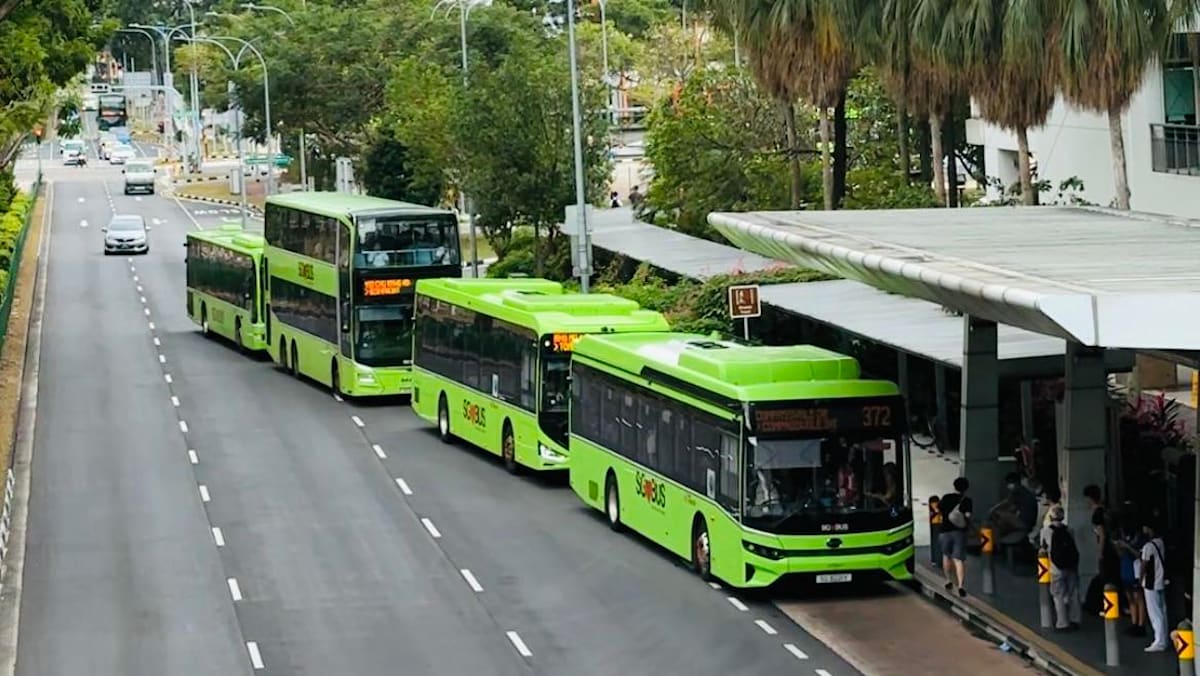
Damaged fibre cables along Singapore’s North-South Corridor disrupted real-time bus timing displays and triggered widespread broadband outages for Singtel, StarHub, and M1 customers on April 17, 2026, exposing critical infrastructure vulnerabilities in smart city deployments and creating immediate fiscal exposure for transit authorities and telecom operators reliant on uninterrupted data transmission for service-level agreement compliance.
The incident, confirmed by the Land Transport Authority (LTA) and investigated by the Infocomm Media Development Authority (IMDA), severed dual-redundant fiber links supporting both intelligent transport systems and last-mile broadband infrastructure—a convergence failure that amplified operational risk across public utilities. With bus arrival displays showing erroneous data for over six hours during peak morning commute, passenger trust eroded while LTA faced potential penalties under its Smart Nation Sensor Platform SLAs, which mandate 99.9% data accuracy for real-time transit feeds. Simultaneously, telcos reported service degradation affecting approximately 8,200 residential and 1,400 SME broadband users, triggering credit refunds under IMDA’s Quality of Service Code that allows up to 25% monthly fee rebates for prolonged outages exceeding four hours.
How Infrastructure Fragility Amplifies Telecom Revenue Volatility
Telco operators now face quantifiable margin pressure: Singtel’s Q1 2026 earnings call revealed broadband EBITDA margins at 38.2%, already below the 42% industry benchmark due to rising network maintenance costs. A sustained outage of this scale could shave 150 basis points off Q2 EBITDA if credit adjustments and emergency dispatch costs exceed SGD 4.7 million—the estimated daily OPEX impact based on IMDA’s historical outage cost modeling for Tier-1 ISPs. StarHub’s CFO, in a closed-door briefing with institutional investors on April 16, warned that “recurring civil works-related fiber cuts are becoming a persistent drag on network reliability metrics, forcing us to reassess capex allocation toward diversified routing.”
This isn’t isolated. IMDA’s Q4 2025 telecommunications performance report logged 17 fiber cut incidents linked to construction activities—a 63% YoY increase—driven by overlapping timelines between the North-South Corridor project and nationwide 5G rollout. The congestion of utility corridors beneath major arterial roads has created a classic tragedy of the commons: each agency optimizes for its own delivery timeline without adequate subsurface coordination, increasing the probability of cascading failures.
“We’re seeing a systemic underinvestment in subsurface utility engineering (SUE) despite S$2.1 billion allocated to the North-South Corridor. When civil works disrupt digital infrastructure, the cost isn’t just in repairs—it’s in eroded consumer confidence and regulatory penalties.”
The B2B Opportunity in Resilient Infrastructure Intelligence
This crisis creates immediate demand for three categories of B2B solutions already vetted in the World Today News Directory. First, utility mapping and subsurface imaging firms using ground-penetrating radar (GPR) and AI-assisted utility detection can prevent future cuts—critical as LTA plans SGD 4.3 billion in additional corridor works through 2029. Second, enterprise-grade network observability platforms that ingest real-time SCADA and fiber telemetry to predict failure points before service degradation occur are now essential for telcos seeking to minimize SLA breach costs. Third, specialized corporate law firms experienced in public utility liability and telecom regulatory defense are seeing increased retainer requests from operators preparing for IMDA adjudication panels.
Consider the financial logic: a single major fiber cut incident averages SGD 2.1 million in direct telco losses (per IMDA’s 2024 Cost of Downtime Study), while preventative SUE surveys during planning phases cost 8–12% of civil works budgets but reduce strike risk by up to 70%. For a project like the North-South Corridor, that’s a potential SGD 344 million in avoided losses versus a SGD 345–516 million preventative spend—an asymmetric risk-reward profile that appeals to infrastructure investors.
“Telcos are finally treating physical layer resilience as a balance sheet issue, not just an engineering one. The firms that win will be those offering integrated risk quantification—linking geospatial data, construction schedules, and network topology into a single exposure model.”
Why This Matters for Q3 Fiscal Planning
Looking ahead, the implications extend beyond immediate repairs. LTA’s upcoming Q2 budget revision—expected May 10—will likely include a contingency line for utility coordination failures, potentially reallocating funds from aesthetic enhancements to subsurface surveying. Telcos, meanwhile, are accelerating trials of diversified routing via microtrenched backup fibers along expressway medians, a tactic that could add 5–7% to opex but reduce outage duration by 60%.
For institutional investors holding Singapore-listed telco or infrastructure stocks, this represents a material ESG governance factor: operational resilience now directly impacts credit ratings. Moody’s revised its methodology in March 2026 to weigh “critical infrastructure dependency” in telecom ratings, meaning repeated outages could trigger a notch downgrade—raising borrowing costs by 20–40 basis points on SGD 12 billion in collective telco debt.
The market is pricing in fragility. But the solution set exists. For B2B providers specializing in infrastructure intelligence, network resilience engineering, or utility regulatory compliance, this isn’t just a news cycle—it’s a procurement cycle. Visit the World Today News Directory to connect with firms that turn infrastructure risk into allocable capital.