
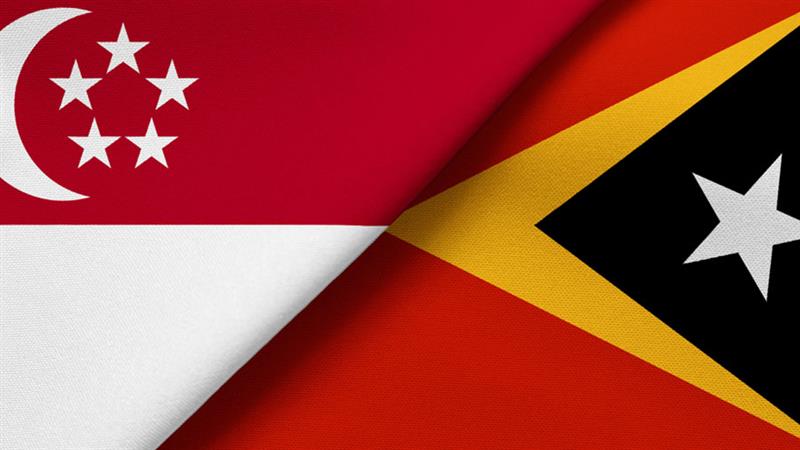
Singapore Bolsters Timor-Leste’s ASEAN Entry with Enhanced Support
New eSTARS Program Accelerates Timorese Readiness for Regional Integration
Singapore has launched an upgraded initiative, the Enhanced Singapore–Timor-Leste ASEAN Readiness Support (eSTARS), to significantly bolster Timor-Leste’s pathway to full membership in the Association of Southeast Asian Nations (ASEAN). This program, running from July 2025 to December 2028, expands upon the initial 2022 framework, offering deeper technical assistance, leadership development, and policy alignment crucial for Timor-Leste to meet ASEAN’s rigorous membership requirements.
Focus on Technical and Institutional Capacity Building
The eSTARS package aims to equip Timor-Leste’s government bodies with essential capabilities. This includes training in trade facilitation, digital government services, regional economic cooperation, and customs harmonization. A key enhancement is the introduction of new leadership training modules and public policy fellowships. These opportunities will allow Timorese civil servants to pursue advanced studies in Singapore, fostering a new generation of leaders equipped to represent Timor-Leste effectively within ASEAN and implement regional agreements domestically.
Urgency Driven by Accession Timeline
Timor-Leste is anticipated to become ASEAN’s eleventh member in November 2025, contingent upon successfully completing its institutional onboarding. Since receiving an in-principle endorsement in 2022, the nation has been attending ASEAN meetings as an observer while preparing its national systems. The eSTARS program is closely aligned with this schedule, ensuring that training and legislative harmonization efforts are delivered promptly to facilitate Timor-Leste’s full participation. This predictable integration timeline offers foreign investors valuable foresight for strategic planning related to supply chains, regulatory adjustments, and cross-border trade.
Aligning Legal and Economic Frameworks
Achieving ASEAN membership necessitates adherence to a broad spectrum of legal, regulatory, and economic standards. These encompass tariff schedules, rules of origin, dispute resolution mechanisms, and e-commerce protocols. Building capacity in these areas is paramount for Timor-Leste to operate seamlessly within multilateral frameworks like the ASEAN Economic Community and the Regional Comprehensive Economic Partnership. For instance, Timor-Leste’s average tariff on imported goods currently stands at 4.5%, a figure that will need to be harmonized with ASEAN’s common external tariff policy.
Strategic Implications for Investors
The expansion of ASEAN to include Timor-Leste signifies the integration of a frontier market into Southeast Asia’s established economic order. As eSTARS facilitates internal reforms, foreign investors can anticipate reduced entry risks, enhanced bureaucratic efficiency, and a more predictable policy landscape. Businesses with long-term interests in the region might find it advantageous to incorporate Timor-Leste into their Southeast Asian strategies, particularly in sectors like logistics, digital infrastructure, and government contracting, where early engagement can yield significant benefits.
Singapore’s Continued Role in Regional Support
Singapore’s commitment to Timor-Leste’s accession reflects its ongoing dedication to regional capacity building. Through the Singapore Cooperation Program, the city-state has a history of assisting countries such as Cambodia, Laos, and Myanmar with administrative and regulatory alignment during their accession processes. With over 1,100 Timorese officials already having benefited from Singapore’s broader training programs, the eSTARS initiative underscores Singapore’s dedication to regional stability, shared knowledge, and economic inclusivity.
