
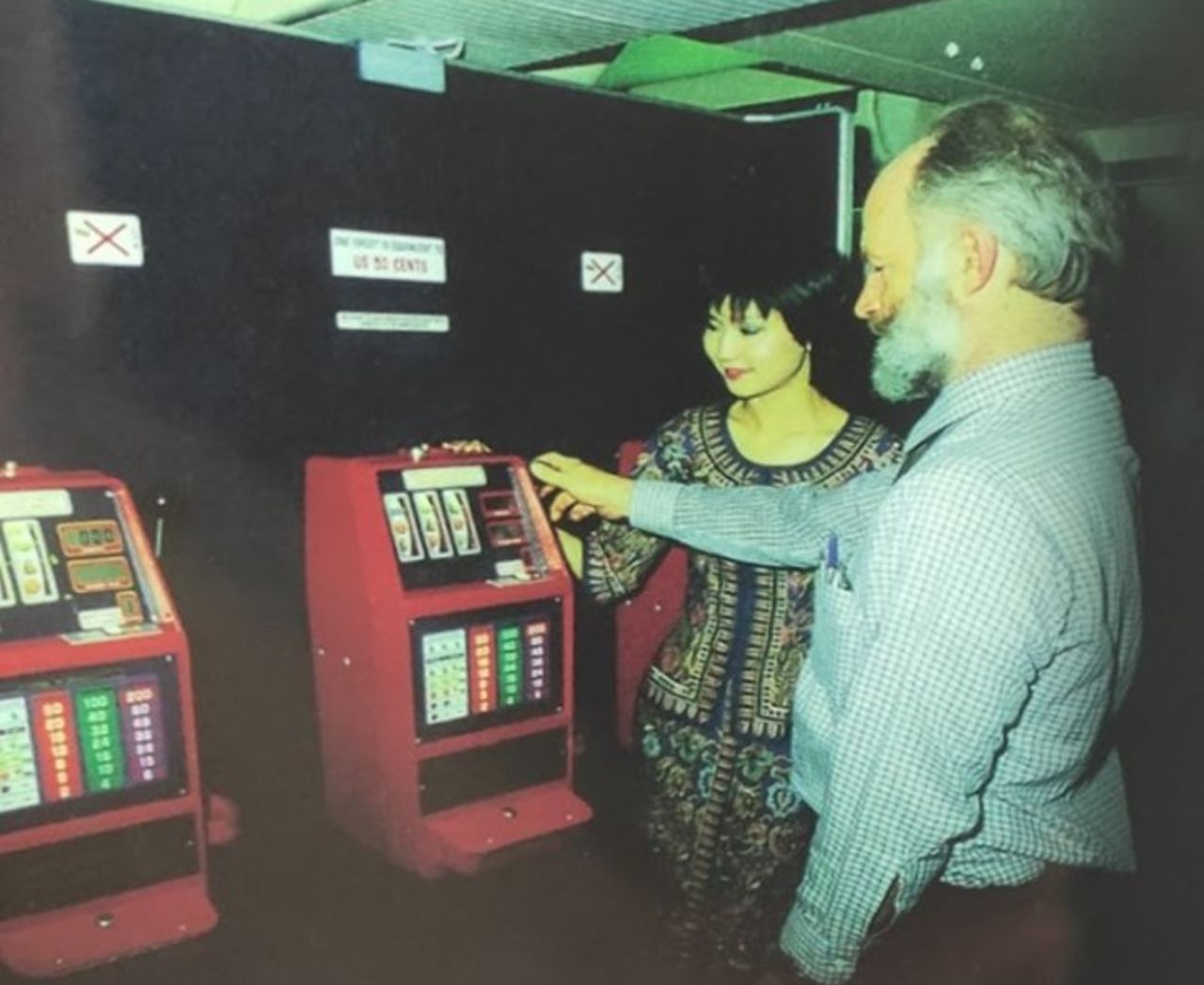
In 1981, a Singapore Airlines Boeing 747-200B departed Changi Airport for San Francisco carrying more than just passengers and cargo – it carried a gamble. Six slot machines, dubbed “Orchard Rows,” were installed in the economy cabin, making it the first airline in the world to offer in-flight gambling.
The experiment, announced to much fanfare in February 1981, was intended to provide a novel form of in-flight entertainment. Singapore Airlines officials stressed they weren’t endorsing gambling, merely offering a recreational activity. Passengers aged 18 and over could exchange cash for tokens with the flight crew and try their luck, with a potential jackpot of US$200. A special one-off jackpot of US$25,000 was also announced, though never won.
The concept wasn’t born in a vacuum. David Flexer, the head of Cemae Investment, the company behind the machines, had already pioneered in-flight movies, solving the logistical challenges of lightweight, automated film equipment. He envisioned flying casinos as the next big trend, investing heavily in research and development and securing exclusive rights with SIA for four months before other airlines could follow suit.
Initial reports from the inaugural flight, SQ2, were positive. Passengers crowded around the machines, champagne flowed, and payouts were made. However, the novelty quickly wore off, revealing a fundamental flaw in the design. To reduce weight, many metal components of the slot machines had been replaced with plastic. The plastic chassis and internal parts proved unable to withstand the enthusiastic, and sometimes frustrated, use by passengers.
Coin slots jammed, arms were broken, and the machines were forced to shut down before the flight even reached Honolulu. Repairs took months, and the machines remained out of service for eight months. Singapore Airlines attempted a revised version in 1982, powered by aircraft electricity and using a computerized credit system instead of tokens, but the problems persisted.
By 1984, Orchard Rows had disappeared. Singapore Airlines quietly discontinued the program, citing ongoing maintenance issues and the cost of operation. Flexer’s vision of airborne casinos never materialized. The airline later introduced virtual jackpots on its KrisWorld system in 1998, but physical gaming machines were never revisited.
Despite its failure, the Orchard Rows experiment generated significant publicity for Singapore Airlines, garnering attention from media outlets worldwide, including the London Daily Telegraph and the Jerusalem Post. Today, the venture is a little-known footnote in aviation history, remembered only by a small display at the Singapore Airlines Training Centre.
