
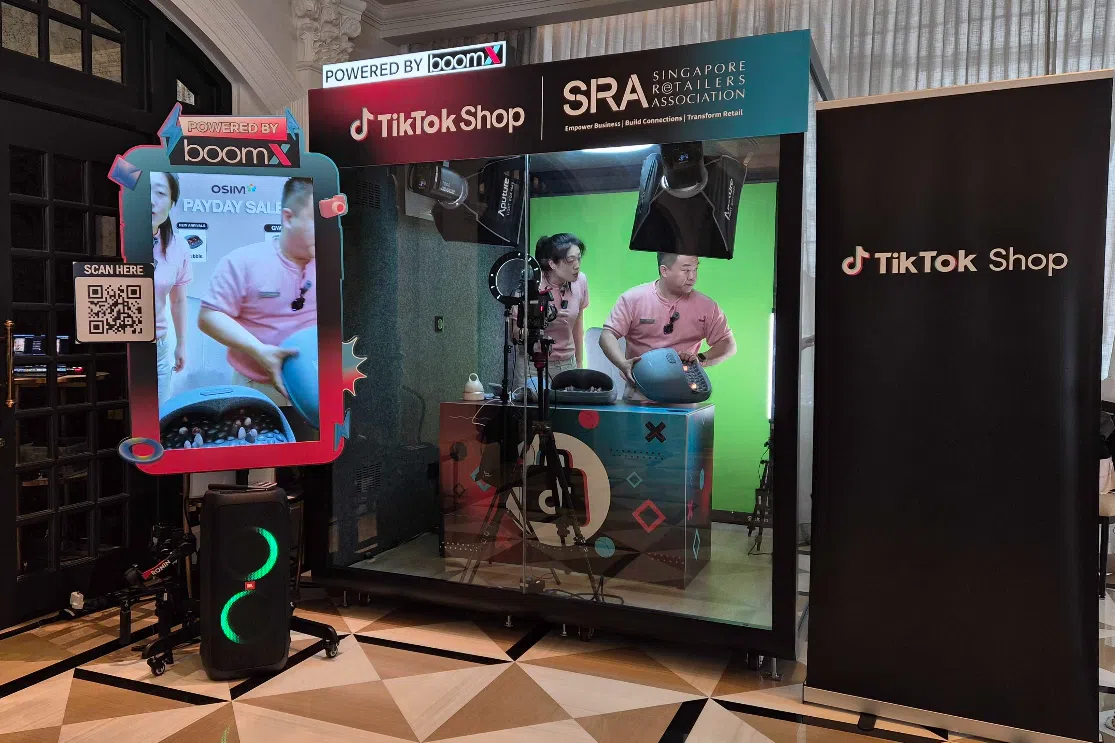
Singapore agencies and TikTok training workers for retail jobs in live-streaming era
Singapore’s retail sector is executing a hard pivot toward high-velocity social commerce, driven by a new tripartite agreement between Workforce Singapore (WSG), the Singapore Retailers Association (SRA), and TikTok Shop. This strategic alliance addresses a critical labor bottleneck: the scarcity of skilled personnel capable of driving conversion through live-streaming channels. By formalizing training for “hosts,” “leads,” and “engineers,” the initiative aims to lower customer acquisition costs (CAC) and stabilize revenue streams in an increasingly fragmented digital marketplace.
The Fiscal Imperative: Why Traditional Retail Margins Are Bleeding Out
The math is simple. Traditional brick-and-mortar retail is suffering from margin compression due to rising overheads and stagnant foot traffic. Meanwhile, the cost of acquiring a customer on static e-commerce platforms has skyrocketed, eroding net profitability. Live commerce offers a solution by compressing the sales funnel—turning discovery and transaction into a single, high-engagement event. However, this efficiency gains nothing if the human element fails.

The pilot program launched in January, training 36 workers, is not merely a vocational exercise; it is a defensive maneuver against obsolescence. When Minister of State Alvin Tan speaks of “charting the future,” he is referring to the preservation of GDP contribution from the retail sector, which faces existential threats from cross-border e-commerce giants. The problem isn’t the technology; TikTok Shop provides the infrastructure. The problem is the talent gap. Retailers cannot scale live operations if they rely on ad-hoc hiring. They need a workforce that understands the mechanics of real-time engagement.
This is where the B2B ecosystem must intervene. Retailers attempting to build these capabilities in-house often struggle with curriculum development and compliance. To mitigate this operational risk, many mid-cap retailers are bypassing internal HR development in favor of specialized corporate training and development firms that can rapidly deploy industry-specific upskilling modules. Speed to competency is now a balance sheet item.
Three Structural Shifts in the Retail Labor Market
The MOU signed at the SRA Retail Forum 2026 signals a permanent restructuring of how retail labor is valued and deployed. We are moving away from the “sales associate” model toward a production-crew model. This shift impacts three specific areas of the P&L statement:
- Labor Arbitrage and Role Specialization: The initiative delineates three distinct roles: hosts (talent), leads (strategy), and engineers (technical execution). This specialization allows for better wage structuring. Instead of paying a flat rate for general sales, retailers can allocate budget to high-performance talent who directly drive GMV (Gross Merchandise Value). It creates a meritocratic pay structure tied to conversion metrics rather than hours clocked.
- Infrastructure Capital Expenditure: Live streaming is not free. It requires lighting, audio, and low-latency connectivity. As TikTok’s Leon Koh noted, “one person is enough,” but that person needs a stack. This drives demand for B2B hardware and software providers. Retailers are increasingly consulting with IT infrastructure and cloud service providers to ensure their streaming setups do not suffer from latency issues that kill conversion rates.
- Demographic Diversification: SRA President Ernie Koh’s assertion that live streaming is “ageless” is a crucial economic signal. It expands the total addressable market (TAM) for labor. By integrating mature workers into backend roles like “social commerce lead,” retailers can leverage institutional knowledge while reserving on-camera roles for digital natives. This reduces turnover costs, a significant line item in retail operations.
The Data Reality: Conversion vs. Cost
Early adopters are already validating the model. Shiseido Singapore reported significant sales spikes during key retail moments like Black Friday by diversifying into TikTok Shop. This aligns with broader market data suggesting that live commerce conversion rates can be upwards of 10%, compared to the 2-3% average of static e-commerce. However, Christine Goh of Shiseido highlighted a hidden cost: preparation time. “It could take hours,” she noted. This is an operational drag.
For public companies, this drag must be offset by volume. Osim’s strategy of using existing sales staff to stream creates a hybrid model that maximizes asset utilization. But for smaller brands, the resource drain is acute. They lack the manpower to staff a 4-hour stream while managing inventory. This creates a vacuum for digital marketing and agency partners who can offer “streaming-as-a-service,” handling the production burden so the brand can focus on product.
“The social ecosystem has changed. You cannot rely on a single platform anymore. Live streaming gives the brand good sales spikes, but it requires a story told in real-time. That is a fundamentally different skill set than managing a shelf.”
The volatility of the creator economy means that reliance on a single platform is a concentration risk. Diversification is key. Just as an investment portfolio requires hedging, a retail revenue stream requires platform hedging. Lazada, Shopee, and TikTok Shop must all be part of the mix. But managing this omnichannel presence requires sophisticated data analytics to track ROI across different engagement models.
The Bottom Line: Operational Readiness is the New Moat
As we move through Q2 2026, the winners in the Singapore retail sector will not be those with the best products, but those with the most agile workforces. The WSG and TikTok partnership removes the friction of entry, but it does not guarantee success. Success belongs to the firms that treat live commerce as a serious operational vertical, not a marketing gimmick.
Investors should watch for retailers that disclose “digital engagement metrics” alongside same-store sales in their upcoming earnings calls. The companies that fail to adapt to this labor shift will spot their customer acquisition costs spiral, rendering them uncompetitive against agile, stream-native competitors. The directory of viable B2B partners for this transition is growing, but vetting for financial stability and technical competence remains the priority for any CFO looking to future-proof their operations.