
Signal Messenger Adds New Group Chat Labels and Audio Updates
Signal just pushed a production update that attempts to move the needle on encrypted group communication, scaling call capacity to 75 participants and introducing member labeling. For those of us managing secure comms for distributed teams, it’s a marginal gain in utility, but a significant test of their complete-to-end encryption (E2EE) overhead.
The Tech TL;DR:
- Call Capacity: Audio and video call limits increased to 75 participants, more than doubling WhatsApp’s current 32-user ceiling.
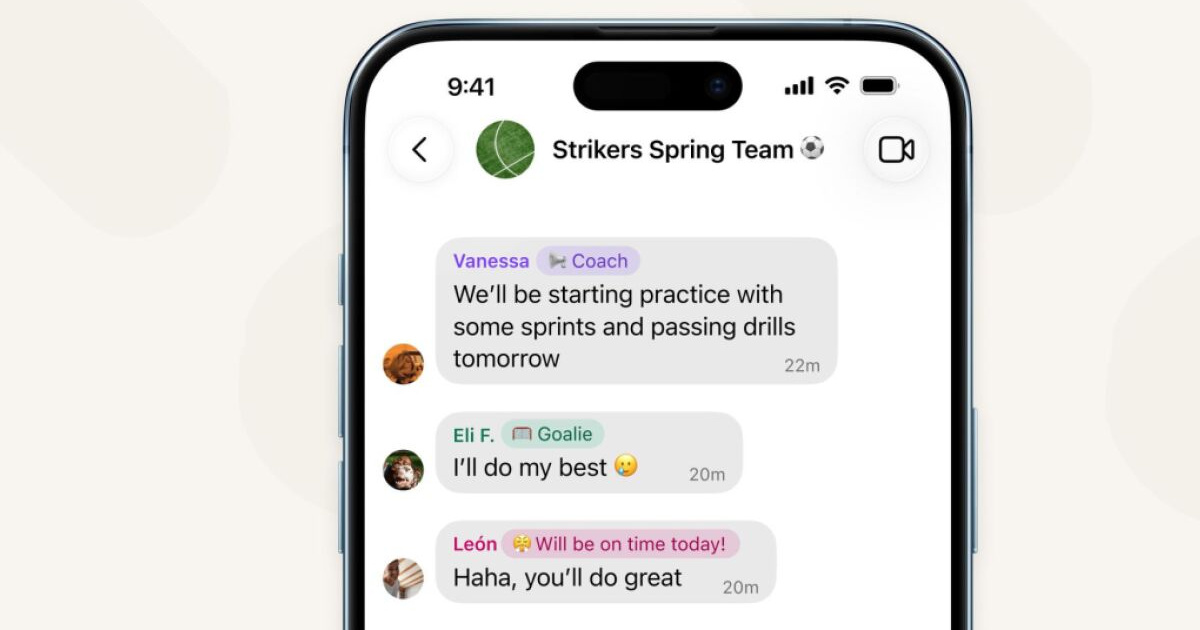
- Group Orchestration: Introduction of member labels (text/emojis) to define roles within large encrypted chats.
- Desktop Parity: One-time view media now supported for sending on Signal Desktop, with a fresh distribution channel via the Microsoft Store.
Scaling an E2EE call from a handful of users to 75 introduces non-trivial latency and key-management challenges. While most messengers rely on centralized mixing for large-scale media, Signal’s commitment to privacy means the computational load on the client side increases as the participant count grows. For enterprise environments where secure, real-time collaboration is non-negotiable, this update reduces the friction of moving away from legacy proprietary stacks. However, scaling these encrypted endpoints across an organization often requires the oversight of Managed Service Providers to ensure endpoint security doesn’t degrade as user counts climb.
The Architecture of Scale: 75-Participant Thresholds
The jump to 75 participants is a direct shot at WhatsApp’s 32-person limit. From an architectural standpoint, the Signal Foundation is betting that modern hardware can handle the increased overhead of maintaining encrypted sessions for a group of this size without significant jitter or packet loss. The primary objective here is to capture the “team meeting” and “community organization” use cases—segments that typically migrate to less secure platforms when they hit the 30-person wall.

Signal vs. WhatsApp: The Scale Gap
| Feature | Signal (v2026.04) | WhatsApp (Current) |
|---|---|---|
| Max Call Participants | 75 | 32 |
| Encryption Standard | End-to-End (Signal Protocol) | End-to-End |
| Group Organization | Member Labels (Role-based) | Standard Profiles |
| Desktop Media Control | One-time view (Send/Receive) | Limited |
Beyond the raw numbers, the introduction of member labels solves a persistent UX bottleneck in large-scale encrypted chats. By allowing admins to assign roles—such as “Referee” in a sports context or a specific professional title in a corporate one—Signal is attempting to bring a rudimentary form of directory services to a decentralized environment. This is critical for “neighborhood chats” or “professional working groups” where users don’t share a pre-existing contact list.
Desktop Parity and Deployment Realities
The deployment of “one-time view” media to the Signal Desktop app closes a long-standing gap in the software’s feature parity. Previously, desktop users were limited to receiving these ephemeral messages; they could not initiate them. By enabling sending capabilities on the desktop, Signal is acknowledging the workflow of the power user who manages sensitive data via a workstation rather than a mobile device.
The shift to produce Signal Desktop available via the Microsoft Store is a move toward frictionless deployment. While the website download remains the primary path for purists, the Store integration simplifies the update cycle for non-technical users. To verify if your local installation is running the latest version capable of these features, you can check your versioning via the CLI if you’re running the app in a managed environment:

# Conceptual check for Signal Desktop installation version on Linux/macOS dpkg -l | grep signal-desktop || brew info signal --cask | grep VersionAs these features roll out, the risk surface for the endpoint increases. Ephemeral messaging on desktop is a convenience, but it requires rigorous memory management to ensure that “one-time view” content doesn’t leave artifacts in the system cache. Organizations deploying this at scale should engage cybersecurity auditors to verify that their endpoint protection policies align with the use of ephemeral encrypted media.
The Protocol Verdict
Signal’s move to 75 participants is less about “beating” WhatsApp and more about proving the viability of the Signal Protocol at a semi-enterprise scale. The addition of role-based labels suggests a trajectory toward more structured group management, moving away from the “chaos” of basic group chats and toward a more organized, directory-like experience.
The real test will be the performance benchmarks in low-bandwidth environments. While 75 users can technically join a call, the actual quality of service (QoS) will depend on how the Signal Foundation handles the distribution of encrypted keys across that many concurrent nodes. For those managing corporate infrastructure, this update makes Signal a more viable alternative to Slack or Teams for high-security silos, provided the deployment is handled by vetted software development agencies capable of integrating secure comms into a broader IT strategy.
Disclaimer: The technical analyses and security protocols detailed in this article are for informational purposes only. Always consult with certified IT and cybersecurity professionals before altering enterprise networks or handling sensitive data.