
Shield AI Raises $1.5 Billion at $12.7 Billion Valuation Amid Global Conflicts
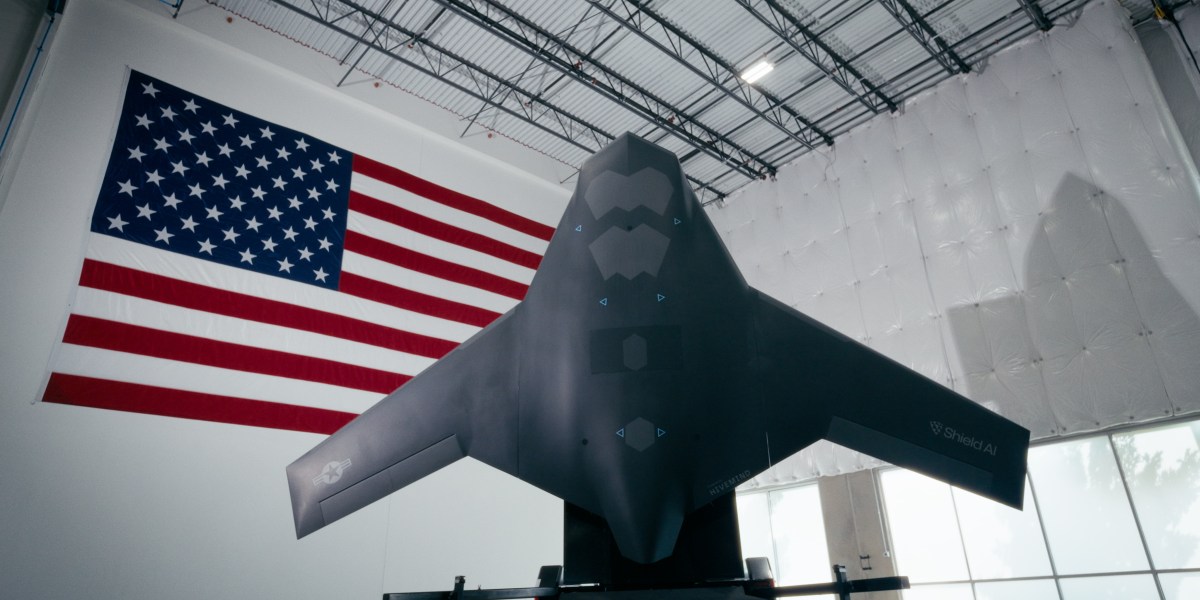
Shield AI has secured a $1.5 billion Series G round at a $12.7 billion valuation, driven by urgent global defense modernization and an 80% projected revenue surge to $540 million in 2026. This capital infusion, anchored by Blackstone and Advent International, funds the acquisition of Aechelon and accelerates the Hivemind autonomy platform, signaling a decisive shift from R&D to scalable combat deployment across volatile geopolitical theaters.
Capital efficiency is the only metric that matters in a high-interest environment, and Shield AI just proved it understands the assignment. While Silicon Valley burns cash on generative text models, San Diego-based Shield AI is printing revenue by solving the kinetic problem of modern warfare. The jump from a $5.6 billion valuation to $12.7 billion isn’t just hype; it’s a repricing of risk in a world where geopolitical instability has become the new baseline for institutional portfolios.
The Blackstone Play: Non-Dilutive Capital as a Strategic Weapon
The structure of this deal reveals more about the maturity of the defense-tech sector than the headline valuation. Shield AI didn’t just raise equity; they layered in a $500 million fixed return preferred equity deal with Blackstone. This is non-dilutive financing, a sophisticated move that preserves founder ownership while securing the heavy balance sheet required for hardware manufacturing.
According to the latest SEC Form D filings accessible for the quarter, this hybrid approach mirrors the capital structures of mature aerospace primes rather than typical venture-backed startups. It signals to the market that Shield is transitioning from a “growth story” to a “cash flow story.” For mid-market defense contractors currently struggling with liquidity, this move underscores the necessity of engaging specialized corporate finance advisory firms to structure similar non-dilutive instruments before approaching traditional VCs.
Revenue is projected to hit $540 million this year. That is an 80% year-over-year growth rate. In the hardware space, that is unheard of without significant margin compression. Yet, Shield claims it can scale without breaking the bank.
Boardroom Shifts and Institutional Validation
Money brings governance. With Advent International’s David Mussafer joining the board and JPMorgan Chase’s Todd Combs acting as an observer, the era of the “garage startup” is officially over for Shield. These are operators who understand exit liquidity and regulatory friction.
“We are seeing a bifurcation in the defense sector. Companies with proven autonomy in active conflict zones, like Ukraine, are commanding premiums that legacy primes cannot match. Shield AI isn’t just selling drones; they are selling a software-defined warfare capability that scales infinitely.”
The acquisition of Aechelon, a tactical simulation company, is the linchpin here. You cannot train AI for combat without high-fidelity synthetic environments. By buying Aechelon rather than building the tech in-house, Shield AI bypasses years of R&D lag. However, integrating disparate tech stacks post-acquisition remains a primary failure point for 60% of tech M&A deals. To mitigate this, enterprises are increasingly retaining specialized IT integration consultants to ensure the Aechelon simulation data feeds seamlessly into the Hivemind neural network without creating data silos.
Geopolitics as a Revenue Driver
Brandon Tseng, Shield’s co-founder, noted that fundraising began before the recent escalation in Venezuela and Iran. The timing suggests that institutional investors are front-running geopolitical volatility. The deployment of V-BAT drones in Ukraine has served as a live-fire proof of concept, validating the technology in a way no lab test ever could.
Per the SIPRI Yearbook 2026 data on military expenditure, global defense spending is trending upward for the eighth consecutive year. Nations are not just buying hardware; they are buying autonomy to offset shrinking manpower pools. This creates a massive supply chain bottleneck. Scaling drone production from hundreds to thousands requires a logistics network that most software companies simply do not possess.
As Shield AI ramps up V-BAT production to meet the $540 million revenue target, they will face the classic hardware trap: working capital constraints. This is where the broader B2B ecosystem steps in. Scaling hardware production often necessitates partnerships with global supply chain logistics providers who can navigate the complex export controls and raw material sourcing required for dual-use technology.
The Regulatory Moat
The deal’s final close is contingent on regulatory approval for the Aechelon acquisition. In the current climate, antitrust and national security reviews (CFIUS) are becoming more aggressive. A delay here could stall the capital infusion. This highlights a critical vulnerability for high-growth defense startups: regulatory friction can kill momentum faster than a lack of product-market fit.
Companies navigating this landscape must treat regulatory compliance not as a back-office function, but as a core strategic pillar. The complexity of cross-border defense tech transfers requires top-tier corporate law firms with specific expertise in ITAR regulations and national security law. One misstep in filing can turn a $1.5 billion round into a stranded asset.
Shield AI’s trajectory suggests that the “software eats the world” mantra has evolved into “autonomy eats the battlefield.” The $12.7 billion valuation is a bet that the future of defense is algorithmic. As the fiscal year closes, the market will be watching one number: gross margin. If Shield can maintain software-like margins on hardware revenue, they will force a re-rating of the entire defense industrial base. For investors and operators alike, the message is clear: the window for passive exposure to defense tech is closing. Active, strategic partnerships with vetted B2B service providers in the World Today News Directory are now the only way to secure a position in this new economic order.