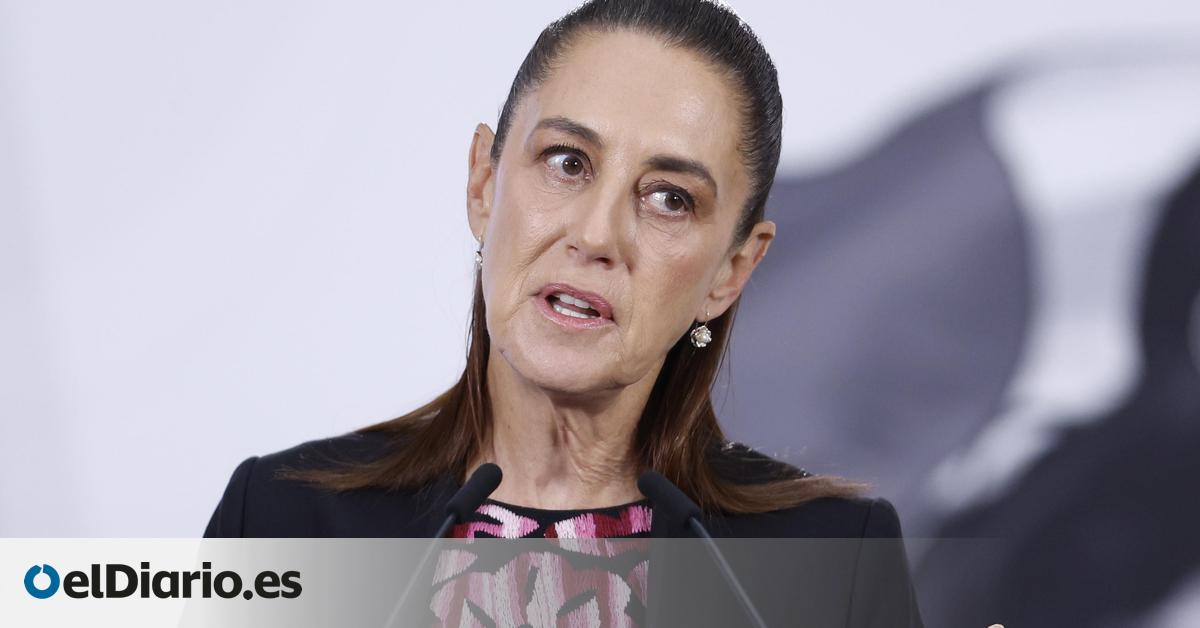
Sheinbaum Acknowledges Spain’s Colonial Gestures but Cites Centuries of Looting
Mexican President Claudia Sheinbaum is easing diplomatic tensions with Spain ahead of her Barcelona visit. While acknowledging King Felipe VI’s admission of colonial “abuse,” Sheinbaum maintains that Spain plundered Mexico for 300 years, seeking a deeper historical reckoning and cultural exchange through academic exhibitions and dialogue.
Diplomacy is rarely a straight line and the relationship between Mexico City and Madrid has spent the last seven years as a masterclass in volatility. For years, the ghost of the 16th century has haunted every high-level meeting, turning diplomatic protocols into ideological battlegrounds. The core of the conflict is not merely historical. it is about the dignity of the living.
President Claudia Sheinbaum is now attempting to navigate this minefield. While she has signaled a willingness to normalize relations, she refuses to trade historical truth for political convenience. The tension is palpable: a desire for fraternal friendship clashing with the memory of systemic plunder.
The Barcelona Summit and the Progressive Pivot
This coming Friday, Sheinbaum travels to Barcelona to participate in the Global Progressive Mobilisation. It is a gathering of international leaders, including Spanish President Pedro Sánchez and Brazilian President Lula da Silva, designed to align the left-wing vanguard on global issues. For Sheinbaum, the congress is a platform to advocate for a world where “the poor arrive first” and global spending shifts from the machinery of war toward the needs of humanity.
But the real story is the bilateral shadow-dance. While this is not an official state visit, the potential for a meeting with Pedro Sánchez is high. Sheinbaum has been clear about her agenda: if she sits down with Sánchez, she will push for Spain to actively host congresses and exhibitions that present the perspective of Mexico’s indigenous peoples.
She is calling for a fundamental shift in how the “Encounter of Two Worlds” is taught. For too long, the narrative in Spanish classrooms suggested that the colonizers arrived to “civilize.” Sheinbaum rejects this, describing the encounter as explicitly violent.
This push for historical revisionism creates a complex environment for international entities. When governments demand the rewriting of national narratives or the return of cultural heritage, the process often moves from the palace to the courtroom. Organizations frequently seek the guidance of international law firms to navigate the treaties and repatriation laws that govern these centuries-old disputes.
A Fragile Thaw: From Boycotts to Invitations
To understand where we are, we have to look at where we were. In October 2024, the diplomatic freeze reached an absolute zero. King Felipe VI was not invited to Sheinbaum’s inauguration—a move the President justified by Madrid’s refusal to apologize for the conquest. Spain responded with an unprecedented snub, refusing to send any representative at all.
President Pedro Sánchez called the exclusion of the King “inexplicable” and “unacceptable,” asserting that Spain and Mexico are “brother countries.”
Yet, the ice is melting.
In March 2026, King Felipe VI made a pivotal admission, recognizing that there was “much abuse” during the colonization of America. This was echoed by Foreign Minister José Manuel Albares, who acknowledged the “pain and injustice” inflicted upon indigenous peoples. Sheinbaum has viewed these gestures as a “step toward rapprochement,” though she remains cautious, noting that it is “not everything we would have wanted.”
“They plundered our territories for 300 years,” Sheinbaum asserted, reminding the world that a few words of recognition do not erase three centuries of extraction.
The most significant olive branch, however, came in the form of a letter. Dated February 3, 2026, and received by the Zarzuela Palace on February 24, Sheinbaum invited King Felipe VI to visit Mexico for the 2026 World Cup. This invitation is a strategic masterstroke, using the universal language of football to bridge a gap that formal diplomacy could not.
The World Cup as a Diplomatic Catalyst
The 2026 FIFA World Cup, co-hosted by Mexico, Canada, and the United States, begins in Mexico City on June 11. For a football enthusiast like King Felipe VI, the lure is strong. If the visit is confirmed, the King could potentially watch the Spanish national team face Uruguay in Guadalajara on June 26.

This potential visit would be the King’s third trip to Mexico, following his 2015 visit with Queen Letizia and his attendance at the 2018 inauguration of Andrés Manuel López Obrador. But this trip would be different. It wouldn’t just be about sports; it would be about the “normalization” of a relationship that has been summed in tensions since 2019.
Sheinbaum’s letter to the King framed the tournament as a “propitious juncture” to evoke the singular bonds between the two nations, rooted in a shared language and culture. However, the logistics of such a visit—balancing the prestige of the Spanish Crown with the sensitivities of the Mexican public—require immense precision.
This is where the “invisible” work of diplomacy happens. The nuances of language in these high-stakes exchanges are critical. A single mistranslated phrase can reignite a diplomatic firestorm, which is why governments rely heavily on vetted diplomatic translation services to ensure that “brotherhood” is not mistaken for “submission.”
The Long Road to Historical Dignity
Sheinbaum is not just seeking a handshake; she is seeking a systemic change in memory. She envisions a future where Mexican anthropologists travel to Spain to explain the grandeur of pre-Hispanic civilizations. She wants the Spanish people to hear the truth about the arrival of the conquistadors from the mouths of those whose ancestors survived it.
For Sheinbaum, this is not an academic exercise. It is a matter of “the dignity of the people of today”—including indigenous and Afro-descendant communities whose legacies were suppressed by colonial narratives.
While she admits that diplomatic, commercial, and tourist ties have never been fully broken, the emotional and historical rift remains wide. The path forward involves a delicate balance of acknowledging the “fraternal” relationship while refusing to gloss over the “rapiña” (plunder) of the past.
As Mexico prepares for the global spotlight of the World Cup and Sheinbaum heads to Barcelona, the world is watching to see if a shared love for a game and a few admissions of “abuse” can truly heal a 500-year-old wound.
The struggle for historical recognition is a marathon, not a sprint. As these two nations attempt to redefine their bond, the need for objective, expert guidance in cultural mediation and international law will only grow. Whether through the repatriation of artifacts or the restructuring of educational curricula, the resolution of these grievances requires professional expertise. Those navigating these complex international waters can uncover verified cultural consultants and legal experts through the World Today News Directory, ensuring that the pursuit of dignity is backed by professional rigor.