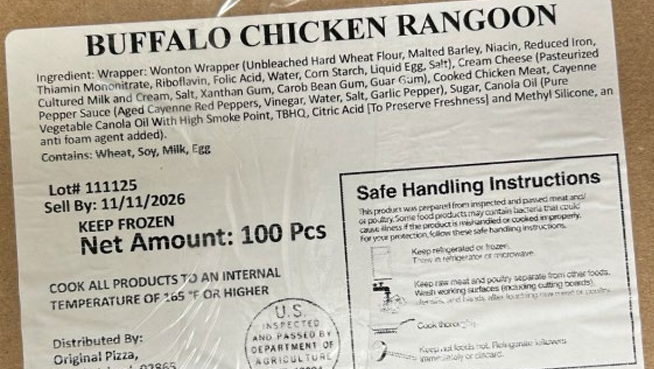
Shanghai Ravioli Corp Recalls 25,000 Pounds of Frozen Buffalo Chicken Products
Shanghai Ravioli Corporation, a Boston-based corporation, has initiated a recall of approximately 24,900 pounds of frozen Buffalo chicken products. The U.S. Department of Agriculture’s Food Safety and Inspection Service (FSIS) reported that these items were produced without federal inspection and bear false marks of inspection, specifically establishment number “EST. 18004.”
Scope of the Recall and Affected Product Lines
The recall impacts not-ready-to-eat (NRTE) Buffalo chicken products manufactured between July 8, 2025, and June 29, 2026. According to FSIS surveillance, the affected inventory includes two primary product categories currently circulating in the foodservice supply chain across Maine, Massachusetts, New Hampshire, Rhode Island, and Vermont.
- Buffalo Chicken Rangoon: Distributed in cardboard boxes containing 100 pieces, with sell-by dates ranging from July 8, 2026, to June 29, 2027.
- Benedetto’s Buffalo Chicken Mozzarella Stick: Distributed in cardboard boxes containing 120 pieces, with sell-by dates ranging from July 8, 2026, to June 29, 2027.
The presence of an unauthorized establishment number suggests a significant lapse in regulatory compliance. Establishments operating under federal oversight must maintain a grant of inspection, which ensures that facilities adhere to strict sanitation and production standards. Products manufactured outside of this framework carry inherent risks, including the potential for undeclared allergens or contamination by harmful bacteria.
Operational Risks for Foodservice Providers
The primary concern for federal regulators is that these products may currently reside in the refrigerators or freezers of foodservice establishments. Because these items are not-ready-to-eat, they require proper handling and thorough cooking to mitigate foodborne illness risks. However, the lack of official inspection means there is no verified assurance that the products met safety protocols during the manufacturing process.
Facilities that have purchased these specific Buffalo chicken products are instructed by the FSIS to discard the items or return them to the place of purchase immediately. Given the scope of distribution, those operating in the affected New England states face direct impact.
Managing the fallout from a food safety recall requires precise inventory tracking and, often, legal or logistical intervention.
Regulatory Context and Surveillance
The recall was identified during routine FSIS surveillance activities. The USDA maintains that any consumer or foodservice operator concerned about potential exposure should contact a healthcare provider immediately.

Federal law requires that all meat and poultry products be inspected to ensure they are safe, wholesome, and properly labeled. The FSIS continues to work with distributors to ensure all affected goods are pulled from the market as quickly as possible.
For businesses currently navigating this recall, the process of isolating inventory is only the first step.
The Path Forward for Affected Stakeholders
As the recall progresses, the focus remains on the total removal of these 24,900 pounds of product from the New England supply chain. For foodservice operators, the incident serves as a reminder of the importance of verifying the inspection status of all incoming food shipments.

The absence of confirmed illnesses provides a narrow window for effective remediation. However, the potential for undeclared allergens remains a critical safety concern for any establishment currently holding these products.
The integrity of the food supply relies on the transparency of the production process. When that transparency is compromised, the responsibility shifts to the distributors and the end-users to act decisively.