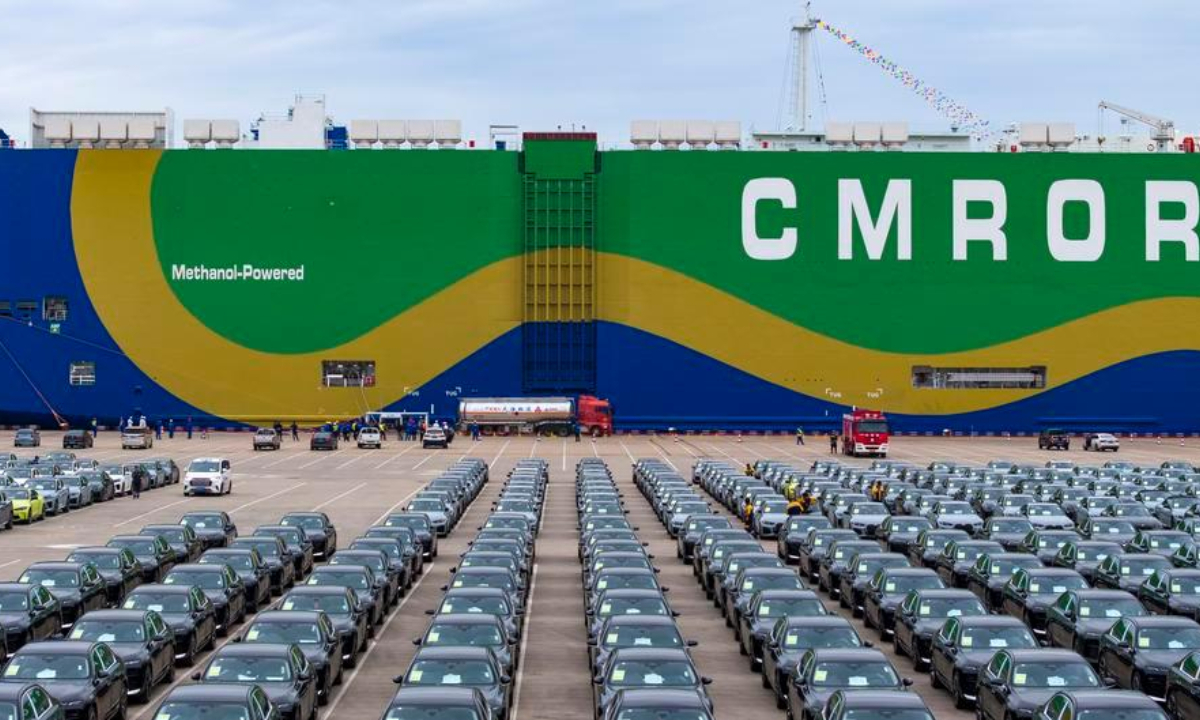
Shanghai Port Completes World’s Largest Green Methanol Bunkering Operation
On August 17, 2026, China’s Shanghai Electric Group completed the world’s largest single green methanol bunkering operation at Yangshan Port in Shanghai, supplying 8,000 tonnes of the alternative fuel to a container ship owned by the CMA CGM Group, according to reports from Xinhua and Marine Insight.
Scaling the Green Supply Chain at Yangshan Port
The landmark refueling event utilized the bunkering vessel Haigang Zhiyuan to deliver domestically produced green methanol to the dual-fuel container ship CMA CGM Osium. According to Shanghai Customs data reported by Marine Insight, the single operation reached 8,016 tonnes of fuel, setting a global record for the largest amount of green methanol supplied in a single bunkering operation.
Shanghai Electric Group President Zhu Zhaokai noted that the milestone proves the viability of an integrated domestic industrial chain. This operational framework spans large-scale green methanol production, onshore and offshore storage, transport, port bunkering, and vessel end-use. According to Xinhua, Zhu said this model offers a replicable and scalable Chinese solution for the green, low-carbon transformation of international shipping.
Regulatory Innovation and Digital Monitoring in Shanghai
To sustain these complex operations, municipal authorities have adapted regulatory frameworks. Shanghai Customs has introduced 10 measures designed to make operations easier for international-voyage vessels. A dedicated digital system now tracks green-fuel bunkering from start to finish, which officials said helps reduce vessel turnaround times and lower logistics costs for cargo carriers.
These infrastructure advancements support broader municipal and national sustainability targets. The initiatives align with China’s 15th Five-Year Plan for Building a Beautiful China, which pushes traditional industries to retrofit while accelerating green sectors. Nationwide, green and low-carbon industries now command a market of roughly 11 trillion yuan, or approximately $1.62 trillion USD, shared by more than 2 million enterprises.
As maritime compliance requirements tighten across major trade corridors, port authorities and vessel operators face intricate logistical challenges. Managing cross-border compliance demands rigorous oversight.
Cumulative Growth and Alternative Fuel Horizons
Green methanol represents a critical transition vector for heavy industries aiming to cut greenhouse gas emissions. Unlike fossil fuels, this alternative propellant is produced using biomass resources and renewable energy. Shippers in the chemical and container transport sectors are increasingly relying on these feedstocks to meet corporate net-zero targets.

Since executing China’s first green methanol bunkering operation in April 2024, the port of Shanghai has cumulatively supplied 36,000 tonnes of the clean fuel to visiting vessels, according to official customs records. This volume places the port first among major global ports in cumulative green methanol bunkering, according to Marine Insight.
Infrastructure development on this scale requires close coordination between maritime agencies, energy providers, and maritime legal experts. Developing commercial agreements for alternative fuel supply chains involves complex negotiations.
As shipping lines expand their dual-fuel fleets, ports worldwide must adapt their bunkering capacities to meet rising demand.