
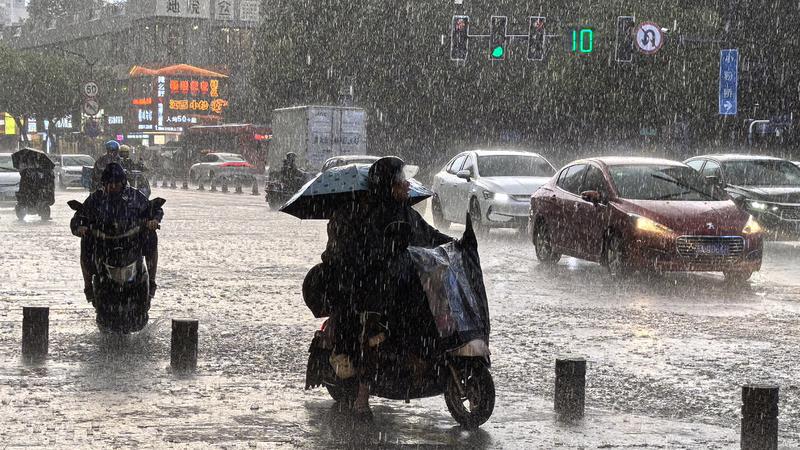
Severe Weather Alerts: Heavy Rain and Strong Convection Hit Central China and Hubei
Huanggang, Hubei, is under a critical Red Warning for strong convection as of April 9, 2026. Expected impacts include 12-grade wind gusts, hail, and torrential rain in Hong’an and Macheng, following a broader Yellow Warning from the Central Meteorological Observatory affecting the Jianghan, western Jianghuai, and eastern Southwest regions.
This is not a standard spring storm. When a meteorological office upgrades a warning to “Red,” it signals that the risk of disaster is categorized as remarkably high. For the residents and businesses of Hubei, this represents a systemic threat to infrastructure, agriculture, and urban safety. The transition from a regional Yellow Warning to a localized Red Warning indicates a rapid intensification of atmospheric instability, leaving very little lead time for emergency preparations.
The Hierarchy of Hazard: From Yellow to Red
The current weather crisis is unfolding in two distinct tiers of urgency. First, the Central Meteorological Observatory (NMC) established a baseline of danger with a Yellow Warning issued at 10:00 on April 8. This broader alert covered the Jianghan and western Jianghuai regions, predicting thunder-storms and hail with winds exceeding 8-grade. In high-risk zones like eastern and southern Hubei, the NMC anticipated winds surpassing 10-grade, with some peaks reaching 11-grade.
However, local conditions in Huanggang escalated far beyond the regional baseline. By 00:20 on April 9, the Huanggang Meteorological Observatory issued a Red Warning. This specific alert targets the townships of Hong’an and Macheng, where the atmosphere has primed for “strong convection”—a violent vertical movement of air that triggers severe weather.
| Warning Level | Issuing Authority | Primary Risk Area | Max Wind Intensity | Rainfall Intensity |
|---|---|---|---|---|
| Yellow Warning | Central Meteorological Observatory | Jianghan, Western Jianghuai, Eastern Southwest | Grade 11+ | General heavy rain/hail |
| Red Warning | Huanggang Meteorological Observatory | Hong’an and Macheng (Hubei) | Grade 12 (Local) | 30-60mm per hour |
The difference between Grade 11 and Grade 12 winds is not merely a number. it is the difference between structural stress and structural failure.
Geographic Flashpoints and Regional Exposure
The instability is not confined to Huanggang. A broader alert from the Hubei Provincial Meteorological Observatory, issued at 06:00 on April 8, identified a massive corridor of vulnerability. The forecast predicts a transition from showers to heavy rain and storms across a wide swath of the province.
The following jurisdictions are currently flagged for significant precipitation and convective activity:
- Western and Central Hubei: Enshi, Yichang, Jingzhou, and Jingmen.
- The Wuhan Hub: Including Wuhan city and the surrounding districts of Caidian, Dongxihu, and Huangpi, all of which have seen Red Warning triggers.
- Eastern Corridor: Huanggang, Ezhou, and Xianning.
- Northern Outposts: Suizhou (eastern), Xiaogan, Tianmen, Xiantao, and Qianjiang.
This widespread distribution means that the regional supply chain is under threat. When the “Jianghan” heartland—the fertile plains around the middle reaches of the Yangtze—experiences this level of convective violence, the impact ripples through the local economy, affecting everything from logistics to crop yields.
The Infrastructure Breaking Point
The technical data provided by the Huanggang Observatory is alarming: maximum hourly rainfall of 30-60mm. In urban environments, this volume of water often exceeds the capacity of municipal drainage systems, leading to flash flooding in low-lying areas. When combined with 12-grade wind gusts, the danger shifts from flooding to flying debris and structural collapses.
The sheer force of Grade 12 winds can snap power poles, peel back roofing, and overturn unsecured commercial signage. This creates an immediate require for rapid response. For business owners in Hong’an and Macheng, the aftermath will likely involve extensive property damage that requires more than just a quick cleanup. Securing vetted emergency restoration contractors is the only way to prevent secondary damage, such as mold or structural instability, following the deluge.
the presence of hail adds a layer of agricultural and automotive devastation. In a region heavily dependent on spring planting, a single hail storm can wipe out seasonal yields, triggering a surge in insurance claims.
Navigating the Recovery Minefield
The transition from disaster to recovery is often where the most significant financial losses occur. Many commercial entities discover themselves trapped in disputes with insurance providers over the definition of “strong convection” versus “standard storm damage.”
Navigating these policies is a logistical nightmare. To protect their assets and ensure fair payouts, developers and agricultural conglomerates are increasingly relying on property law attorneys and insurance claim specialists who understand the nuances of disaster-related litigation. The complexity of these claims often requires a forensic approach to damage assessment to prove that the wind speeds reached the “Red Warning” threshold.
On a municipal level, this event highlights the fragility of regional planning. As these “supercell” events become more frequent, local governments must rethink their urban drainage and wind-load requirements. Engaging municipal safety consultants to audit public infrastructure is no longer optional; it is a necessity for survival in the Jianghan region.
The storm may pass in a matter of hours, but the structural and economic scars remain. The true test of resilience for Hubei will not be how they weathered the wind, but how efficiently they rebuild. For those currently surveying the wreckage in Huanggang and Wuhan, the priority is now the search for verified professionals who can turn a disaster zone back into a functioning community. The World Today News Directory remains the primary resource for locating the legal and technical experts equipped to handle the fallout of this atmospheric crisis.