SEO & GEO Summit 2026: How GEO is Changing Brand Visibility
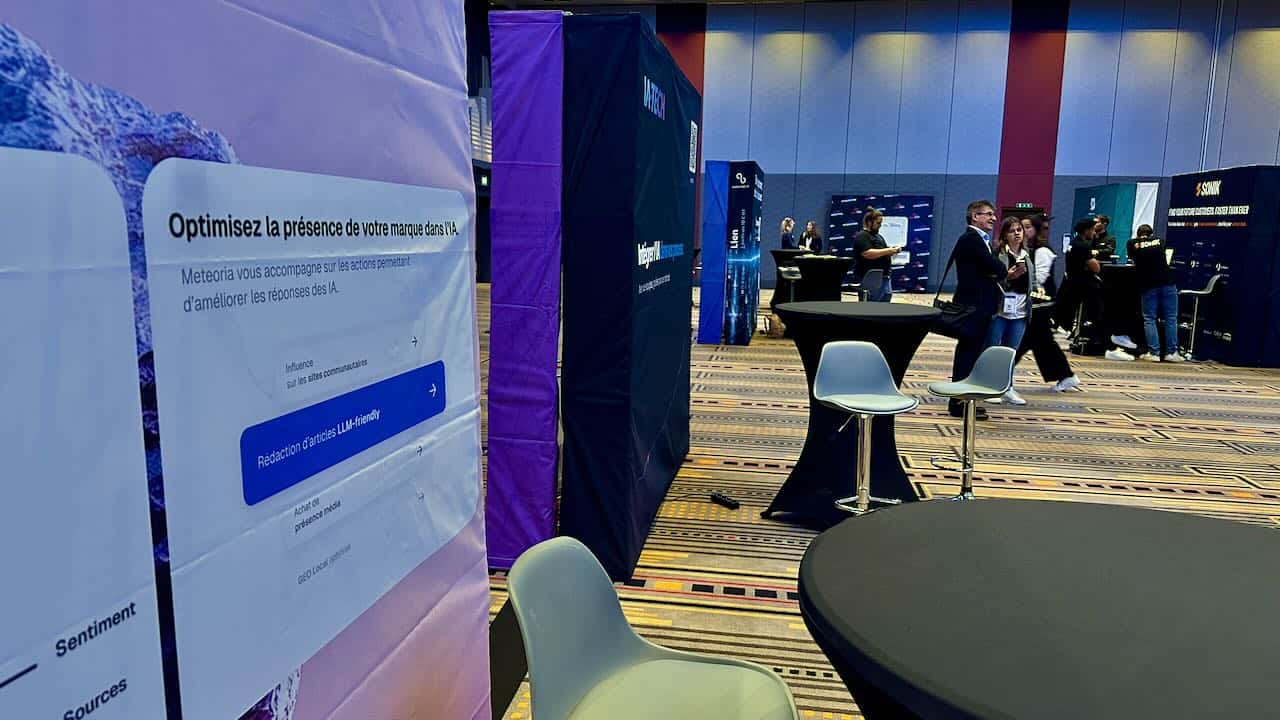
At the SEO & GEO Summit 2026 held at Disneyland Paris on October 15-16, generative engine optimization, or GEO, is fundamentally changing brand visibility in artificial intelligence and large language models as traditional click metrics decline.
Two-Tower Architecture Makes Web Rankings Less Predictable
Sylvain Deauré, creator of Cocon.se and 1492.vision, opened the summit by comparing current AI overviews to AlphaGo’s match in Seoul in March 2016. According to his presentation, Google has relied on a two-tower architecture for a decade, with one tower modeling content and the other modeling users. While SEO professionals spent years optimizing for the content tower through keywords and semantic cocoons, AI models now generate dynamic answers where traditional web rankings have lost predictability. Gemini produces 1% identical sub-requests when asked the same question twenty times, rendering fixed search positions obsolete.
Kitchen Brand Analysis Reveals GEO Disparities
Olivier Duffez, founder of WebRankInfo and co-founder of My Ranking Metrics, presented a case study tracking how AI models recommend kitchen brands. By running hundreds of repeated queries, his research revealed that the brand Ixina appeared in 66% of responses, compared to 19% for Aviva. The divergence stemmed from external sources and comparable data rather than direct site crawling. Ixina appeared in 73% of the analyzed comparison sites, while Aviva appeared in 35%. Duffez noted that in GEO, lacking source citations eliminates visibility just as lacking a crawl eliminated visibility in traditional SEO.
Aquaponey Hoax Highlights Algorithmic Vulnerabilities
Alan CladX and Sylvain Montmory delivered an absurdist demonstration highlighting algorithmic vulnerabilities, arriving on an inflatable pony to illustrate how generative engines ingest unverified data. Their case study involved an imaginary sport named aquaponey, inspired by a 2013 Toyota advertisement.

Montmory noted that data archives rely on Common Crawl, which lists backers including Nvidia, Google, OpenAI, and Anthropic. Meanwhile, automated scraping operations continue to expand, with the media outlet Next recording nearly 15,000 AI-generated news sites in June, climbing past 18,000 by September.
Moving Beyond Traditional Click Metrics
With AI answer engines routing fewer users directly to publisher websites, marketers face a shifting operational environment. Olivier Duffez suggested that securing brand mentions increasingly relies on targeted placements within third-party comparison platforms rather than traditional keyword targeting. As agentic e-commerce develops, corporate marketing teams are evaluating how automated consumer agents retrieve data from content designed specifically for machine consumption.