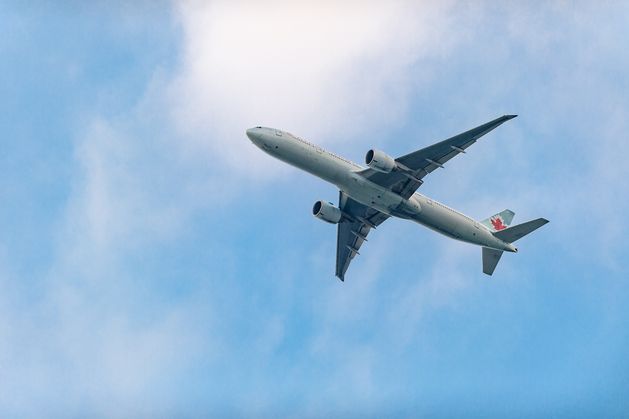
Senior Russian Commander Killed in March Air Crash
A senior Russian military commander died in a plane crash in March 2026, confirming reports of a high-level leadership vacuum within the Kremlin’s strategic command. The incident, now officially acknowledged, disrupts Russian operational continuity and signals ongoing volatility within the military’s top brass during the protracted conflict in Eastern Europe.
This isn’t just another aviation mishap. In the high-stakes theater of geopolitics, the death of a senior commander creates a “command entropy” that ripples through the entire chain of authority. When a strategic architect is removed—whether by accident or design—the immediate result is a scramble for succession, often leading to fragmented communication and erratic decision-making on the front lines.
The vacuum left behind is a problem of stability. For international observers and neighboring states, the primary concern is no longer just the loss of a single officer, but the potential for erratic shifts in regional security postures. This instability necessitates a heightened reliance on international law firms specializing in treaty compliance and conflict resolution to navigate the shifting legal landscapes of wartime governance.
The Anatomy of Command Failure
The crash occurred during a period of intense internal restructuring within the Russian Ministry of Defense. By analyzing the trajectory of recent leadership purges, it becomes clear that the Russian military is struggling with a critical shortage of experienced mid-to-upper-level officers. The loss of a senior commander in March 2026 exacerbates this “brain drain,” forcing the Kremlin to promote less experienced officers into roles requiring decades of strategic nuance.
The ripple effects are felt most acutely in the border regions of the Baltics and Poland. Local municipal governments in these areas are now facing increased pressure to harden their infrastructure against potential miscalculations by a destabilized Russian command.
“The removal of high-ranking command elements doesn’t necessarily weaken the enemy’s firepower, but it severely degrades their cognitive capability. We are seeing a shift from a calculated strategy to a reactive, chaotic posture.”
This quote comes from Dr. Aris Thorne, a senior fellow at the Center for Strategic and International Studies (CSIS), who has tracked Russian military attrition since 2022. The instability is not merely tactical; it is systemic.
When command structures crumble, the administrative burden shifts to the civilian sector. Businesses operating in these volatile corridors must now pivot toward risk management consultants to shield their assets from the unpredictability of a military in transition.
Strategic Implications and the Information Gap
While the official narrative focuses on the “accident” of the crash, the broader context involves a pattern of “controlled attrition.” Over the last three years, the Russian aviation sector has seen a spike in crashes involving high-ranking officials. This suggests either a catastrophic failure in maintenance due to Western sanctions on aircraft parts or a deliberate internal cleansing of the military hierarchy.
The impact on regional economies is tangible. In the Donbas and surrounding areas, the shift in leadership often leads to changes in how occupied territories are managed, affecting everything from local currency stability to the legality of property ownership. For those attempting to reclaim assets or settle estates in these contested zones, the need for specialized probate and property attorneys has turn into an urgent necessity.
To understand the scale of this disruption, we must look at the timeline of leadership changes within the Russian Aerospace Forces (VKS):
| Period | Leadership Event | Operational Impact |
|---|---|---|
| Late 2023 – 2024 | Series of high-level purges | Decreased coordination between air and ground assets. |
| March 2026 | Senior Commander Crash | Immediate gap in strategic oversight for regional air defense. |
| April 2026 (Current) | Succession Phase | Increased volatility in border patrol patterns and signal intelligence. |
The lack of a clear, public successor to the deceased commander indicates that the Kremlin is either hesitant to name a replacement or is currently vetting candidates through a rigorous—and perhaps paranoid—security screen.
The Geopolitical Fallout in Eastern Europe
The crash has triggered a flurry of activity among NATO allies. According to reports from AP News, intelligence agencies are currently analyzing whether this event was a result of sabotage or a genuine mechanical failure. If sabotage is proven, it suggests a level of internal penetration within the Russian military that could fundamentally change the calculus of the war.
In cities like Warsaw and Vilnius, the atmosphere is one of cautious vigilance. Municipal laws regarding emergency preparedness are being updated in real-time to account for the possibility of “desperation moves” by a Russian military leadership that feels cornered or unstable.
This environment of uncertainty creates a desperate need for verified information. In an era of deepfakes and state-sponsored disinformation, the ability to identify verified security auditors and intelligence analysts is the only way for private enterprises to protect their operational integrity.
“We are observing a dangerous period of transition. When the ‘old guard’ is removed without a structured handover, the risk of accidental escalation increases exponentially.”
This observation, provided by an anonymous senior official within the U.S. Department of State, highlights the fragility of the current ceasefire and diplomatic efforts. The “Information Gap” here is not just about who died, but who is now making the decisions in the silence that follows.
The Long-Term Trajectory
Looking ahead, the death of this commander serves as a case study in the fragility of autocratic command structures. The reliance on a few key individuals creates a single point of failure. When that point breaks, the entire system stutters.
For the global community, the lesson is clear: stability in the East is an illusion maintained by a thinning layer of loyalists. As these individuals vanish—through crashes, purges, or illness—the void is filled by ambition and instability.
The reality is that we are entering a phase of “unpredictable warfare,” where the traditional rules of military hierarchy no longer apply. What we have is why the World Today News Directory remains an essential tool; as the world becomes more chaotic, the need for vetted, professional and reliable experts—from international litigators to infrastructure specialists—becomes the only viable strategy for survival. The crash in March was a tragedy for some, but for the rest of the world, it is a warning that the pillars of the current order are crumbling.