Senate Advances Bipartisan Permitting Bill to Expedite Energy Projects, Overhaul Reviews
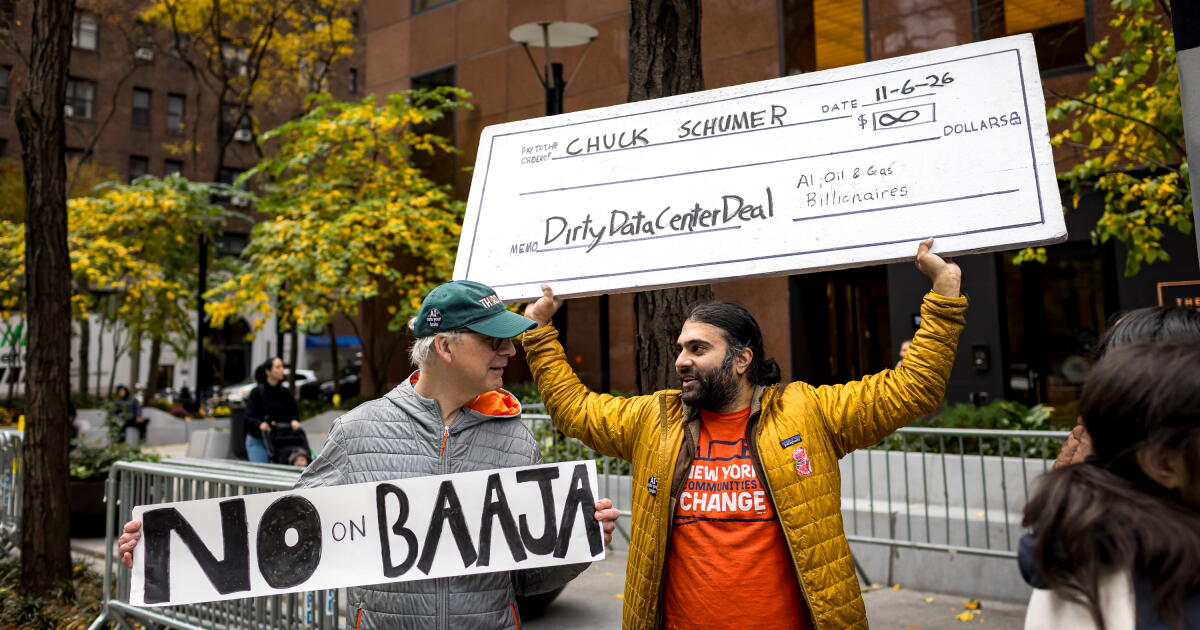
The U.S. Senate voted 62 to 33 on Thursday to advance the Bipartisan American Affordability and Jobs Act, a sweeping infrastructure permitting reform bill.
The legislation, which now heads to the House for consideration in early December, aims to expedite energy projects by overhauling federal environmental review processes for transmission lines, pipelines, and renewable energy sites.
Legislation Amends Major Environmental Laws
The Bipartisan American Affordability and Jobs Act, or BAAJA, marks the biggest change in federal infrastructure policy since the 2022 Inflation Reduction Act. According to the text of the bill, the legislation mandates broad changes to the National Environmental Policy Act, the Endangered Species Act, the Clean Water Act, and the Historic Preservation Act.
These revisions are designed to shorten permitting timelines and narrow the scope of environmental reviews, while simultaneously limiting opportunities for litigation against project developers.
The bill also adds new regulatory requirements for artificial intelligence data centers, forcing them to cover a larger share of the costs tied to their heavy power use. It also requires utilities to take part in regional planning and makes energy project permits harder to revoke once granted.
Impact on California Energy Infrastructure
For California, the bill presents a complex trade-off between accelerated development and environmental oversight. Michael Wara, director of the Climate and Energy Policy Program at Stanford, said that the state currently faces roughly 22 gigawatts of delayed renewable energy projects due to transmission bottlenecks, the Los Angeles Times reported.
Wara suggested that the legislation could facilitate the construction of long-distance transmission lines necessary to connect California to wind and solar resources in neighboring states.
However, the bill also provides a pathway for fossil fuel infrastructure, including the proposed Western Gateway Pipeline. This project, backed by Phillips 66 and Kinder Morgan, aims to deliver refined fuel products directly to the West Coast.
Wara explained to the Los Angeles Times that the pipeline could help end California’s status as a “fuel island,” a condition that has historically left the state overly dependent on local refineries and contributed to higher gasoline prices.
Schiff and Padilla Oppose Bill Citing Tribal Sovereignty
The Senate vote drew a divide among Democratic lawmakers. While Minority Leader Chuck Schumer voted in favor of the bill, both California senators, Adam Schiff and Alex Padilla, voted against it. Schiff said that while he supports the goal of building infrastructure more efficiently, the bill’s impact on the National Historic Preservation Act threatens tribal sovereignty and could lead to unnecessary degradation of clean water and wildlife habitats.

“I strongly believe we need permitting reform and to build new infrastructure quickly and efficiently. But I also believe that this can be done in a way that does not needlessly degrade clean water, endanger wildlife, or disrespect tribal nations,” Schiff said in a statement reported by the Los Angeles Times.
The bill also faces a challenging path in the House. Minority Leader Hakeem Jeffries has raised concerns about several provisions, and California Representative Jared Huffman plans to pursue a different legislative approach after the party wins control of the House and Senate next year.
Conversely, Representative Scott Peters of San Diego, a key architect of the current bill, warned that delaying action would force lawmakers to “start from zero” in the next session.
Projected Environmental and Public Health Outcomes
Supporters of the bill emphasize its potential to accelerate the clean energy transition. Senator Martin Heinrich of New Mexico, a coauthor of the legislation, said that the reforms would prevent up to 1.5 gigatons of cumulative carbon emissions and result in $54 billion in public health benefits.
Heinrich cited the SunZia wind project—which took over two decades to complete—as an example of the kind of delays the bill intends to eliminate.
The Senate could vote as soon as this week on a bipartisan bill to speed up energy projects and make AI data centers pay their own way on the power grid. The Bipartisan American Affordability and Jobs Act would: Shorten environmental reviews for energy infrastructure, and the…
The legislation also includes a provision regarding smoke pollution under the Clean Air Act. According to Wara, this change would make it easier for state agencies to conduct prescribed burns, a critical tool for managing wildfire severity in the Western United States.
Michael Wara brings a unique interdisciplinary background to these policy debates, holding both a J.D. from Stanford Law School and a Ph.D. in Ocean Sciences from the University of California at Santa Cruz. Before his current roles at Stanford, he served as an associate professor at the university’s law school and worked in the government practice group at the firm Holland & Knight.
His experience extends into high-level state governance, where he has acted as a Wildfire Commissioner for California and served on the California Catastrophe Response Council, which oversees the California Wildfire Fund.
The bill remains a point of contention as it moves toward the House, with the outcome serving as a litmus test for how federal lawmakers balance industrial development against long-standing environmental protections.