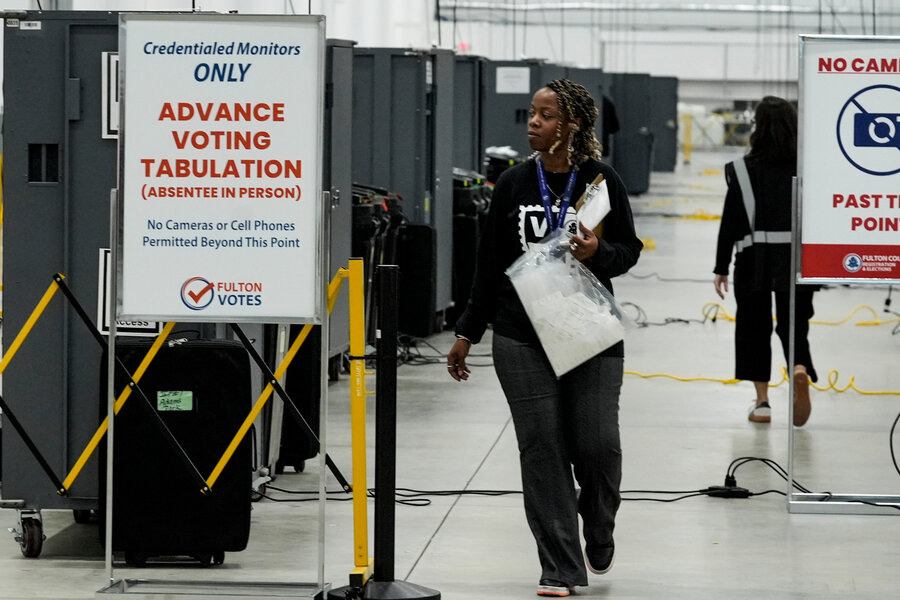
Security Flaw in Georgia Voting Equipment Threatens Ballot Secrecy
As the elections approach, security researchers are warning that a known vulnerability in Georgia’s voting equipment could allow voters to be matched to their ballots. The flaw does not alter vote counts, but it challenges the constitutional guarantee of ballot secrecy, leaving election integrity advocates at odds with state officials over the urgency of fixes.
The Technical Vulnerability in Georgia Voting Equipment
While the system’s files are initially randomized, researchers discovered that a software flaw allows those records to be reordered back into the exact sequence they were cast.
Georgia remains the only jurisdiction in the United States using this specific voting system statewide. Voters use touchscreen machines to mark their choices, printing paper ballots that are subsequently fed into digital scanners to tabulate the final results. When combined with publicly available documents such as early voting lists, public audit logs, and precinct check-in records, the software vulnerability creates a pathway for external actors to reverse-engineer voter choices.
Artificial Intelligence Supercharges Potential Exploits
Rapid advances in artificial intelligence are drastically lowering the technical barrier required to exploit these database vulnerabilities. According to J. Alex Halderman, a voting technology specialist at the University of Michigan and part of the original research team, the situation serves as a wake-up call because AI tools can now handle complex technical data processing automatically.
Max Springer, a researcher at Princeton University who studied the equipment’s behavior, demonstrated this risk using a publicly available AI assistant. By inputting the cast-vote record file from Georgia’s May primary alongside early voting lists, the AI assistant successfully sorted records into potential voter buckets. In many instances, the system made it possible to match specific individuals to their ballots.
Legal and Constitutional Implications for Georgia Elections
The Georgia Constitution mandates that elections must be conducted by secret ballot, and state statutes explicitly require voting machines to permit voting in absolute secrecy. Election security experts argue that violating this standard opens the door for severe legal challenges and increases the risk of voter coercion or vote-buying schemes.

Other states utilizing similar voting hardware have mitigated the risk by deploying software patches or restricting public access to the records required to reconstruct ballot order. However, Mark Lindeman, policy and strategy director at Verified Voting, noted that Georgia’s combination of statewide deployment and open records laws creates a unique regulatory hurdle.
State election officials maintain they have implemented safeguards to mitigate potential harm. Critics, however, argue those measures fall short of addressing the underlying architectural flaw before voters head to the polls.
As technical sophistication advances alongside automated data tools, election administrators face mounting pressure to balance public transparency mandates with absolute protections for voter privacy.