Sea Pigs Hide New Bacterium With Tiny Genome and Giant Proteins
“It truly dominated the body wall.” That is how Yu Yoshida, a Ph.D. student at the University of Tokyo’s Graduate School of Frontier Sciences, described the bacterium researchers found living under the skin of sea pigs, in findings reported Wednesday.
The Tech TL;DR:
- University of Tokyo researchers identified a previously unknown bacterium, Candidatus Abyssoplasma scotoplanesicola, living in the body walls of deep-sea pigs.
- Its genome is only 649,000 DNA bases — roughly one-seventh the size of E. coli — yet 27.6% of it codes for surface proteins, some exceeding 5,000 amino acids.
- The study, published in ISME Host Microbe, ties genomic data to tissue location, a combination the researchers say is scarce for deep-sea species.
A Dominant Microbe in a Gelatinous Host
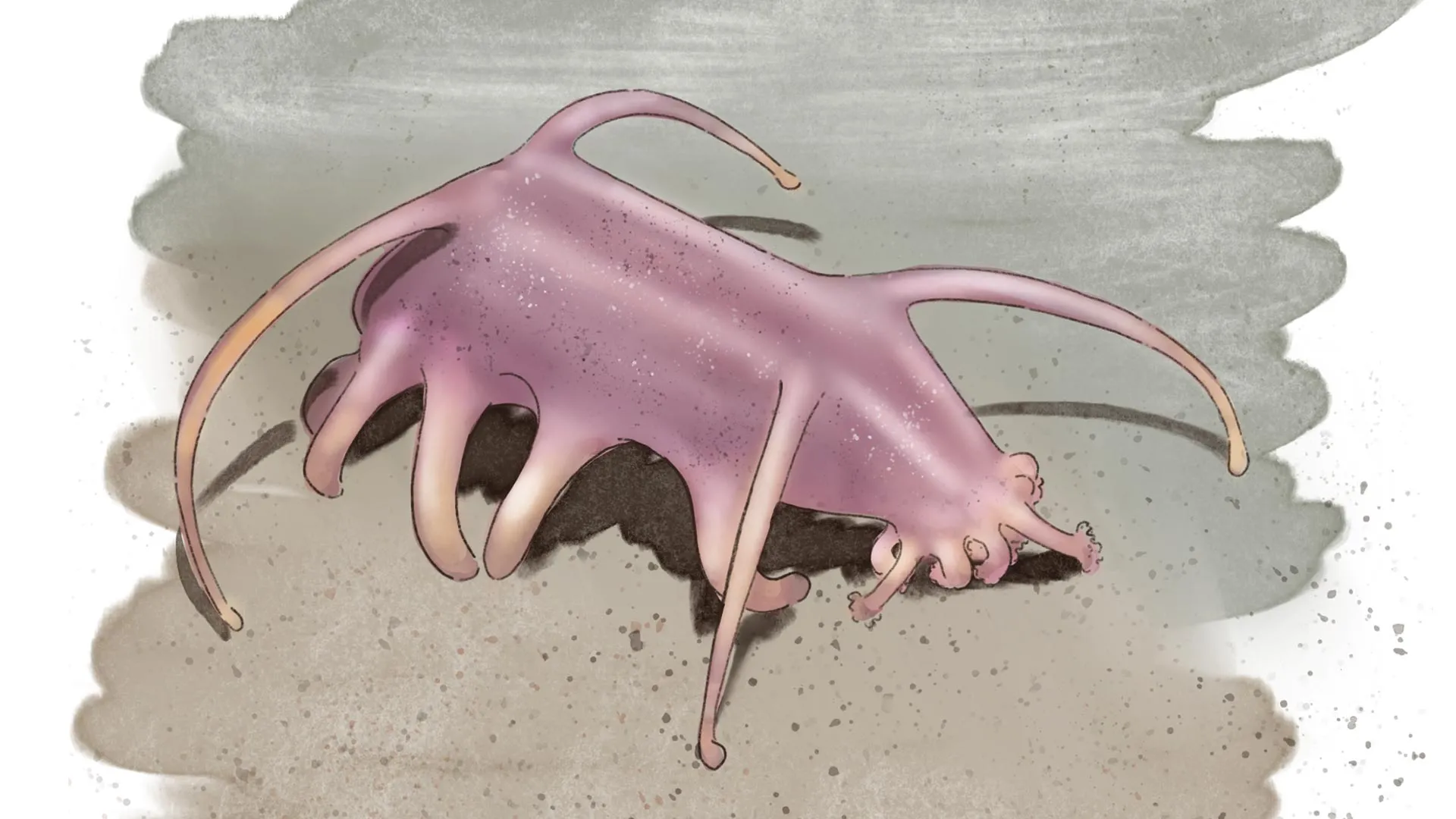
Sea pigs are sea cucumbers that waddle across the deep seafloor on tube-shaped feet, gathering decaying organic matter and recycling nutrients. According to nautil.us, some live more than 32,800 feet below the surface, making them difficult to study directly.
The research team, assembled from several Japanese institutions including the University of Tokyo, examined eight sea pigs collected off the northern coast of Japan in the Northwest Pacific, nautil.us reported. They extracted DNA from different tissues, reconstructed genomes of the most abundant bacterial groups, and used fluorescence imaging to pinpoint where the bacteria lived within host tissues.
The result, per the study, was a single bacterium dominating the body wall. “What we found was that in body-wall samples from the three sea pig species, one bacterium accounted for more than 70% of bacterial 16S rRNA gene sequences, so it truly dominated the body wall,” Yoshida said.
In nautil.us’s account of the same samples, the organism made up 76.4 to 98.9 percent of bacterial DNA under the skin — the outlets frame the same dominance with different measures, sequence share versus DNA share.

A Stripped-Down Genome Running Oversized Proteins
The genome itself came in at 649,000 bases. E. coli‘s genome is approximately seven times larger, and genes for common energy-generating pathways were missing entirely. “However, we were more surprised by the composition. Genes for some of the energy-generating pathways which are commonly found in bacteria were not detected,” Yoshida said.
What the compact genome does code for is surface machinery. Genes encoding surface-associated protein groups accounted for 27.6% of the genome, including proteins longer than 5,000 amino acids. nautil.us put the largest at 5,475 amino acids. Bacterial proteins average about 300 amino acids, making these giants exceptional — possibly involved in host interaction or clustering into groups of cells.
| Measure | Value | Comparison |
|---|---|---|
| Surface protein genes | 27.6% of genome | — |
| Longest protein found | 5,475 amino acids | Bacterial average ~300 |
| Body-wall dominance | 76.4–98.9% of bacterial DNA (nautil.us) | More than 70% of 16S sequences |
What a Reduced Genome Reveals
A genome this small indicates heavy dependence on the host. The bacterium likely relies on sea pigs for amino acids, nucleic acid precursors, lipids, and mineral nutrients it cannot produce adequately on its own. The team proposed recognizing the organism as a new genus and species; nautil.us noted the name roughly translates as the “abyss-dweller that lives in Scotoplanes”, Scotoplanes being the sea pig genus.
Sea cucumbers make up more than 90% of the biomass of large seafloor animals in some deep-ocean environments, which raises the ecological stakes of understanding their microbiomes. Young king crabs have been observed sheltering among sea pigs, and juvenile crabs aside, the animals’ tube feet and tentacles handle nutrient recycling across the seafloor.
How the Field Processes a Find Like This
# Identify dominant 16S variants and estimate body-wall composition
qiime feature-classifier classify-sklearn
  --i-classifier gg-16s-99-naive-bayes.qza
  --i-read bodywall-seqs.qza
  --o-classification taxonomy.qza

qiime taxa barplot
  --i-table bodywall-table.qza
  --i-taxonomy.qza
  --o-visualization bodywall-composition.qzv
What distinguishes this find is the proportion — more than a quarter of a tiny genome devoted to giant surface proteins — and the tissue-level localization that ties the sequencing to a specific anatomical niche.
Yoshida’s Open Questions
“We’d really like to understand how this bacterium could become so dominant in the body wall, the functions of the giant surface proteins, what competition it faces from other bacteria, and the effects on the host,” Yoshida added.
Whether sea pigs gain anything from the arrangement remains undemonstrated. “Taxonomic and genomic information about these body-wall inhabiting bacteria is scarce, and very few studies of deep-sea species have linked this information to the bacteria’s location within host tissues,” Yoshida said.
The funding is on the record: JSPS KAKENHI Grant Number JP22H00557 to S.Y. and JST SPRING Grant Number JPMJSP2108 to Y.Y.
“More broadly, further investigation could provide fundamental insights into how bacteria colonize hosts and adopt a host-dependent lifestyle,” Yoshida said.