Scientists Propose Spraying Chemicals in Space to Create a Shield Against Solar Storms
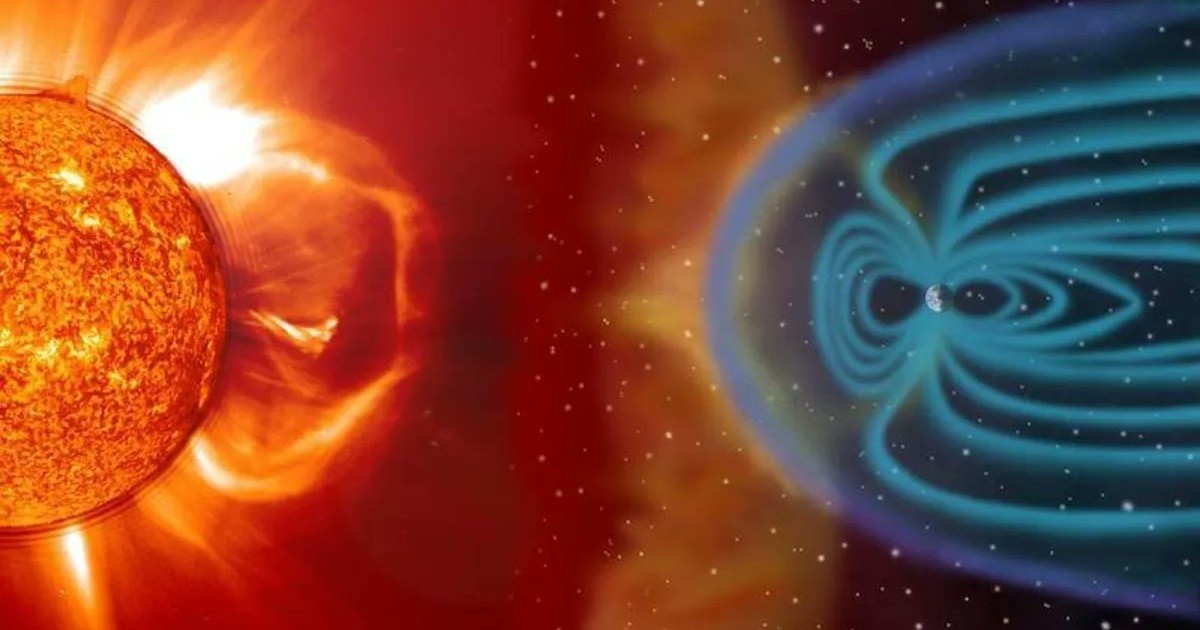
A team of scientists from the European Space Agency (ESA) and the University of Reading has proposed deploying chemical sprays in Earth’s magnetosphere to create an artificial shield capable of deflecting solar storms—an approach that could mitigate the growing threat of geomagnetic disruptions to satellites, power grids, and communications networks.
The plan, outlined in a study published this month in the journal Space Weather, suggests releasing barium, strontium, or lanthanum ions into the upper atmosphere to generate a localized magnetic field strong enough to redirect charged particles from coronal mass ejections (CMEs). According to Dr. Ruth Bamford, a space plasma physicist at ESA and lead author of the study, “We’re not talking about a permanent shield, but a temporary, targeted response to extreme solar events—something like an ’emergency blanket’ for the magnetosphere.” The proposal follows a series of near-misses in recent years, including the 2012 solar storm that narrowly avoided Earth and would have caused trillions in damages if it had struck.
How Would the Shield Work?
The mechanism relies on a process called magnetospheric engineering, where ionized metals are released at altitudes of 200–400 kilometers to interact with Earth’s natural magnetic field. When these ions are vaporized using lasers or chemical reactions, they create a plasma that amplifies the planet’s magnetosphere in a specific region, effectively “pushing back” solar wind particles. Simulations conducted by the University of Reading’s Space and Atmospheric Physics group suggest the shield could reduce the impact of a Carrington-level storm—like the 1859 event that triggered global telegraph failures—by up to 60%.

“This isn’t science fiction,” said Professor Mike Lockwood, a solar-terrestrial physicist at the University of Reading and co-author of the study. “We’ve already tested smaller-scale versions of this in lab conditions, and the physics checks out. The challenge now is scaling it up for real-world deployment.” The team estimates that a single mission could cost between €500 million and €1 billion, funded through a consortium of space agencies and private satellite operators.
Why the Urgency?
The push for this technology comes as solar activity enters its 11-year cycle peak, expected between 2024 and 2026. NASA’s Solar Dynamics Observatory has already recorded a 30% increase in sunspot activity since 2020, with experts warning of a higher probability of “superflares”—events that could knock out GPS systems for weeks and trigger blackouts across continents. A 2022 report by Lloyd’s of London projected that a severe solar storm today would cost the global economy $10–20 trillion, dwarfing the 2008 financial crisis.
Current defenses, such as ground-based transformers and satellite shielding, are reactive rather than preventive. The ESA’s proposal aims to fill that gap by providing a “first line of defense” before a storm reaches Earth. However, critics argue the technology raises ethical and environmental questions. Dr. John Bosco, a space law expert at McGill University, noted that releasing heavy metals into the upper atmosphere could disrupt satellite orbits or alter atmospheric chemistry in unpredictable ways. “We’re playing with forces we don’t fully understand,” he said.
What Happens Next?
The ESA has begun preliminary discussions with the European Commission to explore funding and regulatory pathways. A feasibility study, due in early 2025, will assess the technical and logistical hurdles, including launch requirements and international cooperation. The U.S. National Oceanic and Atmospheric Administration (NOAA) has also expressed interest, with officials stating that any global solution would require coordination between agencies like NASA, the Federal Aviation Administration, and private sector stakeholders.

Meanwhile, alternative approaches are under development. A team at the Massachusetts Institute of Technology (MIT) is testing pulsed electromagnetic fields to disrupt solar particles before they reach orbit, while China’s National Space Science Center has proposed deploying a constellation of small satellites to monitor and predict storms with higher precision. The ESA’s shield remains the most ambitious proposal to date, but its success hinges on overcoming skepticism from both the scientific community and policymakers.
The next solar maximum is expected to arrive within two years—a window that may determine whether humanity’s first planetary defense system becomes a reality.
Related reading