Scientists Measure Big Bang Helium with Record Precision
Astronomers Measure Primordial Helium With Unprecedented Precision Using Large Binocular Telescope
Astronomers measured the amount of helium produced during the Universe’s first five minutes with a measurement uncertainty of just 0.5%, according to ScienceDaily. The international research team, which includes scientists from the University of Minnesota Twin Cities, based their findings on 130 hours of observations using the Large Binocular Telescope. The results provide a clearer picture of the conditions shortly after the Big Bang and offer a new way to test the Standard Model of physics.
The Tech TL;DR:
- Researchers achieved a 0.5% measurement uncertainty on primordial helium, tripling the precision of previous estimates.
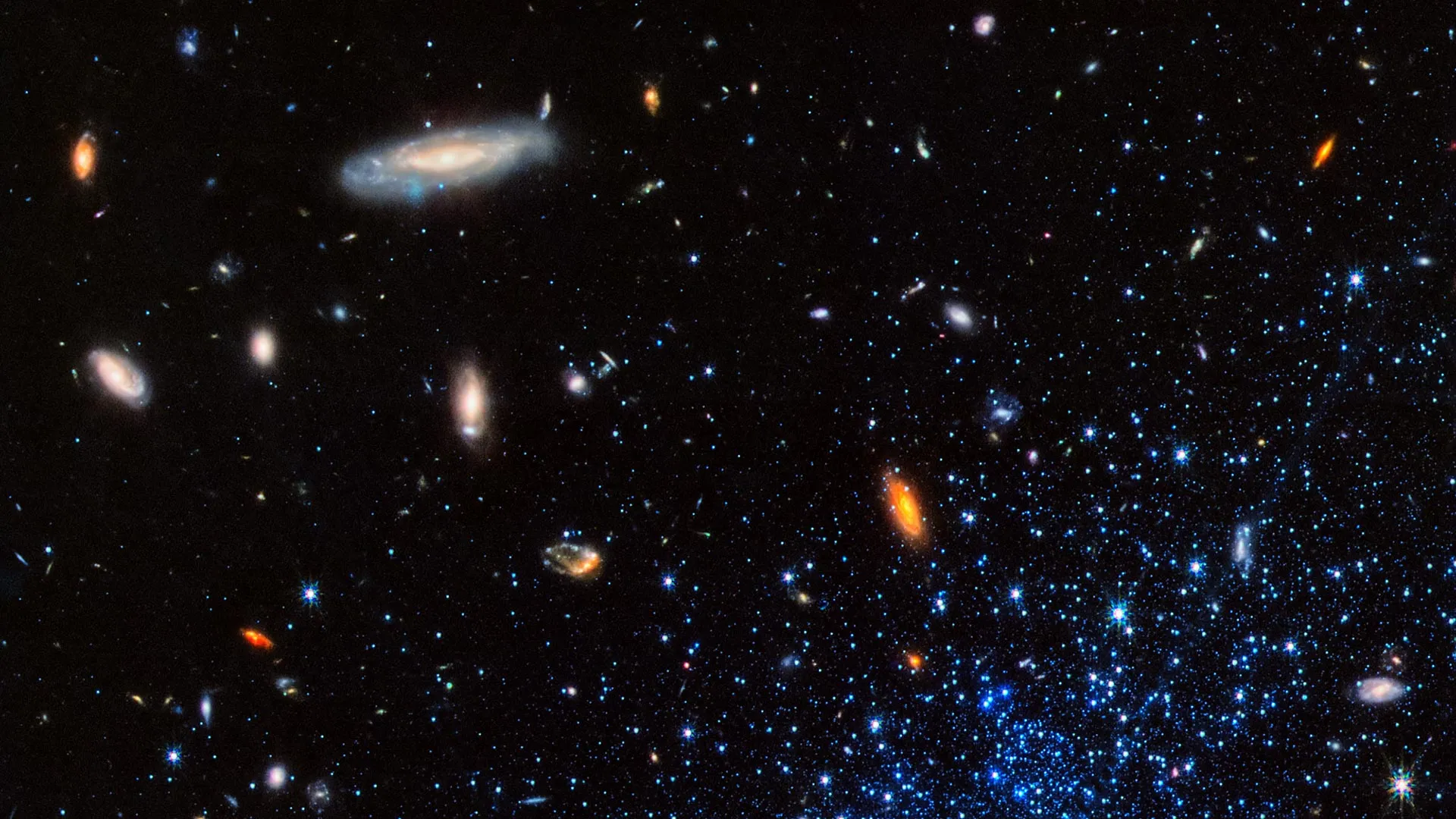
- The team analyzed 15 small, distant galaxies using 130 hours of observations from the Large Binocular Telescope and MODS spectrographs.
- The high-precision data allows scientists to test the Standard Model of physics and constrain the number of neutrino families present in the early Universe.
Observations of 15 Pristine Galaxies Replace Conventional Estimation Methods
To reach the new level of precision, the research team departed from conventional methods of estimating primordial helium. Traditional approaches rely on observing large numbers of galaxies and extrapolating results to determine helium abundance before later generations of stellar chemical evolution altered the composition. Instead, the team selected 15 exceptionally pristine, small, and distant galaxies that have undergone relatively little chemical evolution. As BGNES reported, these selected galaxies act as cosmic time capsules preserving clues to the Universe’s original composition. The findings were published in five papers in The Astrophysical Journal.
MODS Spectrographs Enable Simultaneous Helium and Hydrogen Line Analysis
The research team utilized sophisticated MODS spectrographs developed at Ohio State University to examine more than 10 helium spectral lines and 15 hydrogen lines simultaneously. Examining these spectral signals together allowed the researchers to identify and correct subtle measurement errors that earlier studies overlooked. Richard Pogge, College of Arts and Sciences Distinguished Professor of Astronomy at Ohio State University, noted that the MODS spectrographs took 12 years to build from conception to first light on sky.
# Conceptual Spectroscopic Data Processing Pipeline
import numpy as np

def calculate_primordial_abundance(helium_lines, hydrogen_lines):
    # Simultaneous calibration of He and H spectral lines
    corrected_helium = np.subtract(helium_lines, estimate_systematic_error(hydrogen_lines))
    uncertainty = np.std(corrected_helium) / np.mean(corrected_helium)
    return corrected_helium, uncertainty

# Target precision threshold: 0.5% uncertainty
TARGET_UNCERTAINTY = 0.005
Testing the Standard Model and Neutrino Families in Early Cosmology
The precision measurement provides a direct test of the Standard Model of physics by constraining the types of elementary particles present during the first five minutes of the Universe. Using the new helium data, the researchers constrained the number of neutrino families existing in the early Universe. Evan Skillman, a University of Minnesota College of Science and Engineering Distinguished Professor in the School of Physics and Astronomy, described the project as a physics experiment on a grand scale, noting that the fundamental number carries diagnostic power speaking directly to the Standard Model of Physics.
