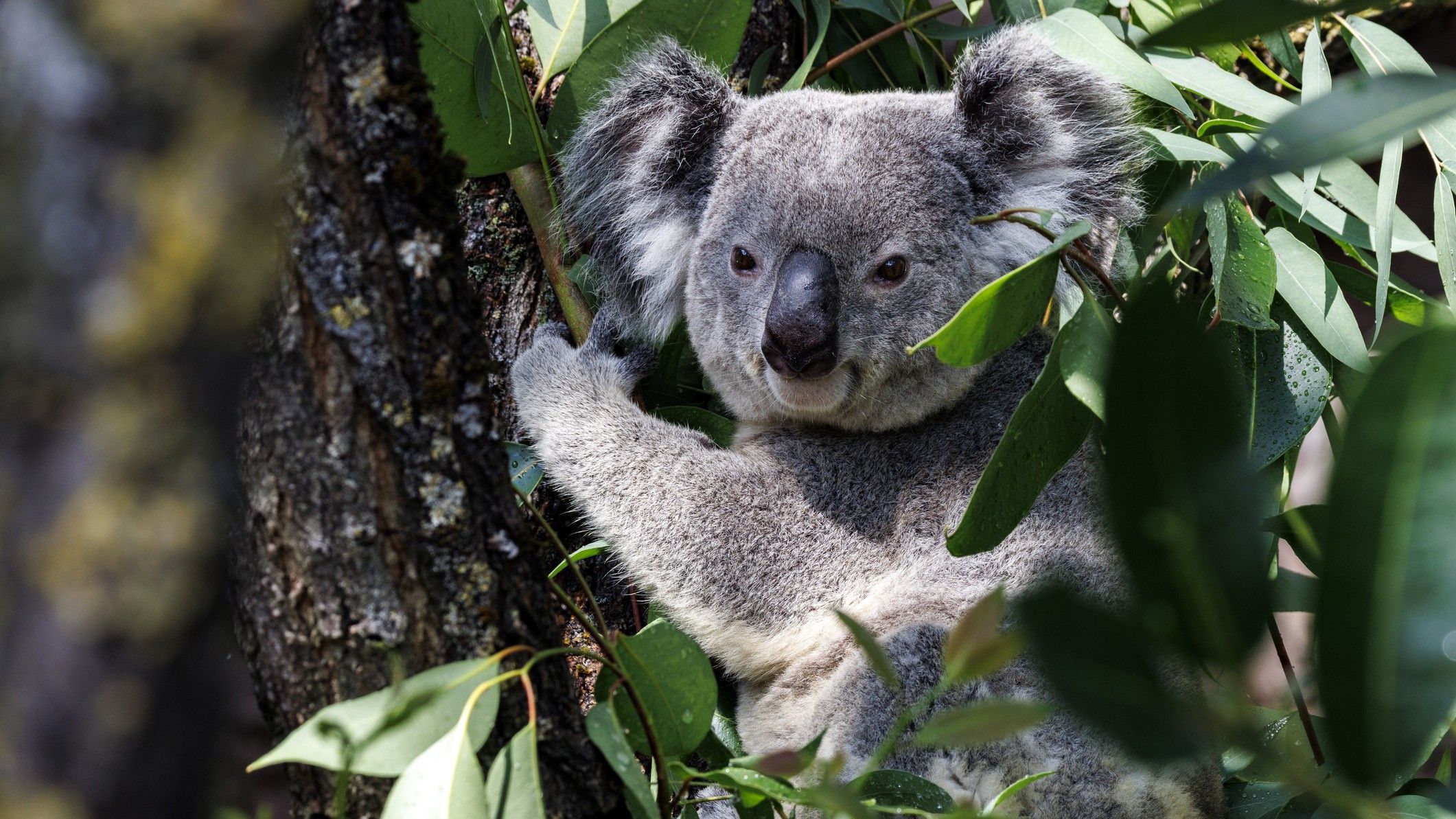
Scientists Freeze Koala Eggs and Sperm to Prevent Extinction
Australian researchers are establishing a cryopreserved genetic repository of koala (Phascolarctos cinereus) gametes to mitigate the risk of species extinction. By utilizing liquid nitrogen (LN2) to store spermatozoa and oocytes harvested from deceased or non-breeding individuals, the team aims to preserve biological diversity that is currently being lost due to deforestation, bushfires, and disease. This initiative, led by the University of Queensland, seeks to provide a contingency for future assisted reproductive technologies, including artificial insemination and in vitro fertilization (IVF).
- The project utilizes liquid nitrogen at minus 321 degrees Fahrenheit to cryopreserve reproductive cells, ensuring long-term viability for future breeding programs.
- Researchers have implemented protocols to screen for and eliminate Chlamydia pecorum from samples, addressing a primary pathogen responsible for infertility in wild populations.
- The repository serves as a genetic safeguard, intended to complement—not replace—traditional conservation efforts such as habitat restoration and disease management.
Biological Mechanisms and Pathogenesis of Population Decline
The urgency of this cryopreservation project stems from a documented collapse in koala populations across Queensland and New South Wales. Since the late 1990s, populations in these regions have declined by up to 80%, leading the Australian government to reclassify the species from “vulnerable” to “endangered” in 2022. According to Andres Gambini, a reproductive biologist at the University of Queensland, the primary clinical challenge is the loss of genetic diversity, which directly correlates with a reduced capacity for environmental adaptation.
A significant driver of this morbidity is Chlamydia pecorum. This bacterium manifests as severe urogenital and ocular pathology, frequently resulting in infertility in females. In highly affected populations, incidence rates reach 90%. The clinical strategy employed by the research team involves the systematic removal of this pathogen from harvested gametes. As Steve Johnston, an associate professor of animal reproduction at the University of Queensland, noted, current laboratory techniques allow for the purification of these samples, ensuring that the stored genetic material is free from active infection before cryopreservation.
Cryopreservation Standards and Longitudinal Viability
The technical framework for this initiative relies on established cryobiology standards used in human and veterinary medicine. By suspending cellular metabolism in liquid nitrogen, the researchers aim to maintain the structural integrity of DNA and cellular organelles for several decades. Vincent Lynch, an evolutionary developmental biologist at the University at Buffalo, confirmed the feasibility of this timeline, noting his own success in reviving cells stored in LN2 for over 20 years.
The project follows a trajectory of reproductive breakthroughs, building upon the 1998 milestone where a team including Johnston achieved the first successful artificial insemination in a koala, and a 2025 study led by Gambini that produced the first-ever IVF kangaroo embryos. While these advancements demonstrate technical proficiency, the researchers acknowledge that scaling these efforts to support self-sustaining wild populations remains a complex logistical hurdle. The number of samples required to maintain adequate population-level genetic diversity is expected to increase as wild populations continue to dwindle.
Clinical Triage and Conservation Integration
This initiative underscores a broader need for integrated wildlife health management.
The project does not operate in a vacuum; it is designed to function alongside habitat protection and population monitoring. The preservation of genetic material provides a “genetic backup” that may allow for future reintroduction efforts once environmental conditions stabilize.
The ability to “wake up” stored cells offers a unique opportunity to address future bottlenecks in genetic diversity, yet the success of this endeavor will be measured by the ability to eventually integrate these resources back into the wild. As conservationists continue to monitor these populations, the application of cryopreservation stands as a necessary, albeit supplementary, measure in the effort to prevent the total loss of this species.