Scientists Discover Unique Bat Immune System With Two Antibody Loci
<>
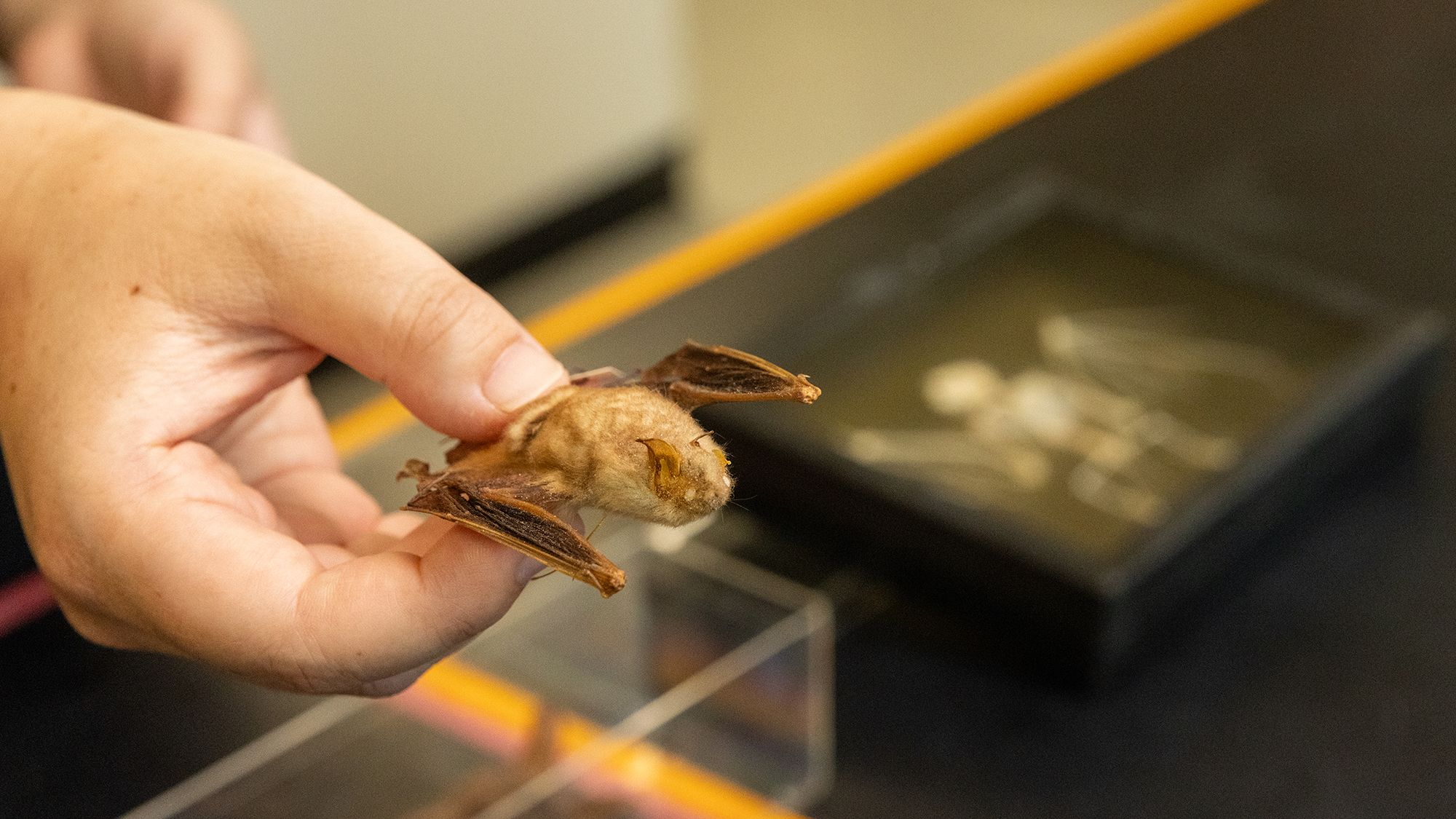
Researchers have uncovered an unprecedented genetic configuration in vesper bats that may explain how these mammals harbor deadly viruses without falling ill, according to a peer-reviewed study published July 29 in the journal Science Advances. Scientists at Tulane University and collaborating institutions found that vesper bats—representing the world’s largest family of bats—possess two separate, functional genetic systems for producing antibody building blocks, a structural adaptation previously documented only in fish.
- Vesper bats feature two distinct, functional heavy-chain antibody loci located on separate chromosomes, diverging from the single locus standard found in humans and other mammals.
- One genetic system provides a broad, ready-made repertoire of antibody building blocks, while the second relies heavily on somatic hypermutation for customizable pathogen defense.
- The discovery published in Science Advances offers new avenues for understanding mammalian adaptive immunity and viral reservoirs.
Mapping the Dual Heavy-Chain Loci in Vesper Bats
Antibodies are Y-shaped proteins featuring heavy and light chains that recognize and neutralize foreign pathogens like viruses and toxins. In humans and typical mammals, the genes constructing these heavy chains organize into a solitary genomic region known as a locus. Cells generate diversity by mixing and matching segments within that single framework. When study co-author Hannah Frank, an associate professor of ecology and evolutionary biology at Tulane University, examined 26 bat species alongside her team, genomic sequencing revealed two complete heavy-chain loci situated on entirely different chromosomes. Laboratory analysis confirmed that both sets of genes remain active and functional within immune cells.
Initially, researchers suspected an assembly artifact during genomic sequencing. However, former graduate student and collaborator Dr. Taylor Pursell recognized the configuration as genuine. Using advanced genetic analysis, the investigation revealed distinct operational differences between the two regions. One locus contains a large, varied collection of gene segments designed to establish a broad, pre-existing antibody repertoire. The second locus deploys fewer initial building blocks but depends more heavily on somatic hypermutation. Through this secondary mechanism, antibody-producing cells execute precise genetic alterations after pathogen exposure to manufacture highly specialized defenses.
Immunological Implications and Comparative Defense Layers
The structural divergence grants bats an expansive immunological toolkit from the onset of an infection. Michael Letko, a molecular virologist at Washington State University who was not involved in the research, noted that the genetic organization provides foundational diversity allowing for faster, more potent responses. Researchers liken this multi-tiered architecture to the layered defenses of innate and adaptive immunity, where an initial wide alarm system pairs with customizable cellular agents. Daniel Becker, an associate professor of biology at the University of Oklahoma who also did not participate in the study, emphasized that the discovery highlights the necessity for broader immunological evaluation across globally distributed bat families.
Beyond infectious disease dynamics, researchers note that bats exhibit low incidences of tumors and cancer. Investigating how these unique antibody configurations and elevated baseline body temperatures interact with viral reservoirs may inform public health monitoring.
Future Directions in Viral Reservoir Research
Establishing the precise operational advantages of dual antibody loci requires observing how these systems activate under direct viral exposure. While the current data confirms genetic capability, empirical infection trials remain necessary to map exact pathogen clearance pathways. Understanding the evolutionary mechanisms underpinning bat resilience ultimately aids epidemiologists in predicting viral emergence risks while redefining how the scientific community views these mammalian reservoirs.