
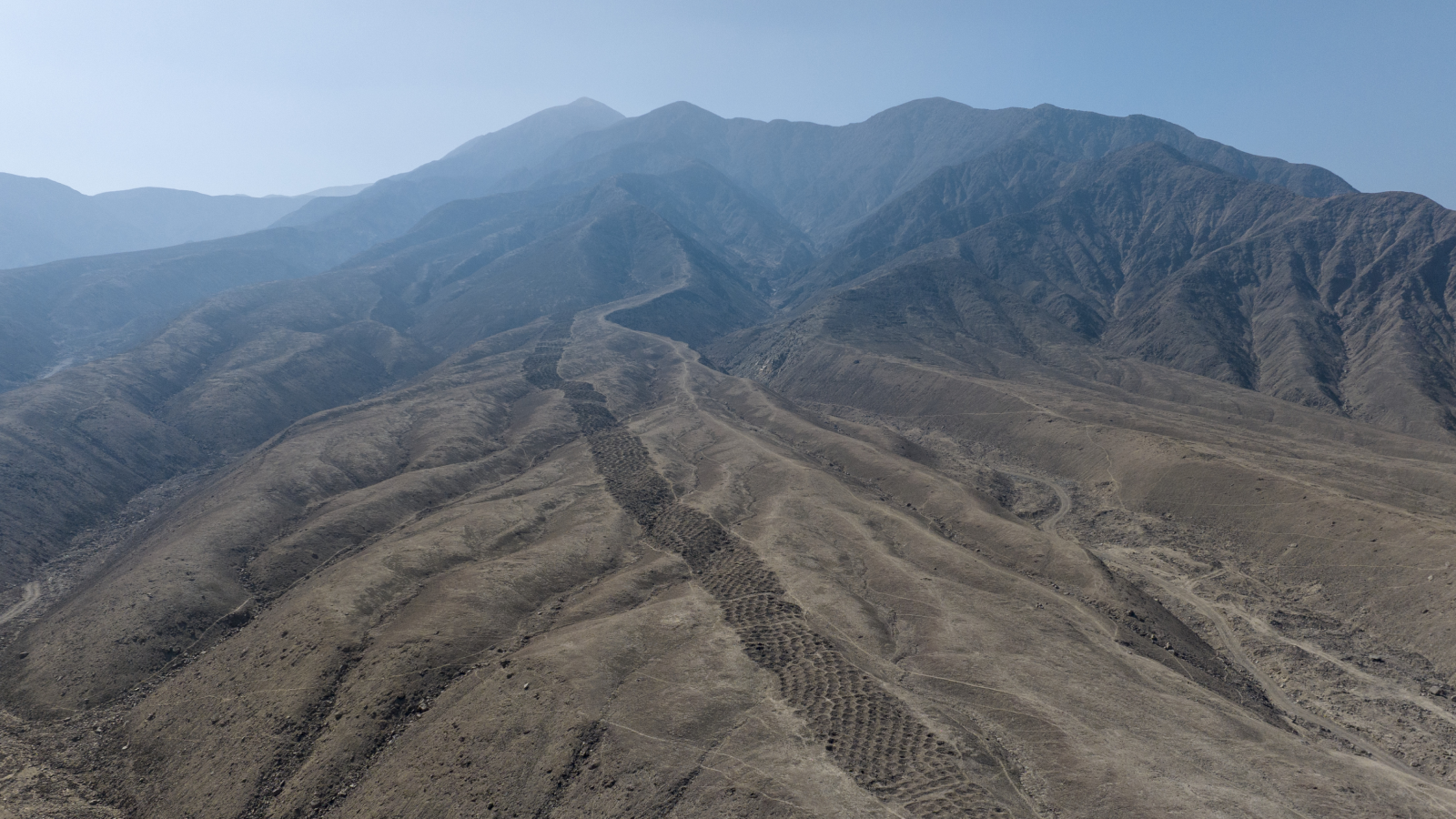
Ancient Peruvian Site’s 5,200 Holes Likely Served as Marketplace and Accounting System,Study Finds
LIMA,Peru – A new study offers a potential explanation too a mysterious archaeological site in the Peruvian Andes featuring over 5,200 holes,suggesting the area functioned as a marketplace and a sophisticated accounting system used by the pre-Hispanic Chincha Kingdom and potentially later the Inca civilization. The research, published Monday (Nov. 10) in the journal Antiquity, details how scientists used drone imagery and plant analysis to unravel the site’s secrets.
Located at Monte Sierpe,the site has puzzled archaeologists for years. Researchers, led by Jacob Bongers, an archaeologist at the University of Sydney in Australia, analyzed remnants of ancient plants found in the sediment of the holes. They discovered pollen from crops, including maize, which doesn’t travel far from its source, indicating deliberate human placement. Remnants of bulrush pollen were also found, a material used by the Chincha Kingdom for basket weaving.
“These data support the hypothesis that during pre-Hispanic times, local groups periodically lined the holes with plant materials and deposited goods inside them, using woven baskets and/or bundles for transport,” Bongers said in a statement.
The team proposes that Monte Sierpe served as a barter market along trade routes in the Peruvian Andes,a common practice during that period. Furthermore, the arrangement of the holes bears a striking resemblance to khipus – the inca’s knotted-cord record-keeping devices. Previous discoveries of khipus alongside similar grids in Inca storage spaces suggest a possible link to counting and sorting goods.Variations in the number of holes within different sections of the site may have even represented tribute levels from surrounding towns.
“This study contributes an vital Andean case study on how past communities modified past landscapes to bring people together and promote interaction,” Bongers added. “Our findings expand our understanding of barter marketplaces and the origins and diversity of Indigenous accounting practices within and beyond the ancient Andes.”
While the exact function of the site remains under investigation, the new research provides compelling evidence that Monte Sierpe was a vital hub for economic and administrative activity in ancient Peru.
