Schlafmangel kostet Milliarden: KI soll Manager und Soldaten retten – Ad-hoc-news.de
The economic and physiological toll of chronic sleep deprivation has evolved from a productivity nuance into a systemic public health crisis. For those operating in high-stakes environments—from elite special forces to corporate executives—the inability to achieve restorative sleep triggers a cascade of cognitive failures and metabolic dysfunction that traditional interventions often fail to arrest.
Key Clinical Takeaways:
- An AI-driven sleep coaching system, utilizing heart rate sensors and cognitive behavioral principles, significantly increased sleep efficiency and reduced sleep onset latency in elite military personnel.
- The intervention demonstrated superior outcomes compared to control groups, analyzing approximately 23,000 nights of sleep over a 15-month period.
- Clinical recovery requires a dual approach: leveraging precision data for behavioral adjustment while implementing strict digital abstinence to mitigate dopamine-driven cognitive exhaustion.
Sleep deprivation acts as a catalyst for increased morbidity, impairing the prefrontal cortex and destabilizing emotional regulation. In the corporate sector, this manifests as a burnout epidemic; current data indicates that one in five German managers feels completely burnt out, reflecting a collapse in emotional attachment to their organizations. When the brain is denied adequate REM and deep-sleep cycles, the pathogenesis of chronic stress accelerates, leading to impaired decision-making and a heightened risk of cardiovascular events. While polysomnography remains the gold standard for diagnosing complex sleep apnea and other parasomnias, the challenge for the general population and high-stress professionals is the lack of real-time, scalable intervention.
Precision Intervention: The Salzburg Military Study
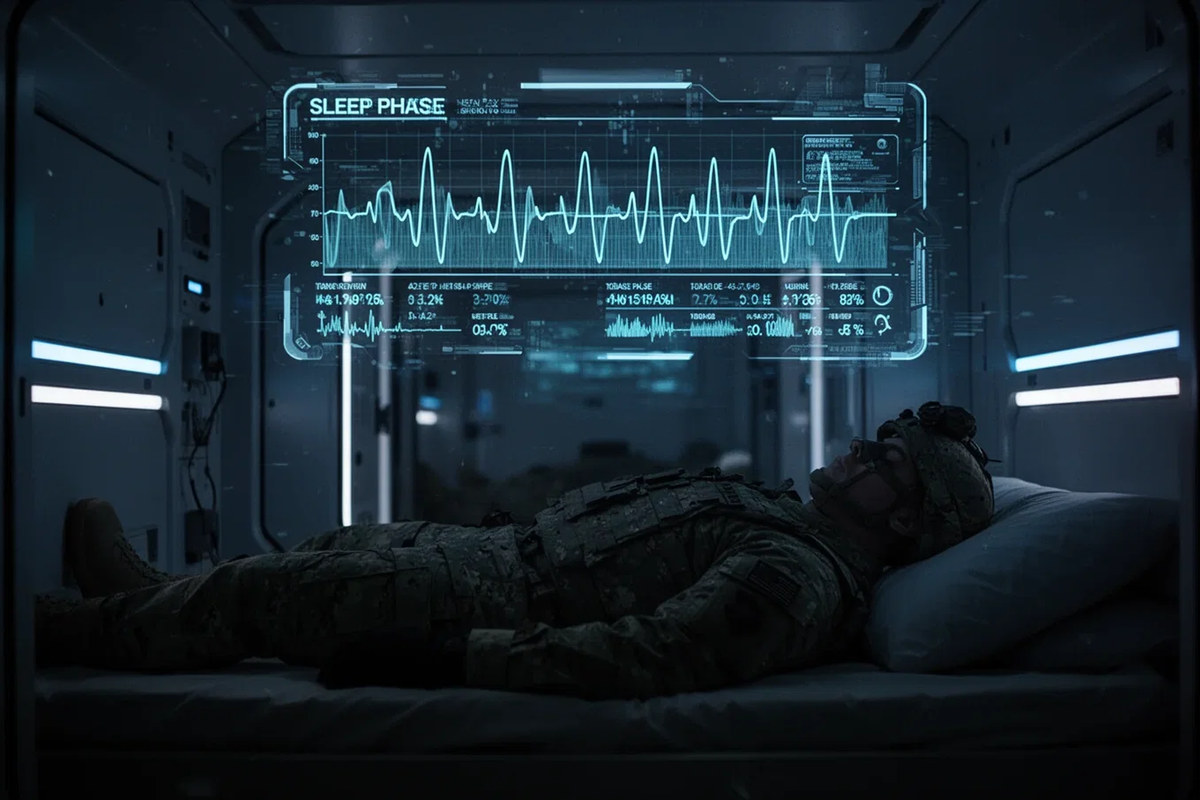
Addressing this gap, a research team from the University of Salzburg, in collaboration with the Austrian Ministry of Defense, conducted a rigorous 15-month longitudinal study focusing on the Jagdkommando, Austria’s elite special forces. The study tracked approximately 80 personnel, evaluating the efficacy of an AI-supported application integrated with heart rate sensors to monitor nocturnal physiology.

The system functioned as a digital extension of cognitive behavioral therapy for insomnia (CBT-I), the established standard of care for chronic sleep disturbances. By providing continuous, data-driven feedback on sleep quality, the AI guided participants through individualized behavioral adjustments. The results were clinically significant: participants experienced a marked increase in sleep efficiency, a reduction in the time required to fall asleep (sleep onset latency) and a decrease in the frequency of nocturnal awakenings. In contrast, the control group, which lacked access to data-based feedback, showed no meaningful improvement.
“The integration of real-time biometric feedback allows for a transition from generic sleep hygiene advice to precision behavioral medicine, targeting the specific physiological disruptions of the individual.”
The scale of the data—roughly 23,000 analyzed nights—provides a robust foundation for these findings, with detailed peer-reviewed publications scheduled for release in the fall of 2026. For individuals struggling with similar patterns of insomnia or fragmented sleep, It’s critical to move beyond over-the-counter aids and consult with board-certified sleep specialists who can provide a formal clinical diagnosis and a tailored treatment plan.
The Dopamine Loop and Digital Exhaustion
Technological intervention alone cannot solve a problem exacerbated by the tools themselves. The prevalence of “always-on” digital culture has created a state of constant hyper-arousal. Neurophysiologist Wolfram Schultz of the University of Cambridge and Stanford Professor Anna Lembke have highlighted the dangers of the continuous dopamine release triggered by social media and constant connectivity. This biochemical loop keeps the nervous system in a state of sympathetic dominance, making the transition to the parasympathetic state necessary for sleep nearly impossible.

This digital saturation effectively kills concentration and accelerates the burnout observed in the managerial class. The biological mechanism involves the downregulation of dopamine receptors, leading to a cycle where the individual requires more stimulation to feel “normal” while simultaneously feeling more exhausted. This creates a clinical paradox where the tools used to manage work—smartphones and laptops—become the primary barriers to the recovery required to perform that work.
Managing this intersection of mental health and occupational stress often requires a multidisciplinary approach. Those experiencing the emotional collapse associated with burnout should seek the guidance of clinical psychiatrists to differentiate between situational exhaustion and clinical depression, ensuring that the treatment path addresses the underlying neurochemical imbalance.
From Military Precision to Corporate Wellness
The success of the Salzburg study suggests that the “quantified self” movement, when guided by clinical principles like CBT, can be scaled to rescue the productivity and health of the civilian workforce. The transition from elite soldiers to corporate managers is a logical progression; both cohorts face high-pressure environments, irregular schedules, and the requirement for peak cognitive performance under stress.
However, implementing these systems at a corporate level requires more than just providing apps. It requires a fundamental shift in organizational culture regarding “digital abstinence.” Without a regulatory or cultural framework that protects sleep, AI coaching acts as a bandage on a systemic wound. Organizations are now beginning to recognize that sleep deprivation is a financial liability, costing billions in lost productivity and healthcare expenses.
To implement these changes sustainably, companies are increasingly partnering with occupational health consultants to redesign workflows and establish “dark hours” where digital communication is prohibited, thereby aligning corporate policy with biological necessity.
The Future of Algorithmic Recovery
As we move toward the 2026 publication of the full Salzburg data, the trajectory of sleep medicine is clearly shifting toward personalized, algorithmic recovery. The ability to synthesize heart rate variability, sleep architecture, and behavioral patterns into actionable intelligence represents a departure from the “one size fits all” approach to wellness. The goal is no longer simply “more sleep,” but the optimization of sleep efficiency to ensure maximum cognitive restoration.
The integration of AI into the sleep-wake cycle is not a replacement for clinical expertise but a powerful tool for early intervention. By identifying the early markers of sleep degradation before they manifest as full-scale burnout or clinical insomnia, You can shift the healthcare paradigm from reactive treatment to proactive optimization. For those navigating the complexities of sleep disorders, the most effective first step remains a professional evaluation to ensure that underlying pathologies, such as obstructive sleep apnea, are not being masked by behavioral coaching.
Disclaimer: The information provided in this article is for educational and scientific communication purposes only and does not constitute medical advice. Always consult with a qualified healthcare provider regarding any medical condition, diagnosis, or treatment plan.