
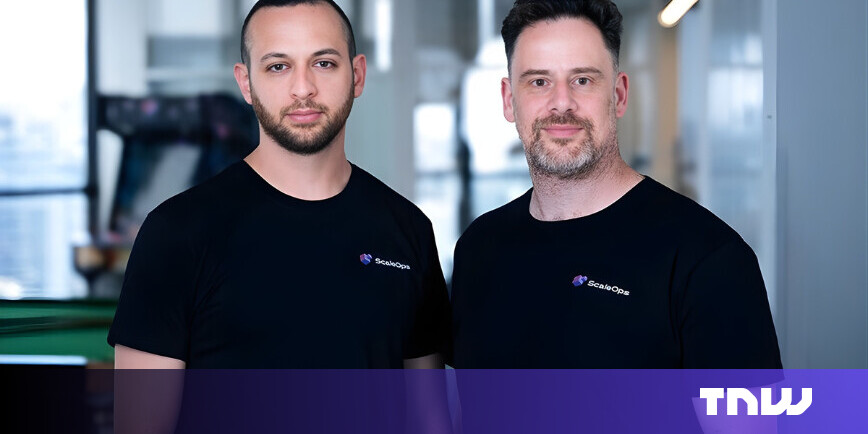
ScaleOps Raises $130M Series C to Automate Kubernetes for AI Workloads
ScaleOps Secures $130M Series C: The End of Static Kubernetes Orchestration
ScaleOps just closed a $130 million Series C round at an $800 million valuation, signaling a decisive shift in how enterprise infrastructure handles AI workload volatility. This isn’t just venture capital chasing hype; it’s a market correction for the inefficiencies inherent in static Kubernetes configurations. When GPU demand spikes unpredictably, manual tuning becomes a bottleneck that burns cash and introduces latency. ScaleOps claims to solve this with autonomous, context-aware resource management, but the real story lies in the operational risk of handing control to an algorithm.
- The Tech TL;DR:
- ScaleOps automates Kubernetes pod rightsizing and GPU allocation, reducing manual engineering overhead by replacing static configs with real-time adjustment.
- Series C funding led by Insight Partners validates the shift from pre-AI infrastructure tools to autonomous orchestration for spiky AI workloads.
- Security implications require rigorous auditing; autonomous infrastructure changes demand validation from cybersecurity consulting firms to prevent privilege escalation.
Kubernetes was architected for relatively stable workloads, a assumption that collapses under the weight of modern AI inference patterns. Traffic shifts by the second, and GPU demand spikes without warning. Engineering teams traditionally respond with constant manual tuning to avoid performance failures or ballooning costs, a task that is not tractable when managing hundreds of workloads simultaneously. ScaleOps replaces that manual work with continuous automation, adjusting compute resources without human intervention. This efficiency gain comes with a trade-off: reduced visibility into the decision-making logic of the orchestration layer.
The Autonomous Orchestration Matrix
Comparing ScaleOps against established players like Cast AI and Kubecost reveals distinct architectural philosophies. Most automation tools operate without full application context, a limitation that causes performance issues in production. ScaleOps argues its context-aware engine prevents the thrashing seen in simpler autoscalers. The following breakdown isolates the technical differentiators relevant to CTOs evaluating deployment.

| Feature | ScaleOps | Cast AI | Kubecost |
|---|---|---|---|
| Core Focus | Autonomous Real-Time Rightsizing | Cluster Automation & Cost | Cost Visibility & Allocation |
| GPU Management | Dynamic AI Model Resource Mgmt | GPU Optimization | Cost Allocation |
| Context Awareness | Full Application Context | Cluster Level | Financial Tagging |
| Compliance | FIPS-Compatible (FedRAMP) | SOC 2 Type II | SOC 2 Type II |
The distinction in context awareness is critical. A standard Vertical Pod Autoscaler (VPA) reacts to metrics after the fact. ScaleOps attempts to predict needs based on application logic. This reduces latency but increases the attack surface. If the orchestration agent is compromised, an attacker could manipulate resource allocation to deny service or exfiltrate data through side channels. This risk profile aligns with concerns raised by security leadership in major tech firms, such as the Director of Security | Microsoft AI role definitions which emphasize the intersection of AI operations and security governance.
Security Implications of Autonomous Infrastructure
Autonomous infrastructure management introduces a new vector for supply chain attacks. When an external agent has permissions to modify node configurations and pod specifications, the principle of least privilege becomes difficult to enforce. Organizations adopting these tools must treat the orchestration layer as a critical security boundary. This necessitates formal assurance mechanisms beyond standard IT consulting.
Cybersecurity audit services constitute a formal segment of the professional assurance market, distinct from general IT consulting. As noted by industry standards, Cybersecurity Audit Services: Scope, Standards, and Provider Criteria define the rigorous testing required for such privileged access. Enterprises cannot simply deploy autonomous agents without validating the security posture of the provider and the integration points. The rapid technical evolution in this sector, covered by networks like the AI Cyber Authority, suggests that regulatory scrutiny will follow funding rounds of this magnitude.
For teams integrating ScaleOps, the immediate requirement is a robust risk assessment. Cybersecurity Risk Assessment and Management Services provide the framework to evaluate whether the cost savings justify the potential exposure. If the automation logic contains a vulnerability, the blast radius encompasses the entire cluster.
Implementation and Configuration Reality
Deployment typically involves integrating the ScaleOps agent into the existing Kubernetes cluster via Helm charts. The configuration requires defining constraints to prevent the automation from over-provisioning expensive GPU instances. Below is a representative snippet of how resource limits might be enforced in a YAML configuration to maintain guardrails around the autonomous agent.
apiVersion: v1 kind: ResourceQuota metadata: name: gpu-quota-guard namespace: ai-inference spec: hard: requests.nvidia.com/gpu: "4" limits.nvidia.com/gpu: "8" requests.cpu: "16" limits.memory: "64Gi" --- apiVersion: apps/v1 kind: Deployment metadata: name: scaleops-agent spec: template: spec: containers: - name: agent image: scaleops/agent:latest securityContext: runAsNonRoot: true readOnlyRootFilesystem: true This configuration enforces a hard ceiling on GPU usage, preventing the autonomous system from spinning up unchecked resources during a traffic spike. It also applies security context constraints to the agent itself, mitigating the risk of container escape. Even with these guardrails, the complexity of managing hundreds of workloads simultaneously requires specialized oversight. Organizations often engage Managed Service Providers to handle the ongoing tuning and security monitoring of these autonomous layers.
The Verdict on Infrastructure Autonomy
ScaleOps’ $130 million raise confirms that the market has moved past manual Kubernetes tuning. The 350% year-on-year growth indicates that enterprises are feeling the pain of AI infrastructure costs acutely. However, the transition to autonomous management is not a plug-and-play solution. It requires a mature DevSecOps pipeline capable of auditing algorithmic decisions. The technology solves the latency and cost bottleneck of static configs, but it introduces a dependency on the vendor’s logic.
As enterprise adoption scales, the focus will shift from mere cost optimization to governance. Companies will need to verify that the automation complies with internal security policies and external regulations. What we have is where the role of external auditors becomes paramount. The trajectory suggests that future infrastructure stacks will blend autonomous efficiency with rigid compliance frameworks, managed by teams skilled in both cloud architecture and security triage.
Disclaimer: The technical analyses and security protocols detailed in this article are for informational purposes only. Always consult with certified IT and cybersecurity professionals before altering enterprise networks or handling sensitive data.